


Yellow Glass Floral Vase
A yellow glass floral vase brings naturalistic colour and layered botanical motifs into a room through techniques developed across the early twentieth century.
Yellow Glass Floral Vase
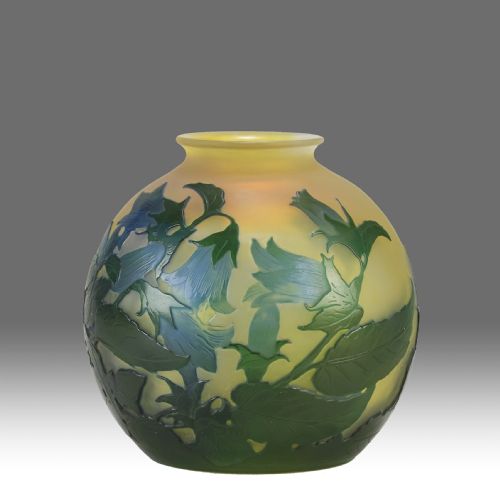
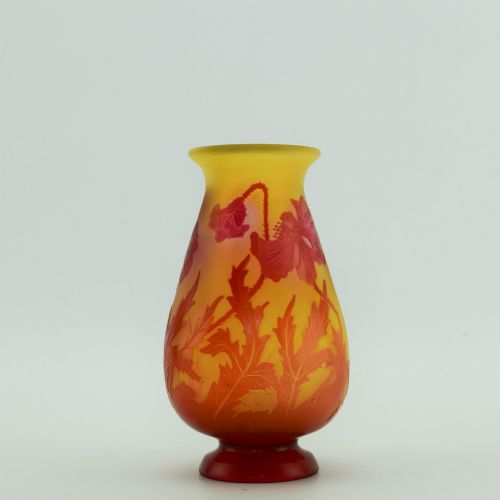
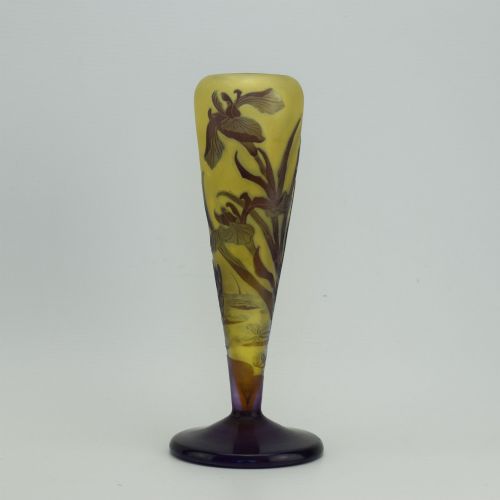
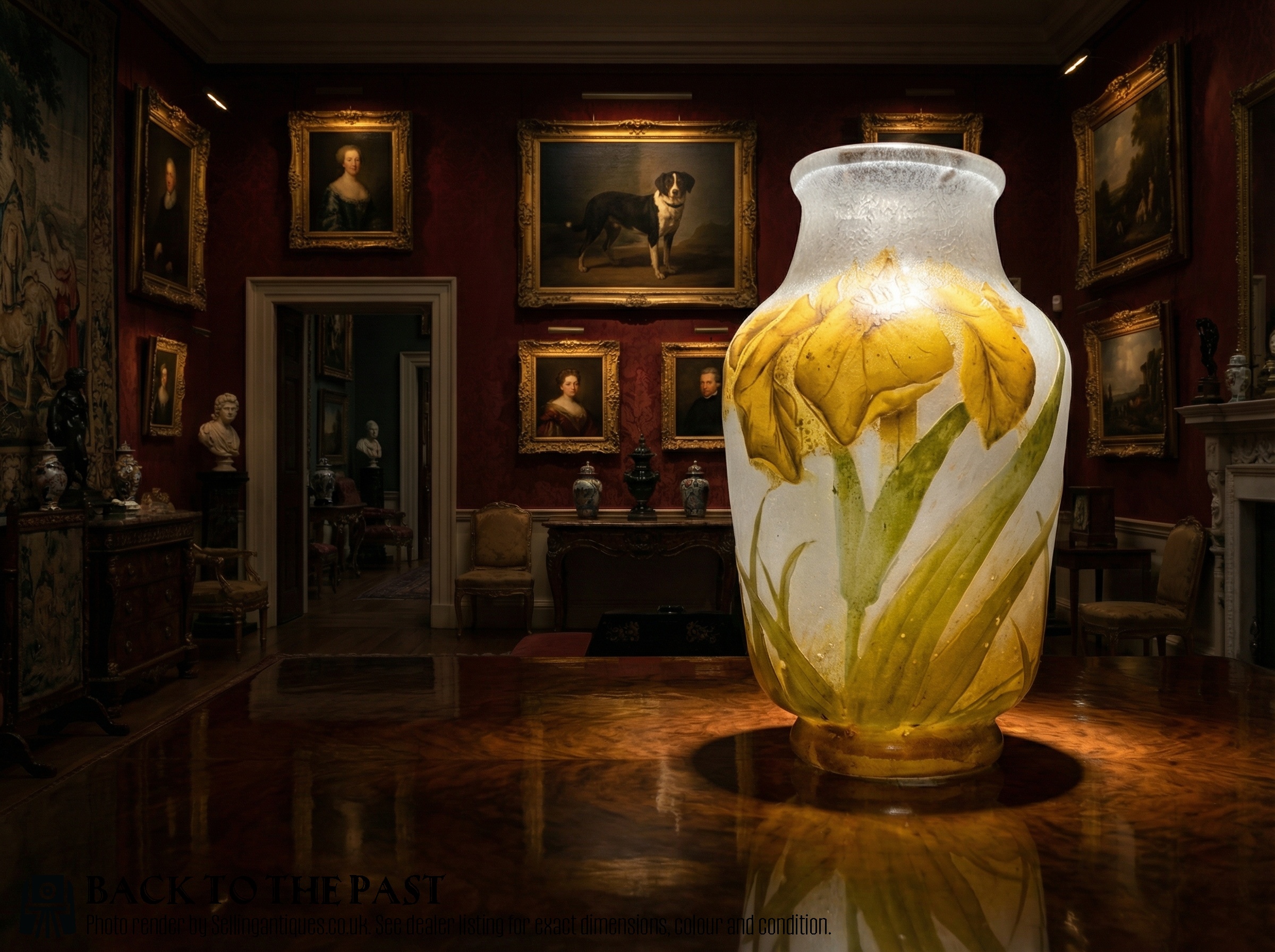
A yellow glass floral vase is most often found as an Art Nouveau piece featuring cameo glass or enamelling depicting subjects like campanula, poppies, iris, cornflowers, sweet pea, montbrecia, and fern. These items emerge chiefly from early twentieth-century French production, alongside later mid-century examples and associated oil paintings on board.
Buyers seeking a yellow glass floral vase encounter works by notable makers such as Emile Gallé, Daum Frères, Daum Nancy, Paul Nicholas for D'Argental, and Karl Palda. The forms range from footed vessels and tall display pieces to specific botanical studies involving uranium glass and enamel.
Judging quality
Quality rests on the depth of the cameo carving and the precision of the acid-etching that defines the botanical subjects. Crisp detail in the floral motifs distinguishes finer output from simpler production.
The complexity of the glass body, such as multi-layered coloured glass or integrated uranium glass properties, marks the upper tier of execution. Harmony between the naturalistic form and the glassblower's technique determines the standing of each piece.
Chrysanthemums, campanula, and sweet peas bloom forever across these glass stems and painted boards without needing a drop of water.
Emile Gallé·Daum Frères·Daum Nancy·Paul Nicholas·Karl Palda
The Yellow Glass Floral Vase Glossary
- Cameo Glass
- A form of glassware created by carving or acid-etching through fused layers of different coloured glass to produce a design in relief. This method allows for detailed botanical imagery on vessels.
- Acid-Etched Glass
- Glass decorated by applying acid to eat away exposed areas, leaving the protected design standing out. It creates subtle textures and depths across the surface.
- Uranium Glass
- Glass that contains trace amounts of uranium dioxide, causing it to glow brightly under ultraviolet light. It appears in twentieth-century decorative items.
- Frosted Glass
- Glass rendered translucent by acid-etching or sandblasting to diffuse light evenly. This finish provides a muted backdrop for bright floral motifs.
Yellow Glass Floral Vase: Frequently Asked Questions
What periods do these pieces date from?
The selection spans the early twentieth century, with a strong concentration around nineteen hundred and nineteen twenty during the height of Art Nouveau and Art Deco design.
Later mid-century examples also appear alongside oil paintings from the same broader timeframe, reflecting shifting artistic styles.
How were these vases displayed originally?
These vessels functioned as ornamental display pieces in domestic interiors, often placed on mantelpieces or tables to showcase botanical forms and coloured glass.
Their substantial height and detailed floral decoration made them focal points within period rooms.
How do I identify Art Nouveau examples?
Art Nouveau pieces typically feature organic, flowing lines inspired by natural plant life such as iris, poppies, and cornflowers. The glasswork often employs cameo techniques to give the stems and petals a tactile presence.
Signatures or marks integrated into the design by makers like Gallé or Daum further confirm the movement.
What is uranium glass?
Uranium glass incorporates uranium within the glass batch during melting, which results in a characteristic yellow or green hue. Under ultraviolet light, the material emits a distinct fluorescent glow.
This glass type was utilised by makers such as Karl Palda for decorative table wares.