
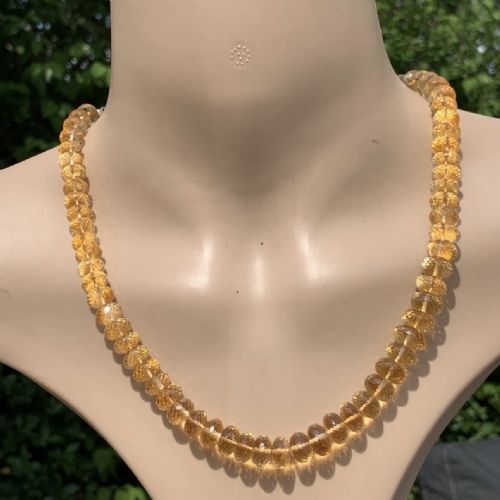


Yellow Gemstone Necklace
These yellow gemstone necklaces span decades of goldsmithing, bringing together bright citrines, fire opals and warm gold settings to sit against the collarbone.
Yellow Gemstone Necklace
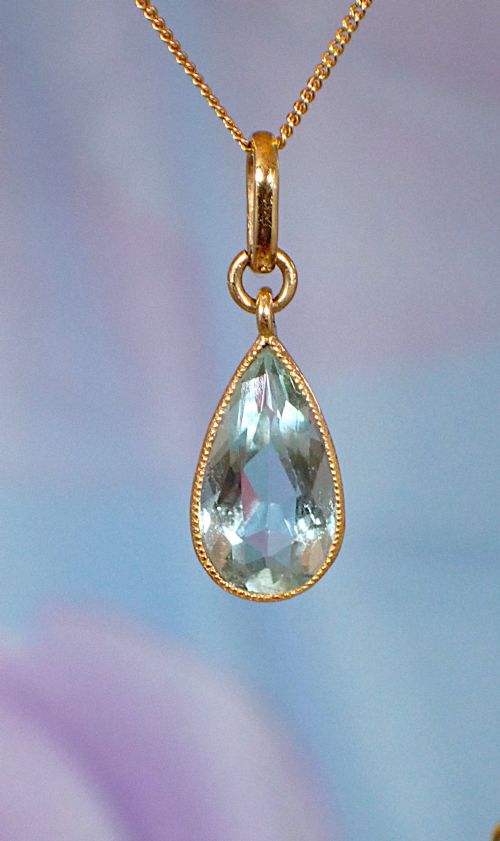
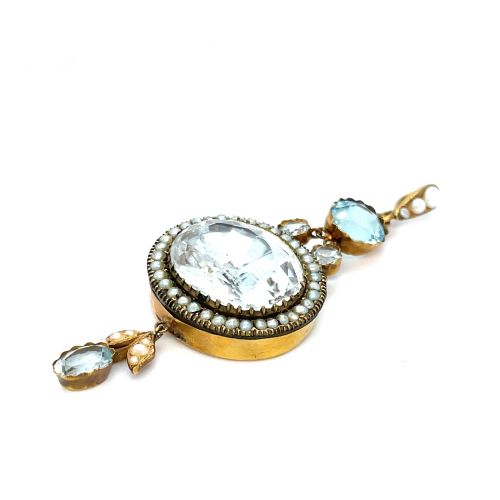
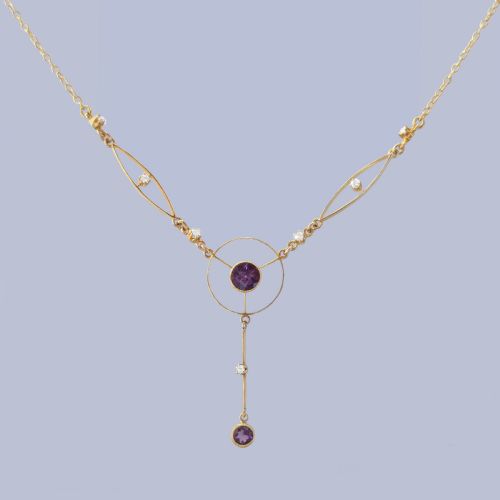
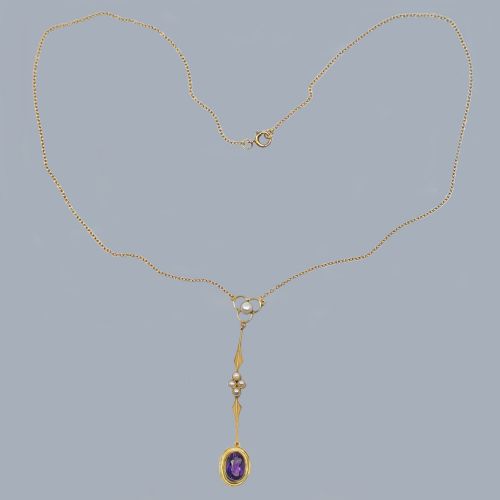
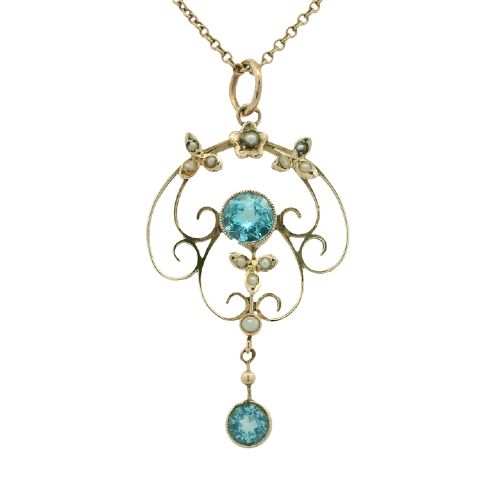
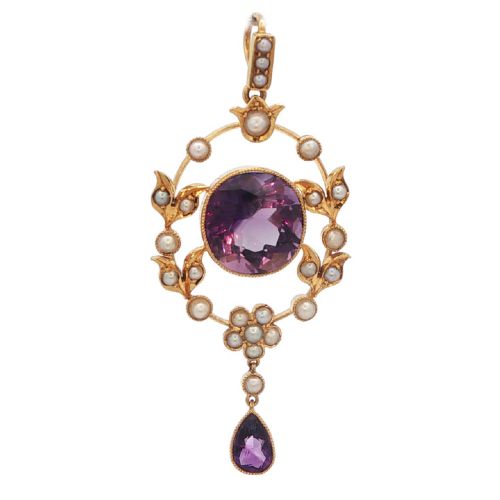
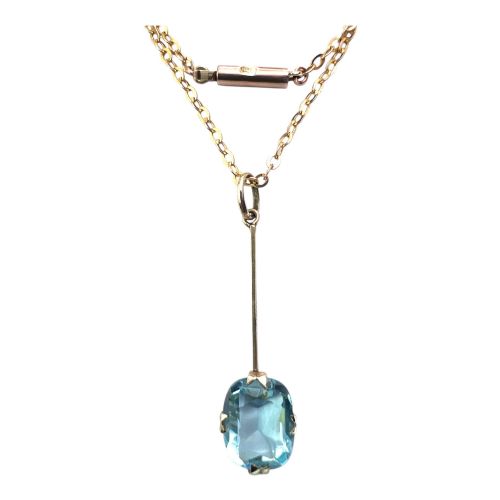
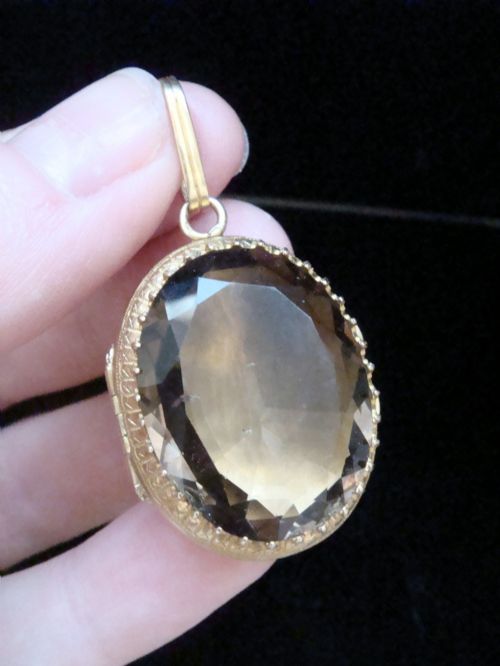
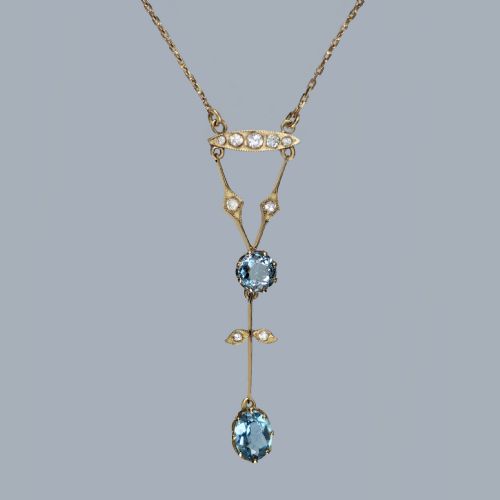
A yellow gemstone necklace encompasses various historic and vintage designs, from delicate drop pendants to substantial cluster necklaces. When exploring this selection, buyers frequently encounter Edwardian lavaliers and mid-century gold settings housing warm-toned stones.
The pieces draw on periods ranging from the late Victorian era through to the 1960s, reflecting changing aesthetic preferences across British and continental jewellery design. Common configurations pair central yellow stones with secondary gems like diamonds, pearls or garnets.
Gold predominates as the primary metal choice, appearing in 9ct, 15ct and 18ct yellow variants. Formats vary from simple solitaire pendants on fine chains to intricate filigree work and multi-stone cluster arrangements.
Materials and Construction
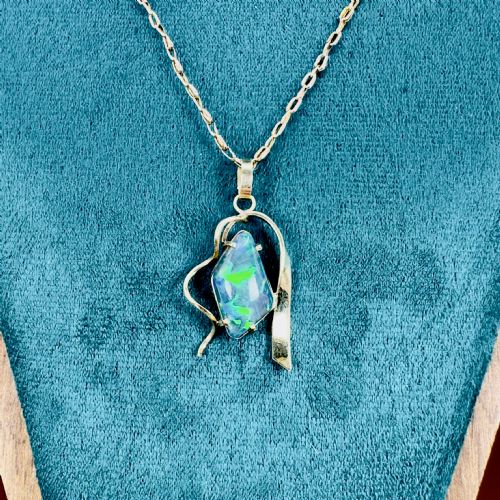
Goldsmiths constructed these necklaces using cast and hand-wrought yellow gold, frequently incorporating platinum details in earlier Edwardian and Art Deco pieces. Stones such as citrine, fire opal and topaz were faceted into oval and round cuts or shaped as smooth cabochons.
Setting techniques evolved from closed-back foil settings in Victorian examples to open-backed claw and bezel settings that allowed light to pass through the gems. Seed pearls and diamonds frequently surrounded the central yellow stones as supportive accents.
Fine chains, often original to the pendants, utilise standard link formations or incorporate decorative stations set with pearls or smaller gemstones.
Assessing Craftsmanship and Materials
The distinction between standard commercial pieces and finer work lies in the intricacy of the metalwork, such as hand-carved filigree, and the optical clarity of the central gemstone. Superior examples display secure, precise stone settings and balanced proportions between the pendant drop and its suspension chain.
The choice of gold purity also marks a hierarchy, with higher carats offering a richer hue, while the inclusion of matched secondary gems like old-cut diamonds elevates the overall standard of the piece.
Murrle Bennett·S. Blanckensee & Son
The Yellow Gemstone Necklace Glossary
- Lavalier
- A necklace featuring a pendant drop that hangs loose from a central point on the chain, popular during the Edwardian period. These often incorporate delicate scrolling metalwork.
- Cabochon
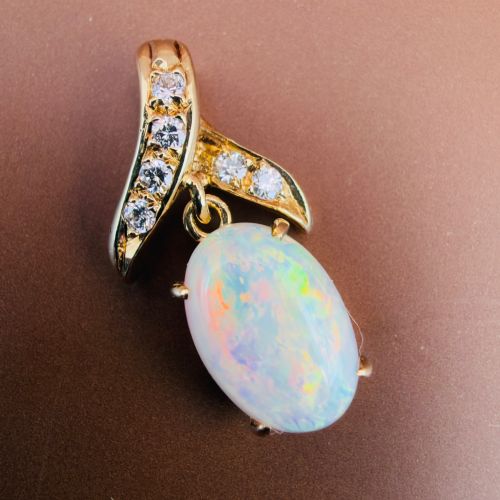
- A gemstone shaped and polished with a smooth, rounded domed surface rather than faceted edges. This style is frequently utilised for opals, moonstones and star peridots.
- Foil back
- A manufacturing technique where a thin sheet of coloured metallic foil is placed behind a transparent stone to enhance its colour and brilliance. This is typical of older Victorian pieces.
- Seed pearl
- A very small, naturally formed saltwater pearl, often drilled and threaded onto fine silk or wire. They are common accents in Edwardian and Art Nouveau cluster designs.
- Witch's heart
- A pendant shape featuring an asymmetrical, twisted heart motif that symbolised romantic devotion in historic jewellery. French examples from the twentieth century frequently employ this form.
Yellow Gemstone Necklace: Frequently Asked Questions
What periods do these necklaces come from?
The available selection spans from the late Victorian era and Edwardian period through Art Deco up to the 1960s. Each era brings distinct metalworking styles and stone-cutting techniques.
Earlier pieces often feature delicate seed pearls and intricate wirework, whilst mid-century examples lean towards bolder cluster designs and heavier gold weights.
How do I care for opal necklaces?
Opals contain natural water content and require gentle handling to prevent drying out or scratching. Store them away from extreme heat and direct sunlight.
Clean the gold and stones using a soft cloth rather than harsh chemical dips, especially if the piece contains pearls or fragile settings.
Are the chains original to the pendants?
Many Edwardian and vintage necklaces retain their original matching gold chains, often marked with period-appropriate clasps and hallmarks. Some pieces are pendants that have been paired with complementary chains from the same era.
Examining the colour and wear of the gold helps determine whether the chain and pendant share the same history.
What yellow gemstones are most common?
Citrine and fire opal appear frequently as the primary yellow stones in these historic necklaces. Amethysts, topazes and peridots also feature prominently alongside multi-coloured cluster arrangements.
These stones are typically paired with yellow gold settings that accentuate their warm tones.