



Yellow Enamel Vase
These yellow enamel vases bring brilliant colour and distinct historical craft to a room, ranging from delicate French glass to grand Chinese porcelain.
Yellow Enamel Vase
A yellow enamel vase unites vibrant colour with diverse historical forms, appearing across periods from the seventeenth century to the twentieth. You encounter everything from tall Chinese floor vessels and moon flasks to French cameo glass and Czech Art Deco glassware.
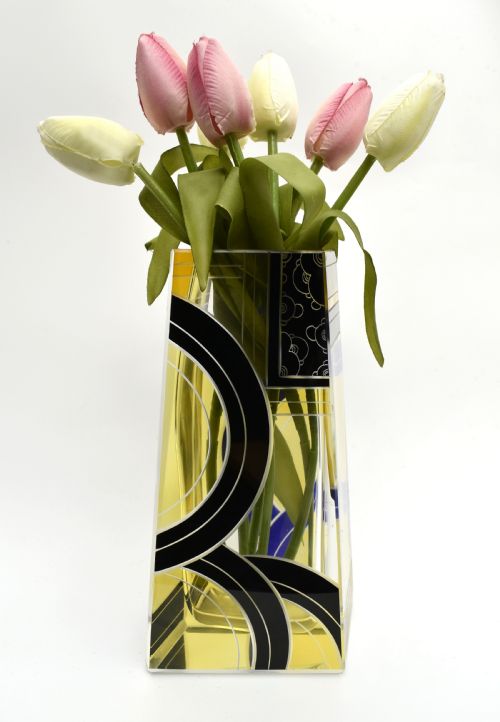
The nineteenth century and the Art Deco era supply a significant share of the selection, alongside earlier Chinese transitional pieces and Republican period porcelain. These objects function primarily as decorative centrepieces, utilising bright yellow grounds to highlight intricate botanical or figurative motifs.
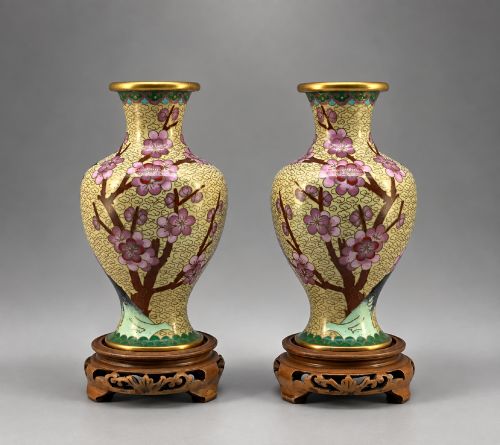
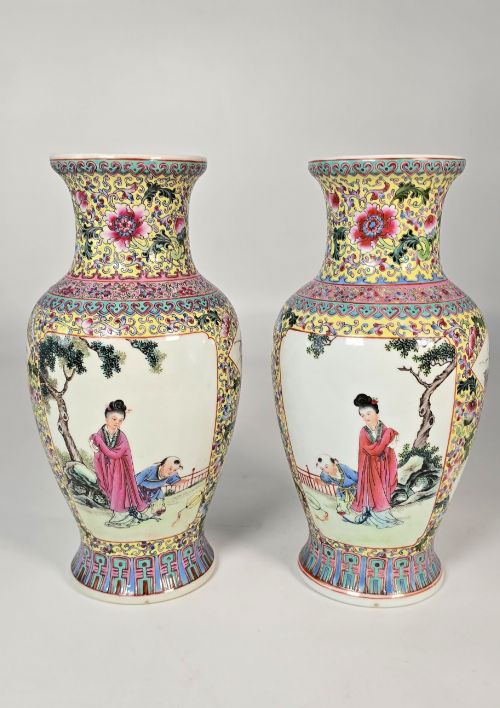
Chinese pieces often deploy famille rose or wucai palettes alongside cloisonné work, whilst European makers concentrate on acid-etched glass and vitreous enamelling. Each style reflects the distinct aesthetic priorities of its origin, bridging Asian ceramic traditions and European glassworks.
Materials and methods
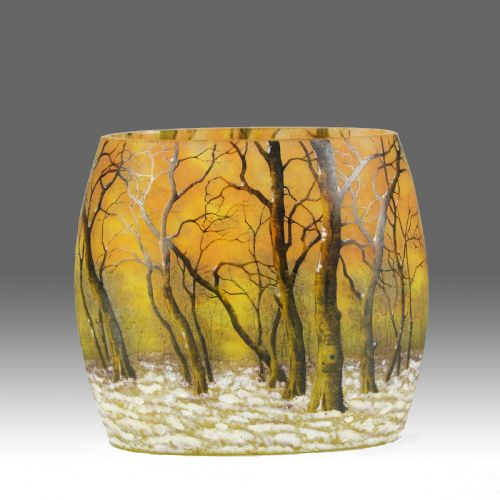
Makers apply enamel directly onto glass, porcelain or metallic bases, fusing the vitrified substance through firing to achieve a permanent coloured surface. Ceramic pieces utilise overglaze enamel painting, whereas glass examples frequently combine cameo carving with surface enamelling.
Techniques such as acid-etching create textured relief on glass vessels, allowing enamel colours to settle into recessed patterns. Cloisonné constructions rely on metal wires soldered to a base to form compartments that hold the coloured paste before firing.
A miniature boating scene and a landscape of winter join the yellow vessels here, proving that tiny rivers fit inside glass.
Evaluating quality
Quality rests upon the precision of the enamel application and the crispness of the underlying form, whether blown glass or thrown porcelain. Superior examples display clean lines, well-defined motifs, and harmonious integration of the yellow ground with secondary colours.
The reputation of the maker or workshop influences distinction, with signed French glass and documented Chinese dynastic periods commanding closer inspection. Condition remains vital, as losses to delicate surface enamels or chips to glass edges alter the integrity of the piece.
Daum Frères·Karl Palda·Legras
The Yellow Enamel Vase Glossary
- Cameo Glass
- Glass vessels formed with multiple layers of different colours, carved or acid-etched to create a raised design. This technique allows intricate contrast between the background and the motifs.
- Cloisonné
- Metalwork technique where thin wires are soldered to a body to create cells, which are then filled with enamel paste and fired. The resulting surface shows distinct metallic outlines around each colour.
- Famille Rose
- A major palette of Chinese ceramic porcelain defined by the presence of opaque pink or rose enamel, introduced in the Qing dynasty. These wares frequently incorporate yellow grounds alongside floral and figurative scenes.
- Vitreous Enamel
- A material made by fusing powdered glass to a metallic substrate by firing, producing a smooth, durable and glossy coating. It provides vibrant colour depth on metal or glass surfaces.
- Wucai
- Meaning five colours in Chinese, this style combines underglaze blue with overglaze enamels such as red, green and yellow. Transitional pieces often employ this method to create layered, multi-hued compositions.
Yellow Enamel Vase: Frequently Asked Questions
How do I clean a fragile enamel vase?
Dust the surface gently with a soft, dry cloth to remove everyday particles without disturbing the decorated areas.
Avoid using water, chemical solvents or abrasive cleaners, as these can easily damage old enamel or etched glass.
Where should I display a tall floor vase?
Place monumental floor vessels in spacious hallways or corners where they stand securely away from passing foot traffic.
Keep them out of direct sunlight to prevent fading on delicate enamel surfaces and coloured glass.
What does transitional mean in Chinese ceramics?
The term transitional refers to pieces made during the shift between the Ming and Qing dynasties in the seventeenth century.
These items often bridge traditional techniques and new decorative styles, featuring distinct painting methods like wucai.