



X Frame Tray Stand
An x frame tray stand offers a portable serving surface raised on folding supports, combining practicality with refined domestic craftsmanship.
X Frame Tray Stand
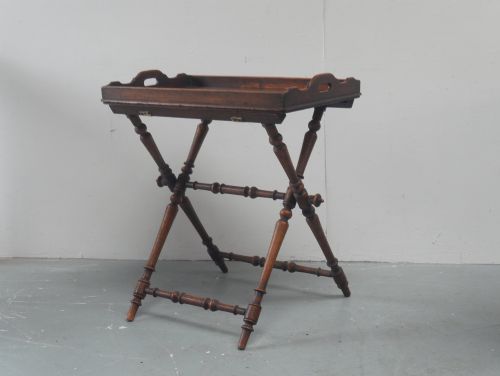
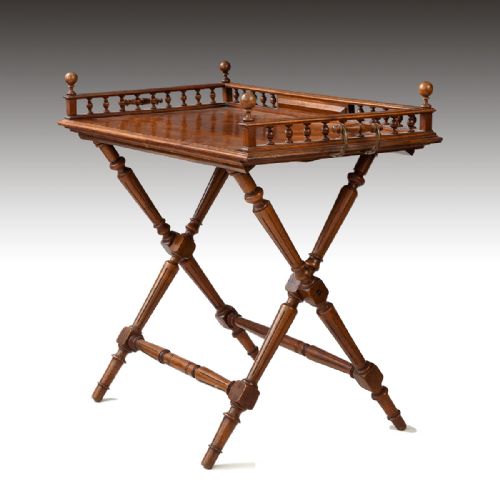
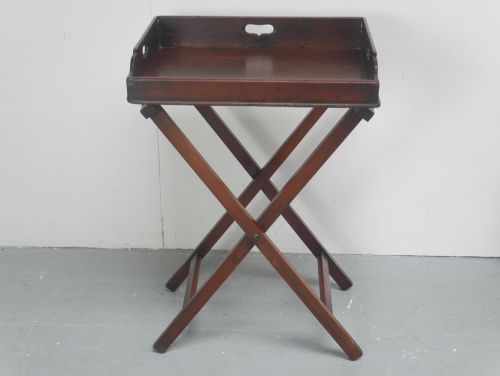
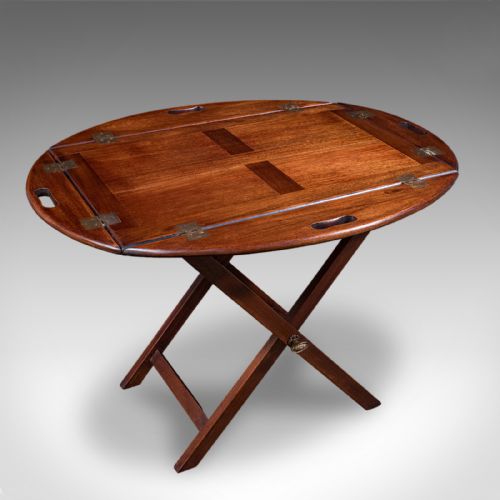
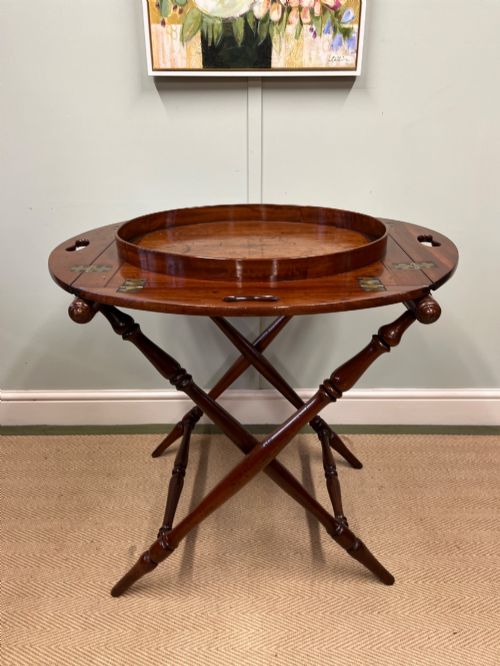
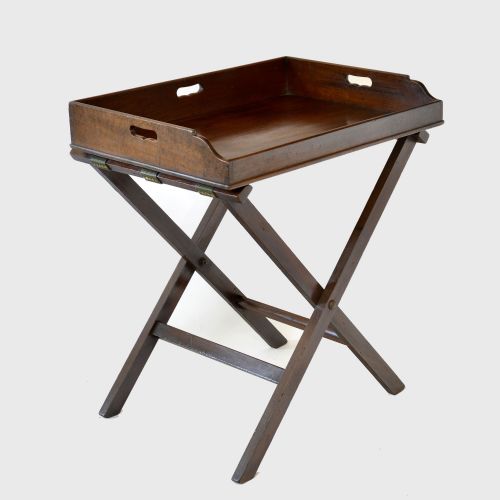
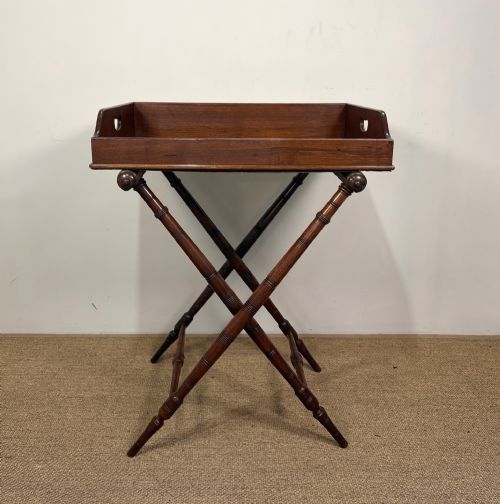
An x frame tray stand brings together a removable flat or drop-flap tray and a collapsible support structure designed for easy movement around the house. These pieces appear most frequently in mahogany, oak, and walnut, spanning periods from the eighteenth century through the Edwardian era. Collectors encounter both standalone trays and complete pairings of trays with their original folding bases.
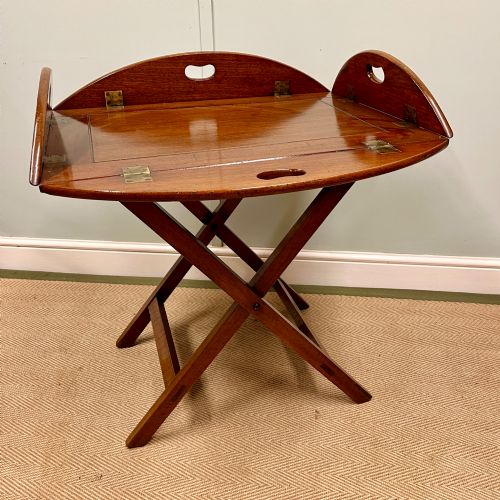
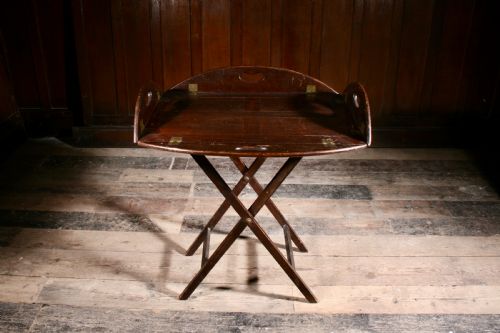
The form functions primarily as a serving table or occasional table, with variants including butler's trays, folding tray tables, and bedside tables. Makers from Georgian, Regency, Victorian, and Edwardian times constructed these items for flexible entertaining and daily domestic utility. The design relies on hinged or folding X-shaped legs that allow the entire assembly to fold flat when not in use.
Materials and construction
Craftsmen utilised timbers such as mahogany, oak, and walnut to build both the trays and the supporting stands. Joinery often incorporated folding X-frames secured with hinges or pivots, allowing the base to collapse neatly while maintaining stability when open. Raised edges, hand-cut carrying handles, and drop-flaps on the trays prevented serving items from slipping during transport.
Surface finishes ranged from polished hardwood grains to carved walnut details, complemented occasionally by brass hardware or cotton webbing. Cabinetmakers selected dense timbers to withstand the regular lifting and moving associated with serving duties. Original stands frequently match the timber and period of the tray resting upon them.
One recorded oak tray even carried a provenance from Bäckaskog Castle.
Assessing quality and authenticity
Quality rests upon the integrity of the timber selection, the crispness of any carved detailing, and the matching relationship between the tray and its stand. Finer examples display carefully chosen wood figures, solid dovetail or pegged joints, and original brass or iron folding mechanisms that operate smoothly. Pieces retaining their original matching stands hold greater historical consistency than later married pairs.
Proportion and execution distinguish standard utilitarian items from exceptional pieces. Superior examples exhibit balanced side handles, well-fitted hinges, and minimal warping in the expansive surface of the tray base. The presence of period characteristics, such as specific Georgian or Regency turning on the legs, indicates higher workshop standards.
William Burwash
The X Frame Tray Stand Glossary
- Butler's tray
- A portable wooden tray with hinged or fixed raised sides designed for carrying service items. These trays typically feature cut-out hand grips and rest upon folding bases.
- X-frame
- A structural support comprising two intersecting legs forming the shape of the letter X. This design allows furniture pieces to collapse flat for storage.
- Drop-flap
- A hinged section of a tabletop or tray rim that can be lowered or raised as needed. This feature expands the usable surface area during service.
- Occasional table
- A small, versatile table intended for light, adaptable use in various rooms rather than a fixed dining or desk purpose.
X Frame Tray Stand: Frequently Asked Questions
What is an x frame tray stand used for?
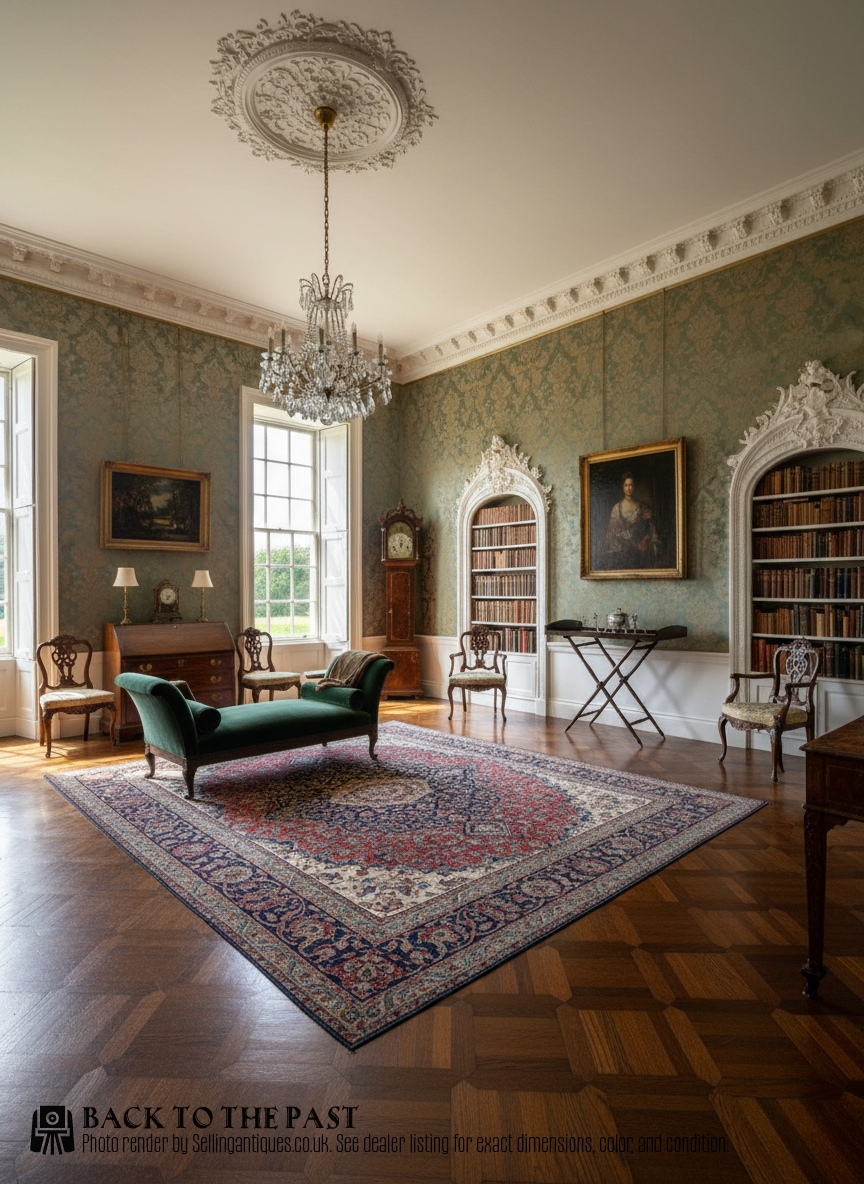
These stands serve as portable tables for drinks, food service, or general display around a room. The removable top lifts off easily while the base folds away.
Historically, servants used them to transport items from kitchens to living spaces before setting up the portable station. Modern homes utilise them as flexible side tables or decorative stands.
Are the tray and stand usually original to each other?
Many surviving pieces keep their original matching stands, though some trays and bases were paired together later. Examining the timber grain, wear patterns, and period characteristics helps determine if they belong together.
Matching woods and consistent patination across both components suggest a unified history from the same workshop and era.
How do I date an antique tray stand?
Dating relies on timber choices, such as eighteenth-century mahogany or later oak and walnut, alongside hardware styles and construction methods. Hand-cut joinery and period-specific leg turnings provide clear chronological clues.
Georgian and Regency examples tend to feature finer mahogany grains, while Victorian and Edwardian pieces often display heavier oak construction or carved walnut.
How do I care for a wood tray stand?
Keep the wood conditioned with appropriate furniture wax and avoid placing hot or wet items directly on the antique surface. Using coasters and protective mats preserves the polish.
Positioning the stand away from direct sunlight and sudden temperature shifts prevents the timber from warping or drying out over time.