




Regency Butler Tray
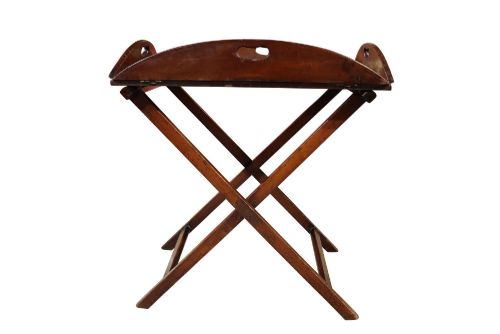
A regency butler tray brings portable Georgian utility and folding convenience to modern rooms as a serving piece or low table.
Regency Butler Tray
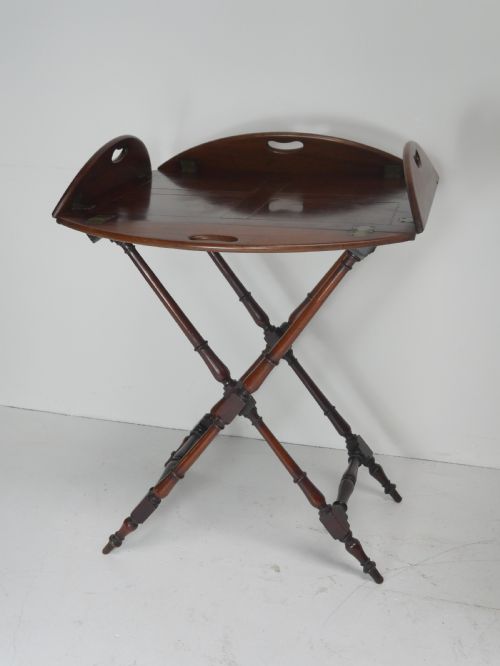
A regency butler tray is a portable serving surface designed to lift off its support for easy carrying before resting on a folding stand. The pieces seen span from the Georgian and Regency eras through later revivals into the twentieth century.
Mahogany remains the dominant timber, often paired with folding wooden stands that convert a tabletop into an occasional table or coffee table. Oval and bow-fronted variants appear alongside rectangular trays with hinged or solid galleries.
Later iterations from the Edwardian period and the nineteen-thirties demonstrate the enduring appeal of the form, utilising period styles like William IV and Regency Revival.
Materials and Construction
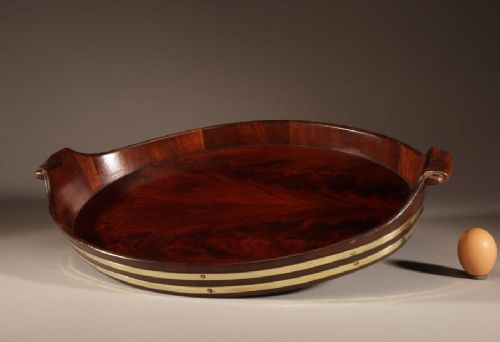
Cabinet makers built these trays using dense timbers such as mahogany and Cuban mahogany, frequently shaping galleries from solid wood or coopering staves together with brass accents. Grain selection determined the visual depth of the polished surface.
Papier-mache and lacquered timber provided an alternative ground for intricate Chinoiserie decoration, gold leaf, and mother of pearl inlay. Stands utilised hinged wooden joints designed to fold flat when the tray was removed.
Some trays feature subtle finger recesses underneath so servants could lift heavy silver platters without dropping the afternoon tea.
Distinctions in Quality
Quality rests in the crispness of the timber joinery, the weight and warmth of the mahogany, and the originality of the brass hinges and carrying handles. Superior examples exhibit finely figured grain and hand-carved galleries rather than plain sawn edges.
In papier-mache pieces, the depth and preservation of the original lacquer and gilt decoration dictate the standing of the tray. The relationship between the tray and its stand also matters, as period-matching pairs hold greater coherence than later adapted supports.
Clay·Gillows
The Regency Butler Tray Glossary
- Butler tray
- A portable serving platter with raised sides or hand-cut grips, usually paired with a folding X-frame stand.
- Coopered
- Constructed from curved vertical staves joined together like a barrel, often seen in oval trays with rounded perimeters.
- Gallery
- A raised wooden border running around the edge of a tray to prevent items from sliding off during transit.
- Papier-mache
- A composite material made from paper pulp mixed with glue and resin, pressed and lacquered to form a smooth rigid tray base.
- Coaching table
- A collapsible wooden stand designed to hold a removable tray, originally intended for travel or flexible entertaining.
Regency Butler Tray: Frequently Asked Questions
How were regency butler trays used?
These trays served functional roles in large houses for carrying silver, glassware, and courses from kitchens to dining rooms. Once delivered, the tray placed upon its folding stand functioned as a temporary side table.
In modern rooms, the same configuration suits domestic life as a low coffee table or a movable surface for drinks and display.
Are the stands original to the trays?
Many trays survive with their contemporary folding stands, particularly those dating from the height of the Regency period. Other examples retain stands from subsequent revival periods or later nineteenth-century dates.
Matching timber colour and wear patterns help identify whether a tray and its stand grew old together.
What is papier-mache made of?
Papier-mache items utilise layers of paper pulp or bonded sheets pressed into moulds and treated with heavy coats of dark lacquer. This process created a durable, smooth surface capable of holding detailed painted ornament.
Makers frequently enhanced these trays with gold leaf, Chinoiserie scenes, and mother of pearl highlights.
How do I distinguish a revival piece?
Revival pieces from the early twentieth century often display standardised machine-cut elements, lighter secondary timbers, and cleaner factory finishes than their Georgian predecessors. Examining the tool marks and the patina of the wood reveals the manufacturing era.
Stylistic cues also point to the nineteenth-century revival movements rather than the original Regency period.