





X Frame Dressing Stool
An x frame dressing stool brings architectural line and compact comfort to a bedroom, combining intersecting supports with upholstered seating.
X Frame Dressing Stool
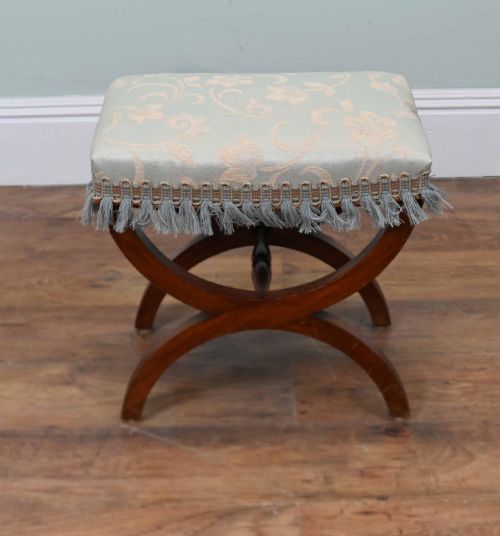
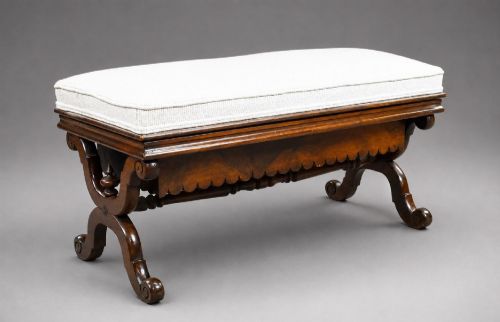
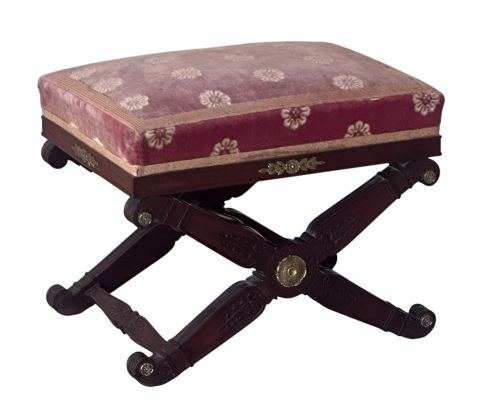
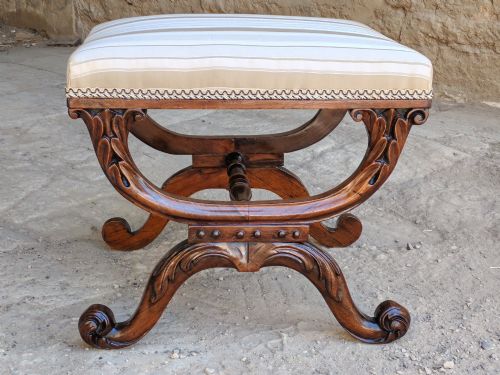
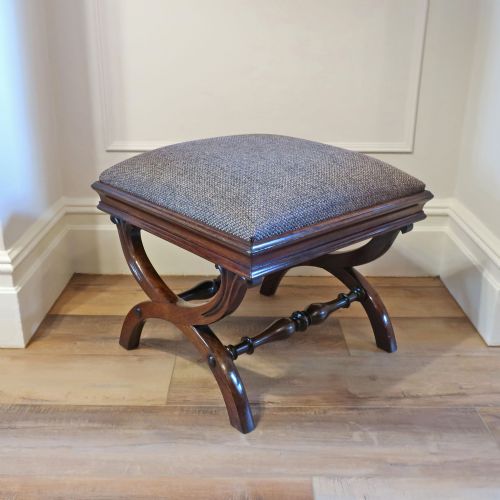
An x frame dressing stool is a low seating piece defined by its intersecting stretcher legs, commonly found in nineteenth century and Victorian formats. Buyers searching for an x frame dressing stool encounter mahogany, rosewood, and walnut frames paired with traditional textile upholstery. These small seats serve multi-functional roles as bedroom dressing seats, piano stools, and window benches.
The selections span from Regency and William IV iterations through to Edwardian interpretations. Mahogany and rosewood examples from the mid nineteenth century dominate the current offerings, alongside occasional Georgian and revival pieces. Most items function as independent footstools or low seats designed for close placement against dressing tables.
Materials and construction
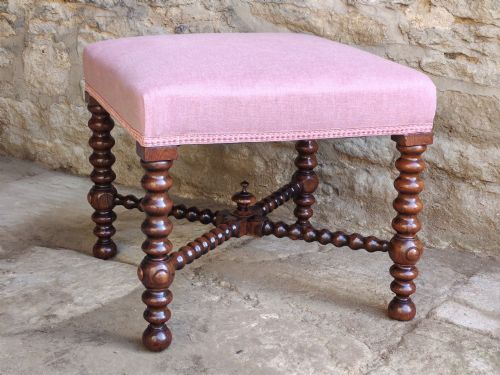
Cabinetmakers constructed the intersecting frames from dense timbers including mahogany, walnut, rosewood, and satinwood, occasionally utilising oak or giltwood. The characteristic X formation required precise joinery at the central pivot or crossed members to bear downward weight securely. Turnings, bobbin legs, spiral carving, and gesso enrichments frequently articulate the wooden supports.
Upholstery methods involved textile coverings such as velvet, damask, leather, and fabric secured over padding. Finer pieces incorporated detailed hand-carved motifs, such as scrollwork or animal forms, directly into the timber frame. Inlaid details and brass elements further distinguish specific workshop productions.
X Frame Dressing Stool Retail Price Guide 2026
Typical asking prices for x frame dressing stool among the pieces listed under this phrase on Sellingantiques today, from the lower quarter to the upper quarter. They describe what is for sale here now, not the wider market.
Distinctions in standard
The distinction between standard and superior pieces lies in the crispness of timber carving and the architectural proportion of the intersecting stretchers. Heavier, dense hardwoods and finely executed turning or hand-carving indicate a higher grade of craftsmanship. Selection of premium secondary timbers and tight frame joints elevate the structural integrity.
Surface finish and the preservation of original or sympathetic upholstery contribute significantly to desirability. Pieces retaining rich timber patination and rigorous joinery without wobble represent the upper tier of the range. Subtle details like carved dog heads or sophisticated inlay separate standard utility seats from exceptional examples.
Miles & Edwards
The X Frame Dressing Stool Glossary
- Curule stool
- An ancient Roman magistrate form of seat featuring crossed legs that inspired later neoclassical and revival seating. This design forms the direct architectural ancestor to the nineteenth century X frame.
- X frame
- A structural support system formed by two intersecting diagonal members resembling the letter X. It provides inherent load-bearing strength while maintaining a light visual profile.
- William IV
- A British design period spanning the 1830s characterised by robust classical revival forms and heavy mahogany utilisation. Pieces from this era often display bold proportions and confident turning.
- Regency
- A British stylistic era lasting from the early nineteenth century into the 1820s influenced by Greco-Roman archaeology. Furniture from this period frequently adopts curule lines and classical motifs.
- Giltwood
- Timber coated with a thin layer of gold leaf or gesso powder and size mixture. This finish provides a bright metallic sheen seen on formal neoclassical and revival salon pieces.
X Frame Dressing Stool: Frequently Asked Questions
What is an x frame dressing stool used for?
An x frame dressing stool provides compact seating specifically proportioned for placement at a bedroom dressing table or vanity. These versatile pieces also function as piano seats, window benches, or occasional footstools.
Their small footprint allows them to tuck neatly beneath furniture surfaces when not in use.
How do I identify a Victorian x frame stool?
Victorian examples typically feature dense timbers like mahogany or walnut paired with heavy turned stretchers or carved details. Stylistic markers often include spiral carving, bobbin legs, or upholstered tops covered in velvet or damask.
Construction methods from this mid nineteenth century era rely on sturdy joint work and seasoned hardwoods.
Are these stools comfortable for daily seating?
Most antique stools offer firm, upright support intended for short-duration tasks like grooming or playing the piano. The padded top provides adequate comfort without deep cushioning.
Their primary design focus balances structural elegance with practical utility.
Where should I place an x frame stool at home?
Position an x frame stool beside a dressing table, at the foot of a bed, or beneath a hallway window. The open cross-leg design prevents rooms from feeling visually crowded.
They work particularly well in narrow spaces where bulky chairs obstruct movement.