

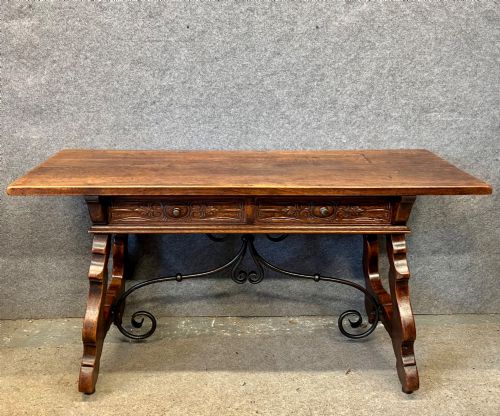


Wrought Iron Spanish Table
These wrought iron spanish table pieces bring solid timber and forged metal together in forms ranging from compact side tables to expansive refectory dining surfaces.
Wrought Iron Spanish Table
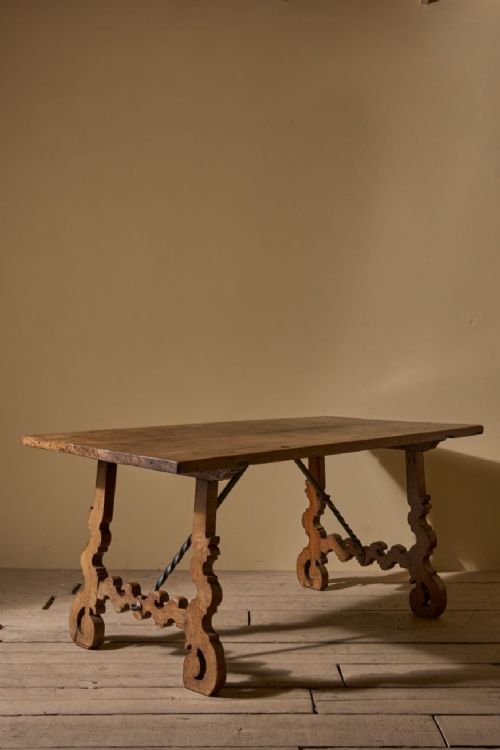
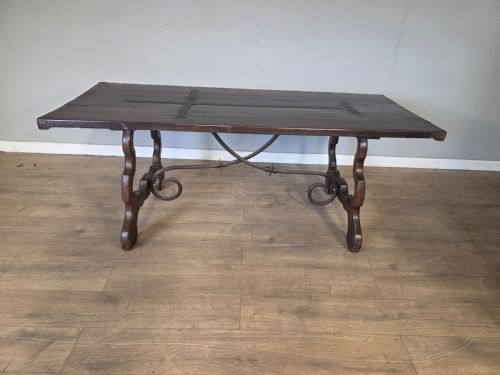
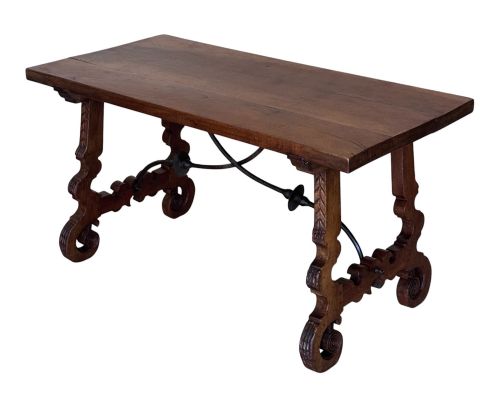
When you search for a wrought iron spanish table, you are looking at heavy timber surfaces supported by forged metal braces, trestles and stretchers. These pieces span from early seventeenth century originals to later twentieth century revivals and regional interpretations.
The selection here encompasses dining tables, coffee tables, side tables and centre tables. Walnut and oak form the primary top surfaces, matched with iron stretchers that provide structural rigidity and distinct architectural character.
Earlier examples show the wear of centuries of domestic use, while later revival pieces from the early twentieth century capture the same rustic proportion and heavy massing. Most items lean towards utility, whether intended for a kitchen, a hallway or a formal dining room.
How they were made
Makers built these tables using thick planks of walnut, oak, chestnut and fruitwood for the tops, joined to robust underframes. Wrought iron was heated and hand hammered into scrollwork, braces and stretcher bars that locked the wooden legs in place.
Joinery relied on pegged mortise and tenon construction, allowing the heavy timbers to expand and contract with seasonal changes in humidity. Iron components were secured with hand-forged rivets and bolts rather than modern machine fixings.
Listings feature centuries of design, spanning from the seventeenth century through to 1930s revival pieces.
What varies in quality
Quality depends heavily on the integrity of the timber and the honesty of the construction. Superior examples retain their original tops and uncompromised structural ironwork, whereas lesser pieces suffer from mismatched replacement planks or heavy modern interventions.
The finesse of the hand forged ironwork also sets pieces apart, with finer tables displaying tapered scrolls and balanced proportions rather than crude, heavy-handed bracing. Original surface patina, developed through generations of use, marks the distinction between a preserved antique and a tired reproduction.
The Wrought Iron Spanish Table Glossary
- Wrought iron
- Iron that has been heated and hammered into shape by hand, leaving slight surface irregularities that distinguish it from cast alternatives.
- Refectory table
- A long, narrow dining table traditionally built for communal eating in monastic or large domestic settings.
- Trestle table
- A table comprising two or more supports connected by a horizontal beam or stretcher, holding a loose or fixed top.
- Patina
- The surface sheen and colour acquired by wood and metal through decades of handling, light exposure and polishing.
- Mortise and tenon
- A traditional woodworking joint where a projecting tongue fits snugly into a corresponding cavity to lock timbers together.
Wrought Iron Spanish Table: Frequently Asked Questions
How do I spot an early wrought iron spanish table?
Early pieces show hand-cut joinery marks, genuine timber shrinkage and ironwork that bears the uneven hammer blows of a forge. Look for pegged joints and dry timber surfaces rather than modern screws and factory finishes.
Examine the underside of the top boards and the stretchers for signs of age and hand tooling. True period examples display natural wear patterns around the foot rails where boots rested over centuries.
Are these tables suitable for everyday dining?
These tables were built for heavy domestic use and remain exceptionally sturdy for modern dining rooms or kitchens. The solid timber tops handle daily wear well when treated with sensible care regarding moisture and heat.
Ensure you measure your dining space carefully, as these pieces often feature substantial overhangs and robust trestle bases that require adequate legroom around the perimeter.
What is the difference between original and revival pieces?
Original seventeenth and eighteenth century pieces carry the distinct wear, timber density and structural quirks of their period of origin. Twentieth century revival pieces replicate the earlier styles using similar traditional methods but lack the same depth of age.
Both categories offer robust construction, but originals command interest for their historical continuity, while revivals often provide practical proportions for contemporary homes.
How do I care for the timber and iron?
Maintain the wood with occasional applications of natural wax to nourish the grain and protect against dryness. Avoid liquid polishes that can build up a sticky film over older finishes.
Keep the iron components clean with a dry or lightly oiled cloth to prevent surface oxidation. Avoid placing these pieces in overly damp rooms or directly beside intense heat sources that could split the ancient timber.