
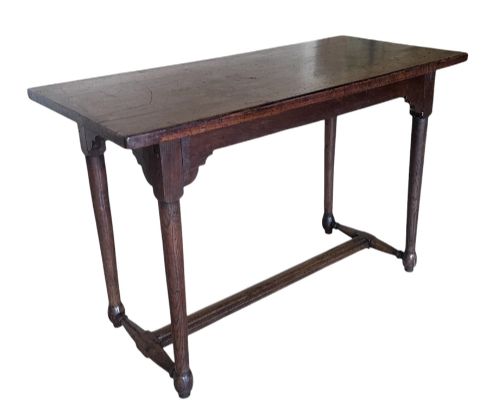

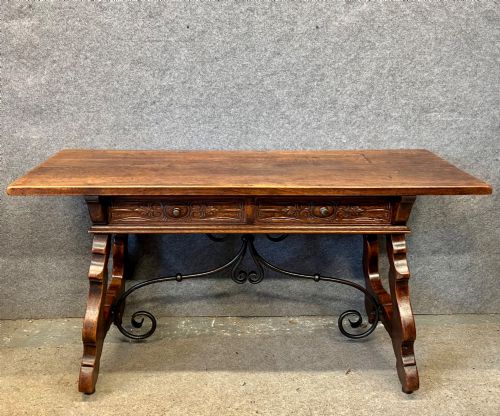


Spanish Carved Hall Table
A spanish carved hall table brings centuries of robust regional craftsmanship and rich timber into a hallway with effortless presence.
Spanish Carved Hall Table
A spanish carved hall table is a sturdy domestic surface designed for passage spaces and grand corridors alike. The examples seen on this page span several centuries, including the seventeenth century, the eighteenth century, and later revivals from the nineteenth and twentieth centuries.
Buyers will encounter console tables, side tables, and centre tables built for utility and display. These pieces appear in regional styles such as baroque, colonial, provincial, and revival.
Oak and walnut dominate the offerings, occasionally accompanied by fruitwood, painted finishes, and wrought iron elements. The forms range from rustic proportions to refined architectural console pieces.
Materials and construction
Solid timbers such as oak and walnut form the structural core of these pieces, selected for their density and durability. Joinery relies on traditional methods that allow heavy timbers to settle over centuries.
Carved wood detailing defines the decorative vocabulary, ornamenting aprons and supports. Wrought iron stretchers and hardware provide both structural bracing and visual contrast against the dark woods.
Current listings feature pieces spanning the seventeenth century through to nineteen twenty, constructed primarily in oak, walnut, and fruitwood.
Assessing quality
Quality rests in the integrity of the timber and the depth of the original patina developed over generations of use. Surfaces that retain their early finish demonstrate superior survival compared to later stripped examples.
The sophistication of the carving separates standard provincial pieces from high-status works. Details executed with crisp execution and harmonious proportions elevate the visual weight of the furniture.
Whytock and Reid
The Spanish Carved Hall Table Glossary
- Console table
- A table designed to stand against a wall, frequently secured to it for stability. These forms suit narrow entrance halls and corridors.
- Patina
- The surface sheen and colour acquired by wood through age, handling, and light exposure. Good original patina indicates minimal aggressive restoration.
- Wrought iron
- Iron beaten into shape by hand while hot, commonly utilised for structural stretchers on heavy timber tables. It provides robust bracing against lateral movement.
- Fruitwood
- Dense timber gathered from fruit-bearing trees, employed alongside walnut for contrasting tones and fine details. It offers a tight grain suitable for intricate shaping.
Spanish Carved Hall Table: Frequently Asked Questions
How do I style a spanish carved hall table?
Place the table against a prominent wall in an entrance hall or corridor where its proportions can command the space. Keep the surface styling restrained to let the carved timber and natural grain remain the visual focus.
Pair the piece with simple lighting or a complementary mirror above to anchor the arrangement. Avoid cluttering the top so the historical character of the wood stays prominent.
What is the difference between a console and a side table?
Console tables historically required wall attachment for complete stability, whereas side tables stand independently on four legs. Both function effectively in hallways, though consoles typically feature shallower depths to save floor space.
Examining the base and stretcher configuration reveals how the maker intended the piece to bear weight. This structural distinction helps determine placement in tight corridors.
How do I date a seventeenth century piece?
Seventeenth century tables display heavy solid walnut or oak construction with straightforward joinery and deep, dark patination. The absence of modern mechanical fasteners points directly to early hand-tool methods.
Tool marks left by adzes and hand saws confirm the early manufacturing date. Comparing the carving style to known baroque examples clarifies the timeline further.
Are these tables suitable for daily use?
These robust timber tables handle everyday placement in busy hallways with ease. Solid construction in oak and walnut ensures they remain functional surfaces for household objects.
Protect the historic wood surfaces from excessive moisture and direct heat sources to preserve the finish. Regular gentle dusting maintains the timber without stripping the accumulated patina.