
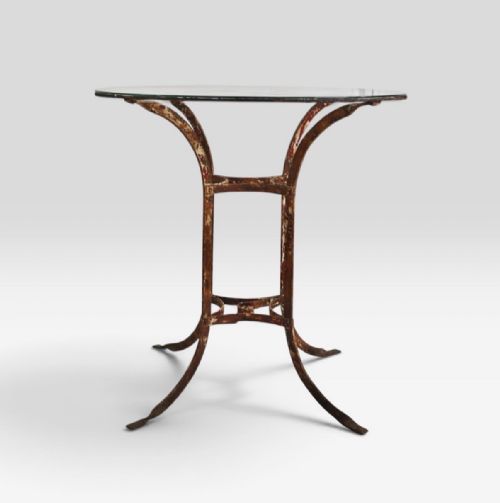


Wrought Iron Patio Table
A wrought iron patio table brings robust metalwork and timeless garden utility to an outdoor terrace, offering a sturdy surface that withstands the elements.
Wrought Iron Patio Table
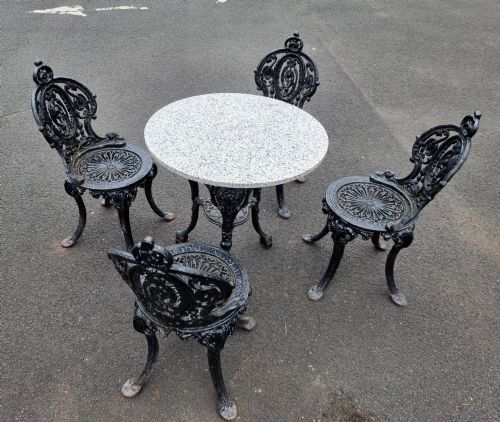
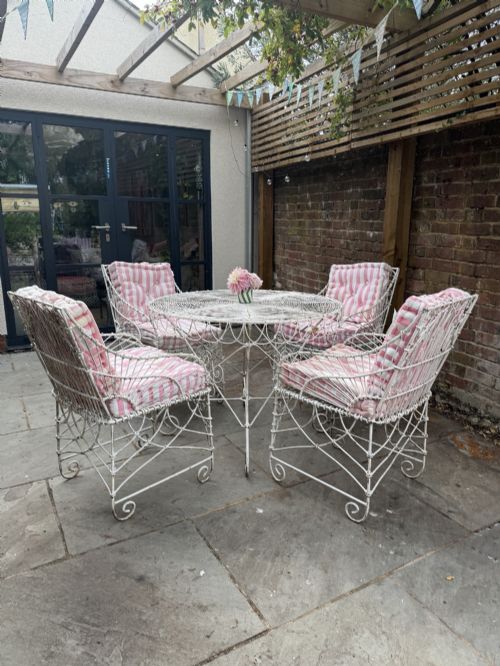
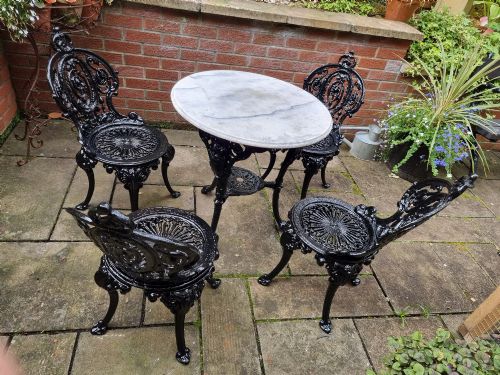
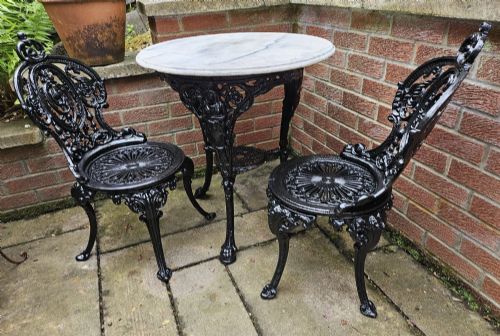
When searching for a wrought iron patio table, buyers encounter a selection of garden tables, bistro sets, and dining furniture originating from the Victorian era up through the 1930s. The listings span various regional aesthetics including French country, French industrial, and Mediterranean revival designs.
Most examples on this page comprise complete garden sets or bistro tables paired with matching chairs, often constructed for outdoor dining and café use. The forms range from simple folding garden tables to heavy cast iron sets and intricate wirework configurations.
How they were made
Makers utilised durable metals such as wrought iron, cast iron, and wirework to build frames capable of enduring outdoor conditions. Zinc, brass, and copper also appear as primary or accent materials on tabletops and decorative elements.
Surfaces were frequently completed with alternative materials including marble, granite, wood, fabric, and applied paint. These finishes combined structural metal foundations with functional or decorative tabletops suited for garden environments.
Tabletop surfaces incorporate diverse materials including marble, granite, zinc, wood, and painted finishes.
What varies in quality
The distinction between ordinary and superior pieces rests on the weight and complexity of the metalwork, alongside the integrity of integrated materials like marble or zinc tops. Heavier cast components and intricate wirework or strap work indicate higher levels of craftsmanship.
Design sophistication also sets examples apart, ranging from utilitarian folding frames to decorative Art Deco or Victorian styles with distinct regional character. The preservation of original painted surfaces and mixed metal accents further influences the overall character of each table.
The Wrought Iron Patio Table Glossary
- Wrought iron
- Tough, malleable iron that can be heated and hammered into decorative and structural shapes. This material forms the backbone of traditional outdoor furniture.
- Cast iron
- Iron poured into a mould to create rigid, highly detailed components. It provides substantial weight and ornate ornamentation for garden tables.
- Wirework
- Metal strands bent and joined to form open, latticed patterns. This technique appears on Victorian garden furniture for a lighter visual effect.
- Bistro set
- A small table accompanied by two or four chairs designed for compact outdoor spaces. These sets originate from traditional pavement cafes.
- Strapp work
- Flat metal strips riveted or joined in geometric patterns. It provides structural support and decorative detail on early twentieth-century tables.
Wrought Iron Patio Table: Frequently Asked Questions
How do I clean a metal garden table?
Wash the surface gently with mild soap and water using a soft brush to remove dirt and organic debris. Avoid harsh chemical cleaners that might strip historic finishes or protective coatings.
Dry the metal thoroughly after washing to prevent moisture accumulation. Applying a light coat of protective wax can help preserve painted or bare iron surfaces against outdoor weathering.
Can these tables stay outside all winter?
Historic metal furniture tolerates outdoor conditions well, but prolonged exposure to freezing moisture and heavy snow accelerates rust formation. Moving tables into a shed or shelter during harsh weather preserves the structural integrity.
If outdoor storage is necessary, cover the table securely with a breathable waterproof tarp. Elevating the feet slightly prevents moisture absorption from damp ground.
How do I identify a Victorian garden table?
Victorian pieces often feature heavy cast iron frames with naturalistic leaf motifs or intricate wirework construction. The materials reflect nineteenth-century industrial capabilities and established aesthetic preferences.
Examine the construction joints for hand-finishing marks and traditional fasteners typical of the period. Comparing the stylistic details against documented nineteenth-century designs helps confirm the era.
Are folding garden tables sturdy?
Early folding mechanisms utilise robust iron hinges and pivots designed for daily commercial use in cafes. These joints provide reliable stability when fully opened and locked into position.
Inspect the pivot points for secure pins and smooth movement without excessive wobble. Regular lubrication of the folding mechanisms ensures they continue to operate correctly.