
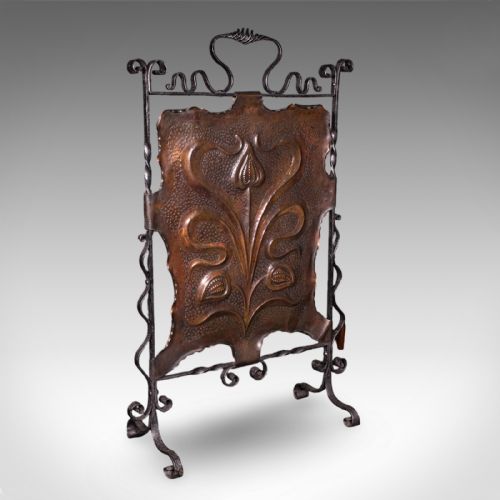


Wrought Iron Hearth Guard
These wrought iron hearth guard pieces protect living spaces from stray embers while defining the domestic fireplace through diverse period forms.
Wrought Iron Hearth Guard
A wrought iron hearth guard encompasses utilitarian nursery fenders, folding fireguards, and decorative fire screens designed to sit before an open fireplace. Buyers searching this phrase meet substantial metalwork originating from the nineteenth century onward, spanning Victorian, Edwardian, and later twentieth century periods.
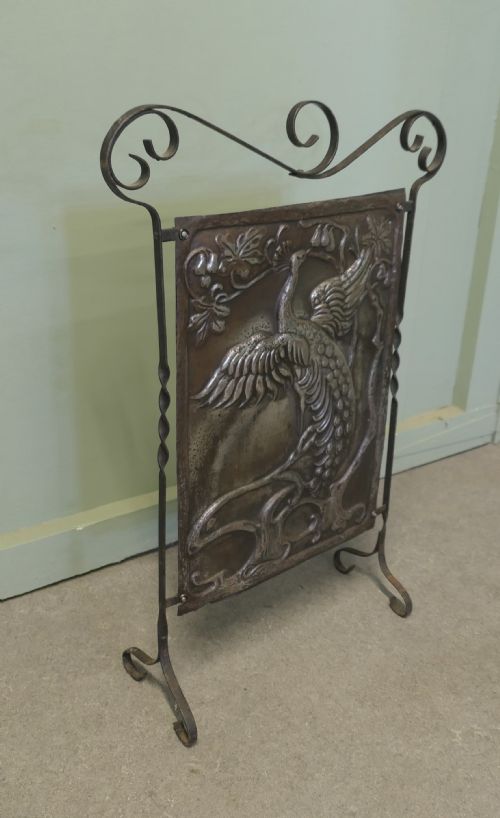
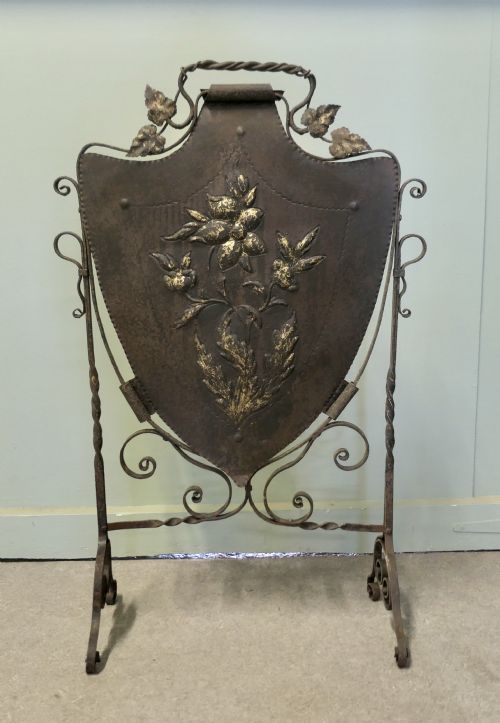
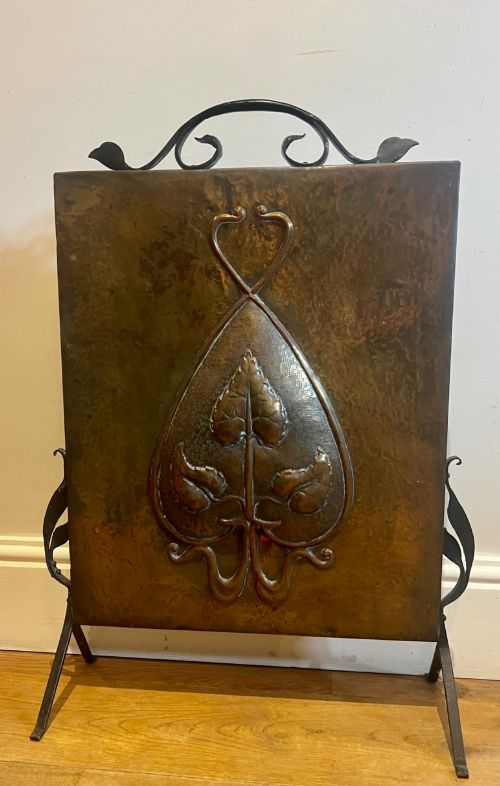
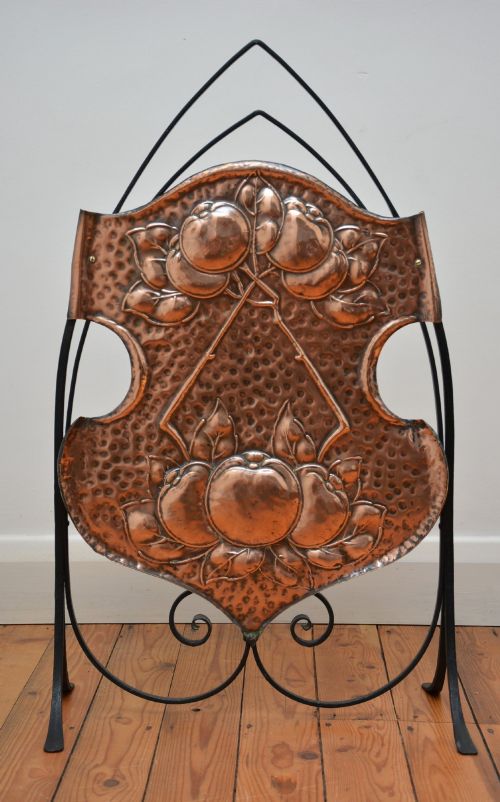
The selections available here favour functional domestic items constructed from iron, steel, and wire mesh, frequently paired with copper panels or leather upholstery. Forms range from low protective nursery boundaries with integrated rails to tall decorative screens displaying distinct Arts and Crafts and Gothic Revival motifs.
How they were made
Construction relies heavily on forged wrought iron and rigid steel frameworks, often shaped by hand into structural supports and decorative grilles. Blacksmiths and metalworkers utilised wire mesh to contain sparks safely while maintaining visibility of the hearth fire.
Many examples incorporate beaten copper panels, sometimes bearing Newlyn style motifs, or feature upholstered leather seats on club fenders. Artisans combined cast iron details and gilt highlights to elevate the finish of functional domestic safety barriers.
Some nineteenth-century nurseries required fenders with built-in rails, ensuring small children and damp laundry shared the hearth safely.
What varies in quality
Quality rests upon the weight of the metalwork and the integrity of the joins, separating heavy structural fenders from lighter domestic guards. Substantial gauge iron and thick steel provide durability, whereas simpler wire mesh designs prioritise straightforward utility.
The Wrought Iron Hearth Guard Glossary
- Wrought iron
- A tough, malleable form of iron that can be heated and forged into decorative and structural hearth furnishings. This material forms the primary substance for many protective hearth guards and fire screens.
- Nursery fender
- A low, protective barrier designed to encircle a hearth and keep children safely away from open flames. These pieces frequently include integrated rails or wire mesh construction.
- Club fender
- A substantial hearth fender featuring upholstered leather seats on either side of the fireplace opening. Nineteenth-century examples often combine steel frames with mahogany or oak elements.
- Fire screen
- A decorative panel placed before an unused fireplace to conceal the opening or deflect heat. They appear in copper, iron, and glass during various stylistic periods.
- Spark guard
- A fine wire mesh screen designed to catch flying embers from an open fire. These functional items prevent accidental burns to surrounding carpets and furnishings.
Wrought Iron Hearth Guard: Frequently Asked Questions
What is a wrought iron hearth guard used for?
These pieces serve a dual purpose in the domestic interior, providing essential safety by containing sparks and preventing contact with open flames. At the same time, they act as decorative focal points that frame the fireplace during colder months.
Heavier versions incorporate seating or drying rails, transforming the simple hearth barrier into functional furniture for the living room.
How do I identify a Victorian fire screen?
Victorian examples often display heavy ironwork, Gothic Revival motifs, or ornate Arts and Crafts styling. The integration of dark metals with hand-beaten copper panels points directly to nineteenth-century manufacturing traditions.
Examining the construction methods and material weights helps separate genuine nineteenth-century pieces from later reproductions.
What is the difference between a fire screen and a nursery fender?
A fire screen is typically a vertical panel designed to stand directly in front of the fireplace opening, either to block heat or conceal the hearth when the fire is unlit. They often feature decorative copper panels or folding frames.
A nursery fender creates a low protective perimeter around the entire hearth area, usually constructed from wire mesh and iron to keep children at a safe distance from the flames.
How do I care for antique iron hearth furniture?
Maintenance involves gentle cleaning to remove soot and dust without damaging the original metal finish or patination. Avoid harsh chemical cleaners that might strip the historical surface of wrought iron or copper components.
Keeping the metal dry prevents corrosion, while occasional light waxing can help preserve unpainted steel and iron surfaces.