
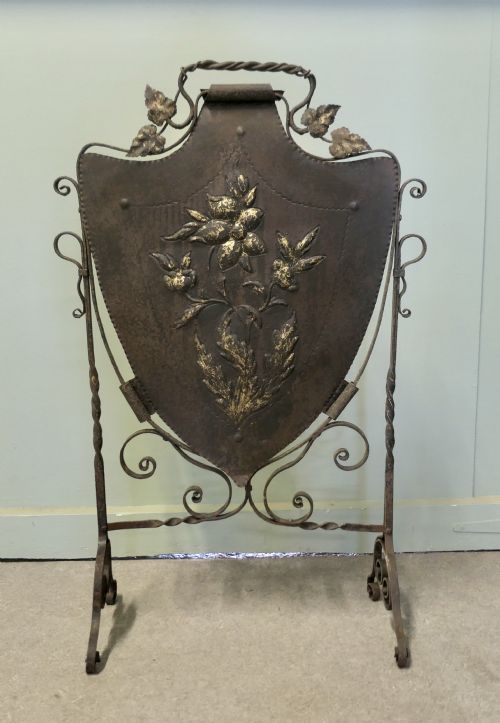
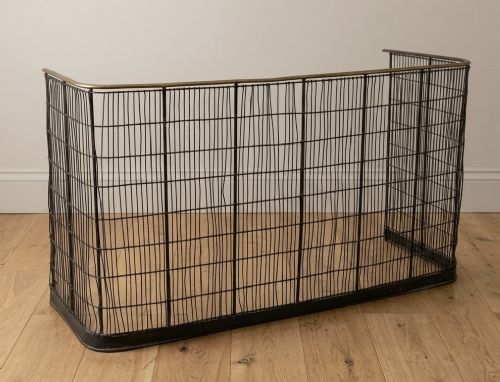
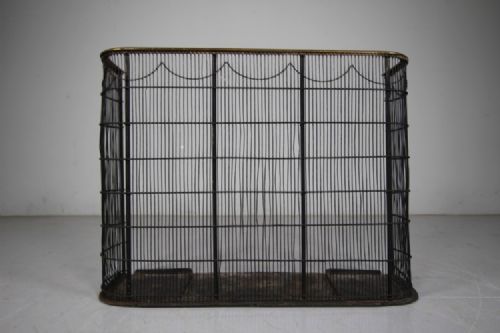


Black Iron Fire Screen
These black iron fire screen pieces keep your room safe from stray embers while anchoring a hearth with honest metalwork.
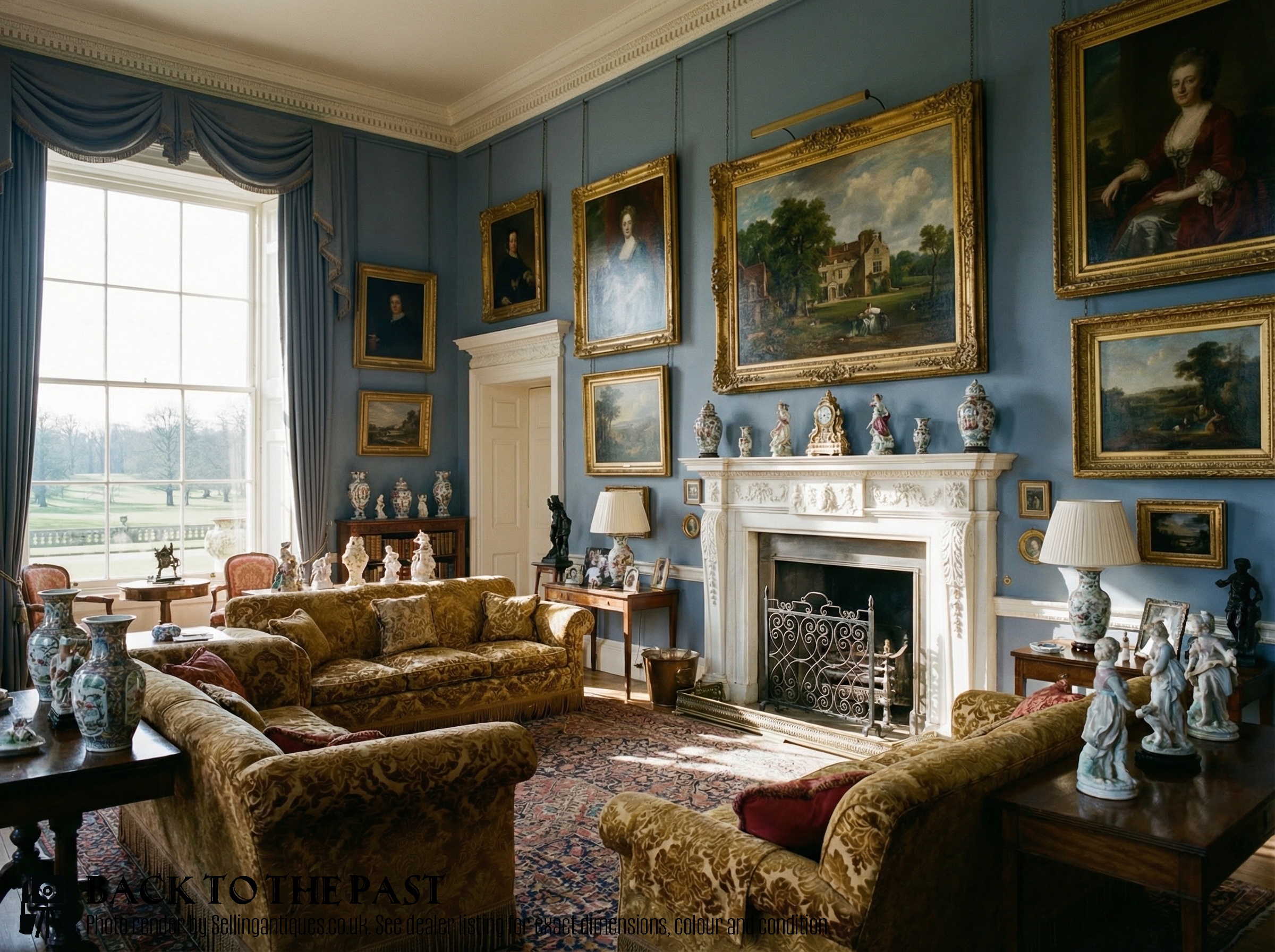
Black Iron Fire Screen
A black iron fire screen sits before an open hearth to catch sparks and shield the room. When you search for a black iron fire screen, you are looking at heavy metal frames designed for daily duty by the fireplace.
The versions you meet on this page span the nineteenth and early twentieth centuries. They range from simple wire mesh guards to robust Gothic shields and folding Arts and Crafts frames.
Many examples combine sturdy iron with brass top rails or mesh panels. These pieces reflect the practical needs of English country houses and Victorian parlours.
How they were made
Black iron fire screen pieces rely on wrought iron, cast iron, and steel mesh. Smiths shaped the main frames by hand, hammering and joining the heavy metal to withstand intense hearth heat.
Fine wire mesh and brass components appear frequently alongside the black iron structure. These materials allowed makers to create protective guards that remained transparent enough to let the firelight through.
Black Iron Fire Screen Retail Price Guide 2026
Typical asking prices for black iron fire screen among the pieces listed under this phrase on Sellingantiques today, from the lower quarter to the upper quarter. They describe what is for sale here now, not the wider market.
Some nursery fenders doubled as clothes dryers, featuring built-in rails where damp socks toasted safely away from the flames.
What varies in quality
The weight of the metal and the integrity of the joinery set the better examples apart. A heavier wrought iron frame holds its shape against knocks and heat far better than lighter wire versions.
Design ambition also divides the standard pieces from the superior ones. Elaborate Gothic revival details, careful hand-forging, and well-fitted brass rails show a higher level of workshop skill.
The Black Iron Fire Screen Glossary
- Wrought iron
- Iron that has been heated and hammered into shape by a smith. This material forms the durable skeletons of many traditional fireplace guards.
- Spark guard
- A fine mesh screen designed to catch flying embers from an open fire. These panels protect the surrounding floorboards from burning.
- Nursery fender
- A protective barrier that surrounds the hearth to keep children and pets at a safe distance. They often incorporate high rails and mesh panels.
- Gothic Revival
- An architectural and decorative style drawing on medieval forms. Pieces in this style often feature pointed arches and heavy geometric ironwork.
Black Iron Fire Screen: Frequently Asked Questions
What is a black iron fire screen used for?
A black iron fire screen stands in front of an open fireplace to contain sparks and flying embers. It protects carpets and furniture from accidental burns while the fire is lit.
These screens also serve as a physical barrier in busy rooms, preventing children and pets from getting too close to the hot grate.
How do I clean my fire screen?
Dust the iron frame regularly with a dry cloth to prevent soot accumulation. Avoid harsh chemical cleaners that can strip the dark finish from the metal.
If rust appears, rub the affected area gently with fine wire wool and apply a light coat of protective grate polish or oil.
Are these screens safe for modern fires?
Most antique iron screens handle modern open fires very well because they were built for heavy coal and wood hearths. The mesh and heavy frames block stray sparks effectively.
Check the stability of the feet and the condition of the mesh before use to ensure the screen stands firmly.
How do I date an iron fire screen?
Examine the construction methods and stylistic cues to determine the age of the piece. Hand-forged wrought iron and Gothic revival motifs often point towards the nineteenth century.
Simpler wire mesh designs with lighter frames frequently date from the Edwardian period or the nineteen-twenties.