
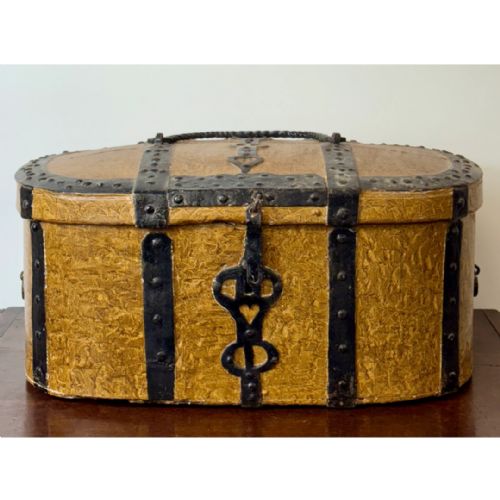
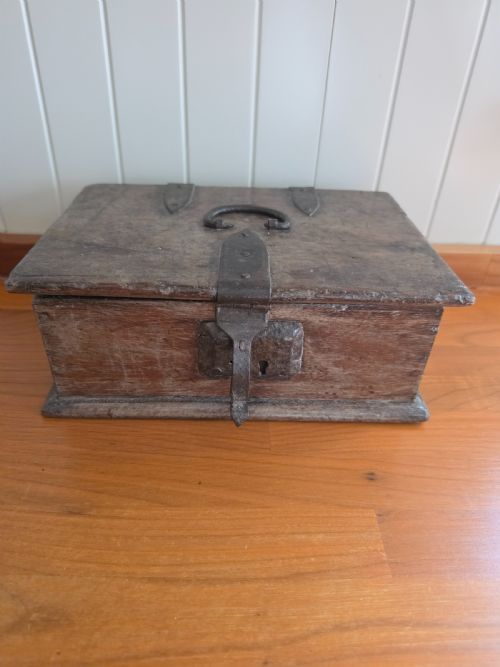
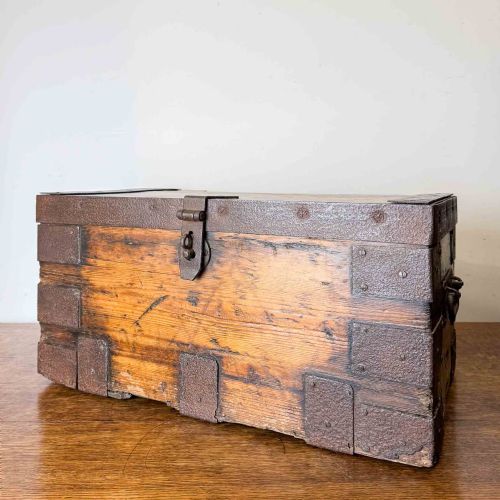


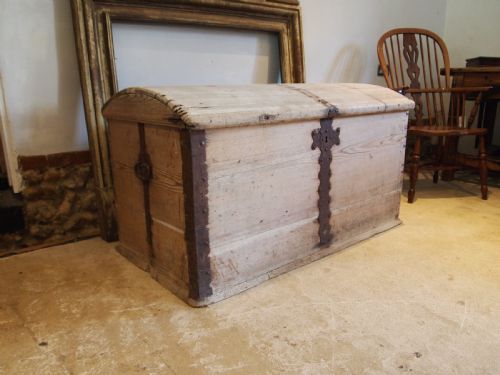


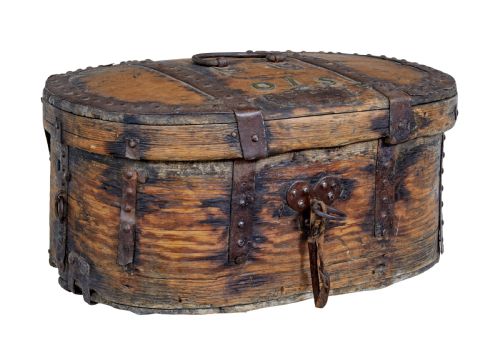


Wrought Iron Bound Chest
A wrought iron bound chest is a sturdy timber storage piece reinforced with metal straps, built to secure valuables through centuries of hard use.
Wrought Iron Bound Chest
A wrought iron bound chest serves as a robust container constructed from timber and secured with heavy metal bands. Buyers searching this phrase encounter trunks, coffers, strongboxes and marriage chests originating from various regions.
The pieces on this page span from the sixteenth century through to the early twentieth century. Examples range from Scandinavian folk art boxes to French cannonball boxes and Georgian pine chests.
Formations vary from small travelling strongboxes to large substantial trunks. Many incorporate side lifting handles, working locks and intricate iron hasps for added security.
How they were made
Construction relies heavily on durable timbers such as oak, pine, elm and wood, joined to withstand heavy travel and storage. Blacksmiths shaped wrought iron and metal straps to reinforce corners, lids and seams.
Surface treatments involve natural wood finishes alongside painted applications. Swedish examples frequently feature hand painted decoration, including labyrinth motifs on period pine.
Hardware execution includes functional side carrying hoops, working locks and structural hasps riveted directly into the wooden carcass.
Materials recorded across these items include wrought iron, pine, oak, elm, brass, and traditional paint finishes.
What varies in quality
Quality rests upon the integrity of the original timber frame and the complexity of the ironwork. Thickly forged bands and early forged rivets indicate superior craftsmanship compared to later, simpler metal reinforcement.
The preservation of original surface decoration distinguishes standard pieces from exceptional ones. Intact period paintwork, such as traditional Swedish folk art or baroque detailing, elevates the stature of a chest.
Proportion and scale also define the hierarchy, where substantial proportions combined with working original locks and functional carrying hoops represent the highest tier of surviving examples.
The Wrought Iron Bound Chest Glossary
- Wrought iron
- Iron that has been heated and worked with tools by a blacksmith. This material provides the tough, pliable straps that encircle and protect the wooden chests.
- Strongbox
- A heavily secured container designed for carrying valuables safely. These smaller boxes often feature complex locking mechanisms and thick metal bands.
- Armada chest
- A type of German or Flemish strongbox disguised as a regular chest, fitted with an elaborate internal locking mechanism beneath the lid. They were widely exported and used across Europe.
- Marriage chest
- A celebratory storage piece commissioned to mark a wedding, often inscribed or decorated with specific dates and motifs. Pine and oak were frequent choices for these regional commissions.
- Folk art
- Utilitarian objects decorated within regional traditions by self-taught makers. Scandinavian examples on this page often display painted geometric patterns and traditional palettes.
Wrought Iron Bound Chest: Frequently Asked Questions
What were wrought iron bound chests used for?
These chests primarily served to secure money, documents, and valuable possessions during transport or at home. Their robust construction deterred theft and protected contents from the elements.
Smaller strongboxes travelled easily on coaches or ships, while larger coffers remained stationary in homes, storing textiles, household silver, and records.
How do I identify the period of a chest?
Dating relies on examining the timber species, construction joints, and the style of the ironwork. Sixteenth and seventeenth century pieces often feature heavy oak frames and hand-forged straps.
Later eighteenth and nineteenth century examples frequently utilise pine or elm, sometimes incorporating painted folk art decoration or simpler machine-assisted metal components.
Are the locks on these antique chests still working?
Some chests retain their original working locks and keys, while others operate via internal mechanisms that require specialist attention. Many surviving pieces function purely through external hasps and padlocks.
Buyers should inspect specific listings to determine the current operational status of any included lock or latch.
How should I care for a painted wooden chest?
Maintain painted and polished surfaces by keeping the chest away from direct sunlight and dramatic humidity shifts. Gentle dusting with a dry cloth preserves delicate historic paintwork.
Avoid using modern chemical cleaners or polishes that might degrade aged wood finishes and historic iron components.