



Woven Wool Torba Bag
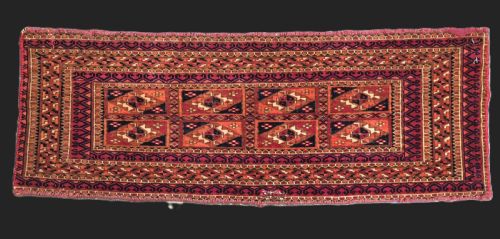
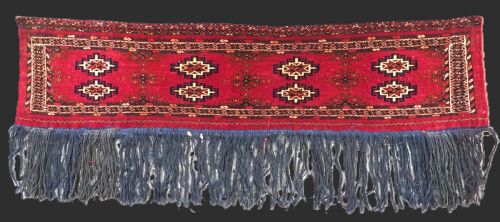
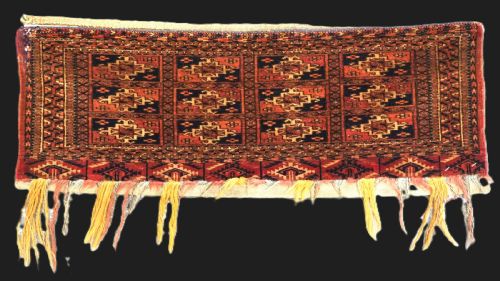
When you examine a woven wool torba bag, you hold a piece of Central Asian tribal weaving created for nomad household storage.
Woven Wool Torba Bag
A woven wool torba bag represents a traditional tent storage piece produced by Turkmen and other Central Asian nomadic tribes during the nineteenth and early twentieth centuries. These rectangular utility sacks hung inside felt tents to hold household goods, bedding or personal possessions.
The selections available here include complete pieces retaining their plain weave backs and tassels alongside bag faces separated from their reverse panels. Makers from various tribal groups such as the Tekke, Yomut, Saryk and Ersari applied distinct regional layouts to their practical household items.
Forms span from standard storage sacks to smaller compartments, vanity bags and horse gear attachments like the at torba ilgich. Dating across the inventory stretches from the early nineteenth century through to the interwar decades of the twentieth.
Materials and construction methods
Weavers constructed these utilitarian objects using hand-spun wool for the primary pile and foundation structures, occasionally incorporating cotton and silk highlights. Natural dyes provided the palette for the intricate geometric patterns woven across the face.
Production techniques involved dense pile knotting for bag fronts paired with plain weave or flatweave structures for backs, sometimes augmented by embroidery. Artisans finished edges with durable overcast stitching and secured contents using integrated hanging loops or cords.
Current listings span periods from 1850 through 1920, featuring wool, cotton, silk, and natural dyes across Turkmen and Central Asian tribal traditions.
Differentiating quality across examples
Distinctions in quality emerge through the precision of the drawing and the density of the knotting within the primary field. Finer weaves allow for sharper definition in tribal guls and secondary motifs.
The richness and stability of the natural dye palette contribute significantly to an example's visual impact. Completeness also elevates an item, particularly when original plain weave backs, flatweave panels and tassels remain attached.
The Woven Wool Torba Bag Glossary
- Torba
- A small Turkmen storage bag traditionally used inside nomadic tents for personal possessions. These rectangular sacks feature structured pile faces and were hung against tent lattice walls.
- Gul
- A primary medallion or repeating octagonal design motif used by Central Asian tribal weavers. Each tribal group utilised specific forms to identify their lineage and origin.
- Mafrash
- A larger rectangular storage container or bedding bag associated with nomadic household furnishings. They share construction techniques with smaller utility sacks.
- Kepsé
- A specific diamond-shaped lattice or gul pattern frequently employed by Yomut weavers. The design creates an interconnected grid across the face of the weaving.
- Aina gul
- A mirror-related motif incorporated into tribal designs, often featuring a stepped or multi-sided diamond configuration. The pattern holds symbolic protective meanings within nomadic textile traditions.
Woven Wool Torba Bag: Frequently Asked Questions
What was a torba used for?
Nomadic families utilised these bags for storing small household goods, garments, and personal effects inside portable dwellings. Their compact proportions made them practical for organising daily items within limited tent space.
Hung against lattice walls by integrated loops, the bags kept contents elevated from damp ground surfaces. Certain specialised variants served as vanity containers or horse gear attachments.
How do you identify different tribal groups?
Tribal attribution relies on the specific structural guls, secondary ornaments, and overall colour palettes employed in the weave. Tekke, Yomut, Saryk and Ersari weavers each utilised distinct geometric vocabulary that marks their origin.
Structure and border configurations provide further clues for distinguishing between regional workshops and nomadic confederations. Examining the knotting style and wool preparation aids in confirming these attributions.
Are most torbas complete with backs?
Many surviving examples exist solely as bag faces because the sturdy pile sections endured heavy use while soft flatweave backs wore away. Complete specimens retaining their original plain weave reverse panels and closure systems are less common.
When a backing survives alongside the face, it often includes original hanging loops and side cords. These complete pieces offer a fuller record of the original utility item.
How should I care for a textile bag?
Preserving these wool pieces requires gentle handling, low-intensity lighting, and protection from sustained moisture or insect activity. Regular inspection helps prevent fibre stress from hanging tension.
Professional textile conservation methods should be consulted for cleaning or structural stabilisation. Keeping the weave in a stable environment ensures the natural dyes and fibres remain protected over time.