
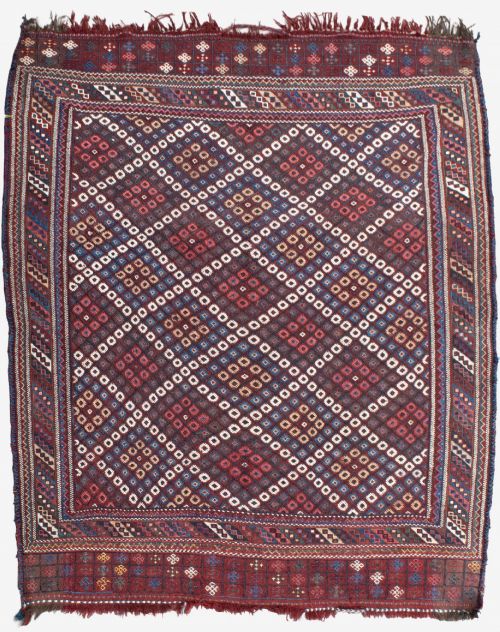


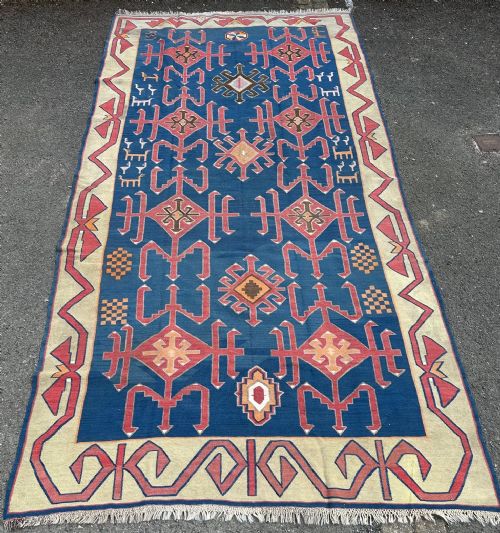


Woven Wool Kilim
Woven wool kilim textiles offer striking tribal patterns and durable flat-weave construction that bring historic character and texture to any interior.
Woven Wool Kilim
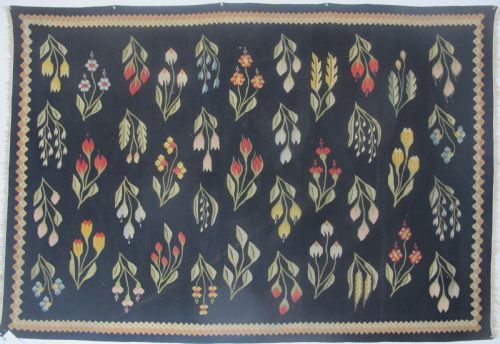
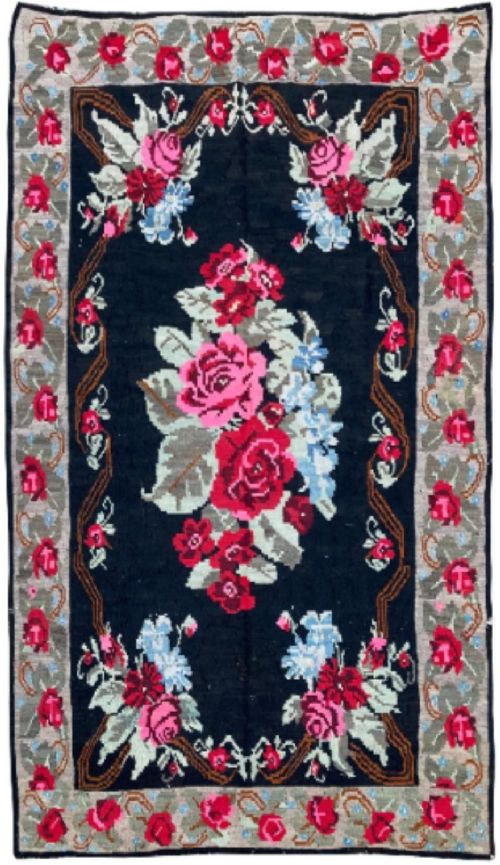
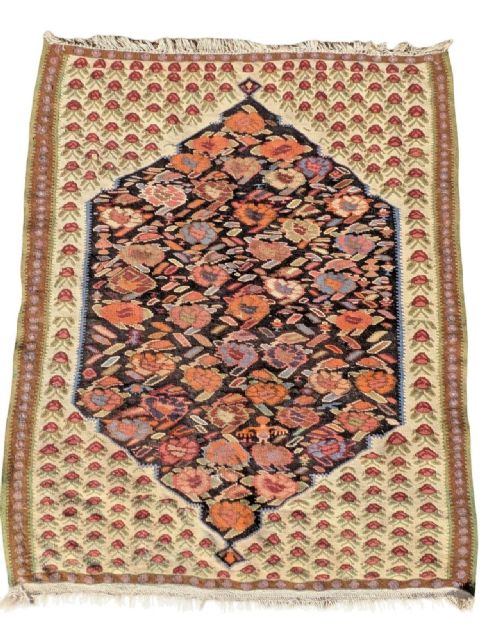
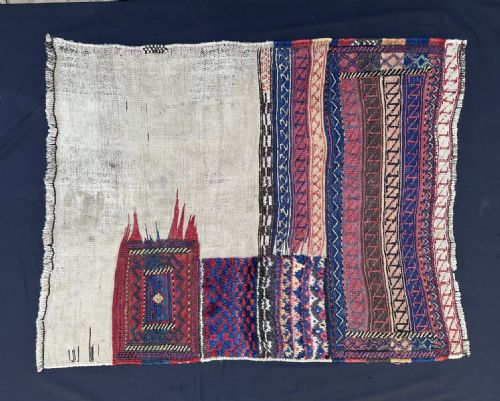
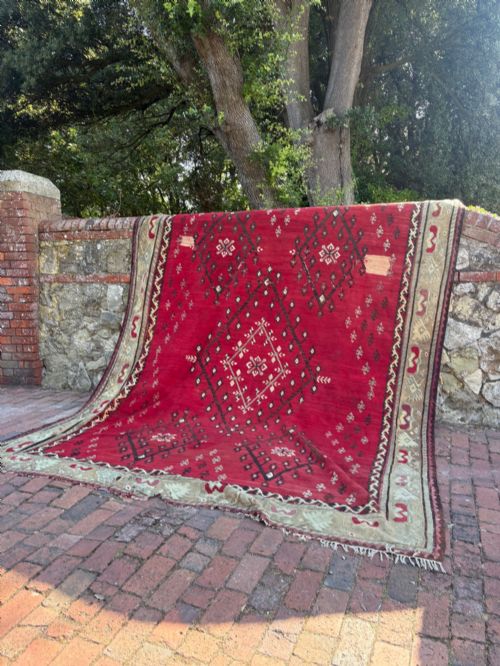
Woven wool kilim pieces encompass an array of flat-weave rugs, storage bags, and dining cloths produced by nomadic and tribal groups across Persia, Anatolia, the Caucasus, and Central Asia. A buyer investigating this selection encounters nineteenth and early twentieth-century examples including Kurdish bread sofreh, Caucasian runners, and Anatolian flatweave carpets.
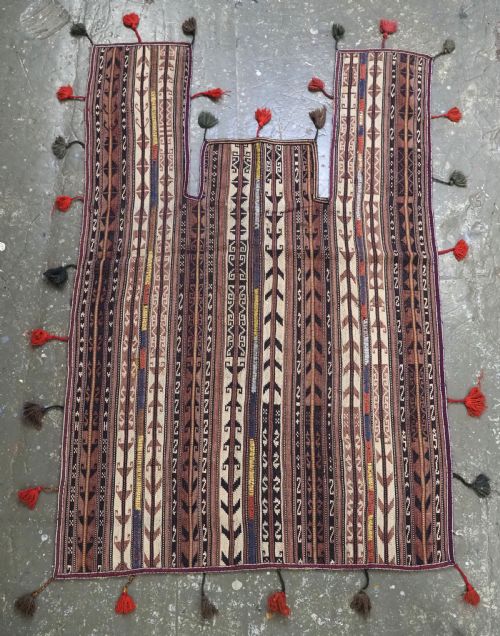
The practical function of these textiles originally included grain storage, horse blankets, floor coverings, and eating cloths for tribal communities. Today, they serve as decorative floor coverings and wall hangings that introduce geometric motifs and rich regional palettes into homes.
Materials and Construction
Makers utilised hand-spun wool combined with cotton and occasional goat hair to create tight, durable warp and weft foundations. Natural dyes imparted deep earthy tones that mellow gracefully over decades of light and use.
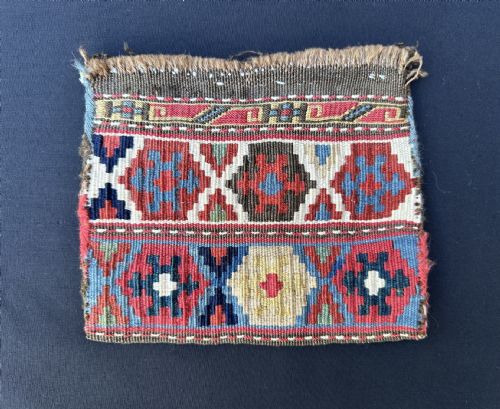
The slit-weave technique creates distinct geometric patterns by leaving small gaps where colour areas meet, which maintains structural integrity while allowing intricate graphic designs.
Listings feature nineteen-century and early twentieth-century wool, cotton, and natural dye textiles originating from Persian, Anatolian, Caucasian, and Central Asian tribes.
Quality Variations
The fineness of the weave and the tightness of the knotting or interlacing distinguish standard utility pieces from exceptional tribal commissions. Denser foundations allow sharper graphic definition and greater durability under foot.
The integrity of the original natural dyes and the preservation of authentic tribal borders influence the visual cohesion of the textile. Pieces retaining clear regional iconography and minimal structural alteration command greater respect among collectors.
The Woven Wool Kilim Glossary
- Sofreh
- A woven spread or cloth traditionally used for dining, kneading dough, or wrapping bread within nomadic households. These items frequently display banded geometric designs.
- Mafrash
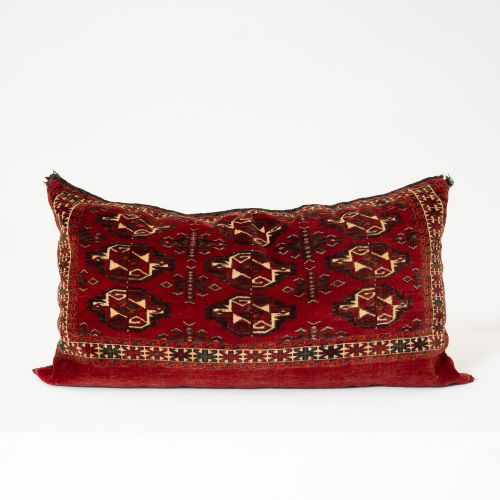
- A large rectangular storage bag or travel container produced in pairs by nomadic tribes for bedding and household possessions. They are often disassembled and sold as flat panels.
- Slit-weave
- A flat-weaving technique where the weft threads are returned at the boundary of a colour block rather than interlocked, producing small vertical slits along pattern edges.
- Warp
- The stationary vertical threads stretched upon a loom that form the structural foundation of the textile. Weft threads are passed horizontally through them.
- Weft
- The horizontal threads passed back and forth through the warp to create the visible pattern and colour fields of the flatweave.
Woven Wool Kilim: Frequently Asked Questions
What is a kilim?
A kilim is a flat-woven textile made without a pile, produced by nomadic and village weavers across the Middle East, Caucasus, and Central Asia.
Unlike knotted carpets, kilims are constructed by tightly interweaving warp and weft threads to create smooth, reversible surfaces with sharp geometric designs.
How were sofreh used?
Sofreh were utilitarian cloths spread on the ground to serve meals, prepare bread dough, or wrap household provisions.
Nomadic families relied on these durable wool and cotton textiles daily, which accounts for the practical wear visible on many surviving examples.
How do I care for antique kilims?
Protect antique kilims from direct sunlight and heavy foot traffic by placing them in low-impact areas or mounting them securely on walls.
Regular gentle vacuuming without a beater bar removes dust, while professional textile cleaning maintains the integrity of hand-spun wool and natural dyes.
How do I identify regional styles?
Regional styles are identified through specific structural characteristics, colour palettes, and geometric motif repertoires unique to tribes such as the Qashqai, Shahsevan, or Yomut.
Caucasian pieces often favour sharp primary colours and linear medallions, whereas Anatolian and Persian tribal weaving frequently incorporates earthy tones and complex border bands.