

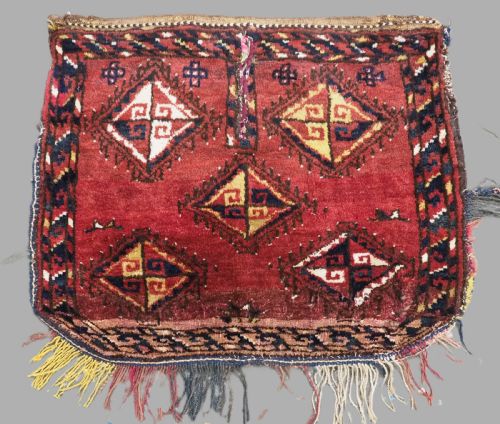


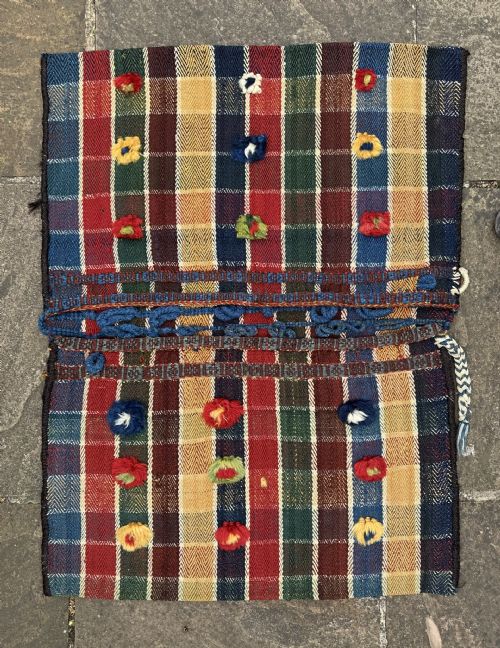


Woven Rug Saddle Bag
When you search for a woven rug saddle bag, you encounter the portable art of nomadic and tribal weavers designed for transport on animals.
Woven Rug Saddle Bag
A woven rug saddle bag represents functional tribal textiles created by nomadic and village communities across Persia, the Caucasus, and Central Asia during the nineteenth and early twentieth centuries. These items served practical purposes for transporting goods on horses, camels, and donkeys before being adapted into decorative interior objects.
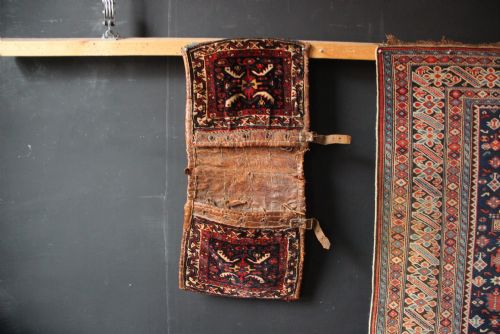
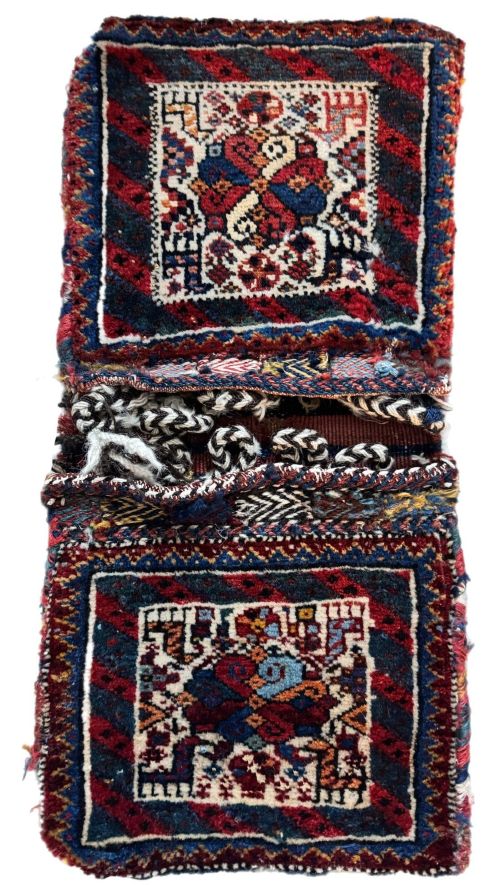
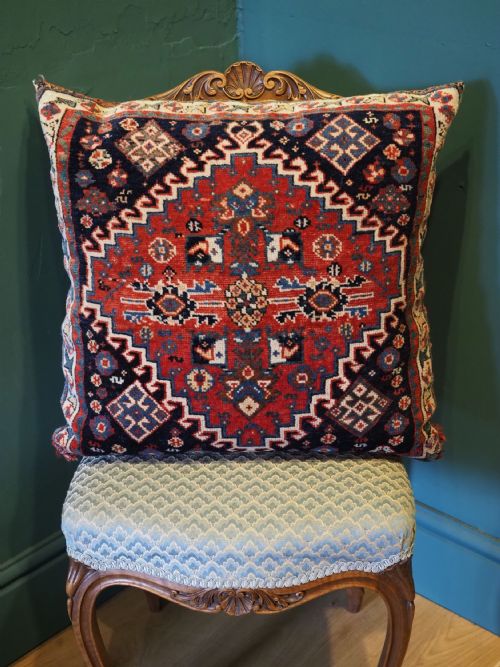
The inventory on this page consists primarily of individual saddle bag faces, complete pairs, and whole khorjin sets originating from specific tribal groups such as the Qashqai, Shahsavan, Afshar, Khamseh, and Luri. Pieces range from miniature bag dimensions up to larger formats, occasionally retaining their original plain weave backs or leather and metal elements.
How they were made
Weavers constructed these textiles using hand-spun wool for the pile and foundation, supplemented by cotton and sometimes metal thread for specific structural or decorative effects. Natural dyes provided the deep colour palette characteristic of these nomadic pieces, interacting with the wool to produce varied tones across the surface.
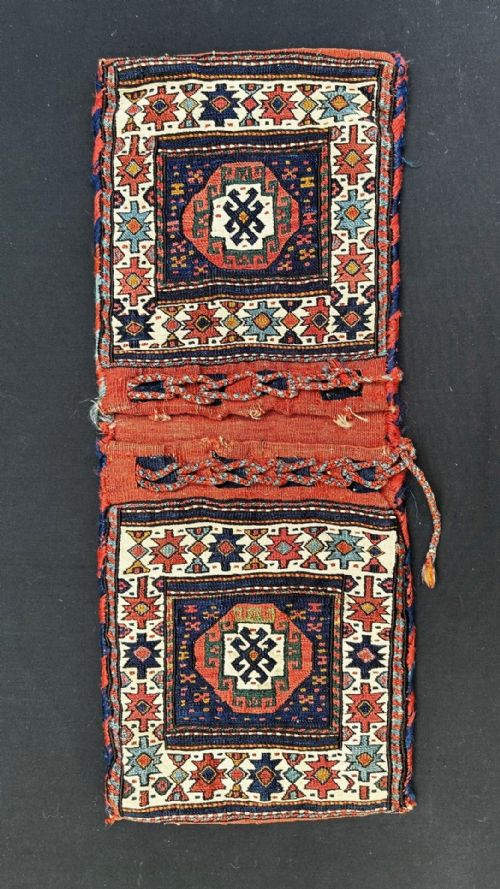
Techniques varied between piled knotting and flatwoven soumak or kilim structures, depending on the specific tribal tradition and the intended function of the bag face or complete khorjin. Sturdy plain weave backs and leather attachments provided durability for daily use in transit.
Woven Rug Saddle Bag Retail Price Guide 2026
Typical asking prices for woven rug saddle bag among the pieces listed under this phrase on Sellingantiques today, from the lower quarter to the upper quarter. They describe what is for sale here now, not the wider market.
The selection includes Shahsavan soumak techniques, Afshar boteh designs, and complete Turkmen chuval faces alongside standard Khorjin saddle bags.
What varies in quality
Quality in a woven rug saddle bag depends upon the fineness of the knotting or weave structure and the integrity of the natural dyes used in the design. Pieces with dense foundations and luminous, well-preserved wool display greater visual depth and structural resilience.
The degree of completeness also influences the object, as surviving pairs, intact khorjin sets with original backs, and well-maintained tribal formats retain more of their historical utility and context than single detached bag faces.
The Woven Rug Saddle Bag Glossary
- Khorjin
- The traditional Persian term for a double-sided saddle bag used by nomads for transport. These items were slung over pack animals and often separated over time into individual bag faces.
- Soumak
- A flatweaving technique that wraps supplementary weft threads over the warp to create a textured surface resembling embroidery. This method appears frequently on Caucasian and Shahsavan pieces.
- Chuval
- A large tent bag produced by Turkmen tribes for domestic storage inside yurts rather than animal transport. They feature repeated gul motifs across the face.
- Gul
- A medallion-like primary design motif repeated across Turkmen and other Central Asian tribal textiles. Each tribal group utilised distinct variations of this geometric form.
- Boteh
- A stylized almond or paisley motif representing a floral shoot or cypress tree, commonly found in Afshar and Persian tribal weaving. It forms the primary pattern on numerous bag faces.
- Kilim
- A tapestry-woven flat textile produced without a pile, utilised for lightweight bags and structural backs. These pieces rely on warp and weft interlock construction.
Woven Rug Saddle Bag: Frequently Asked Questions
How were saddle bags used originally?
Nomadic groups utilised these bags in pairs slung across the backs of horses, camels, or donkeys during seasonal migrations. They stored personal belongings, provisions, and household goods.
When families settled at camp, the bags served as storage containers inside tents or houses, protecting contents from dust and moisture.
How do I identify different tribal styles?
Tribal attribution relies on specific design vocabulary, colour combinations, and weaving structures unique to each group. Qashqai and Khamseh pieces from south-west Persia often feature distinct geometric medallions and animal motifs.
Shahsavan pieces from the Caucasus and north-west Persia frequently display soumak technique and crisp geometric patterns, while Afshar bags showcase bold boteh designs and lustrous wool.
How should I care for an antique bag face?
Care involves gentle vacuuming without a rotating brush to remove dust from the wool pile and flatweave areas. Keeping the textile away from direct sunlight prevents natural dye fading.
For pieces used as small floor rugs, a quality underlay provides grip and reduces friction against the backing fibres.