




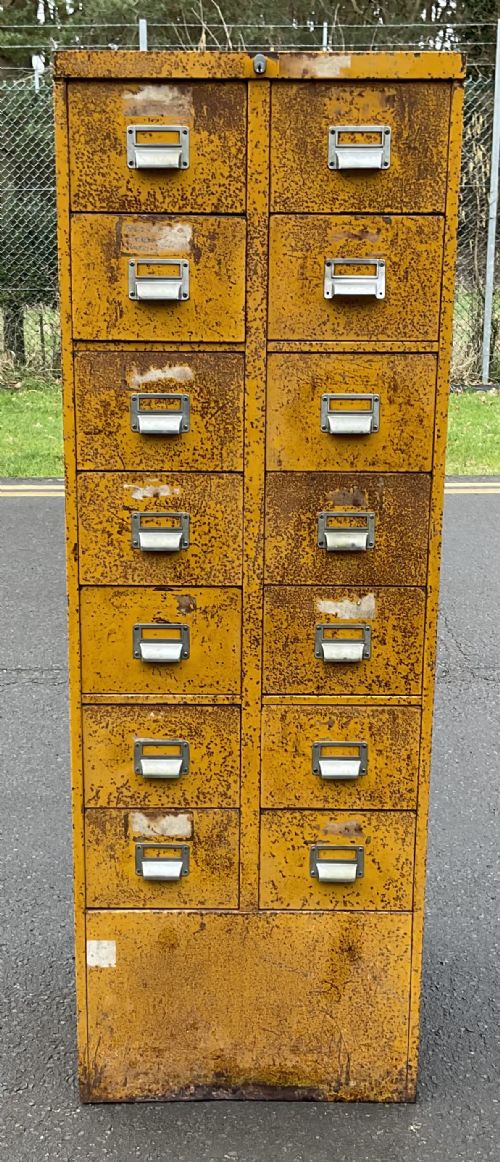
Workshop Storage Cabinet
A workshop storage cabinet is a utilitarian piece built for trade and sorting, prized today for bringing heavy-duty storage into domestic rooms.
Workshop Storage Cabinet
A workshop storage cabinet encompasses heavy storage forms built for trade and utility, including banks of drawers, pigeon holes, filing cabinets, and tool chests. When seeking a workshop storage cabinet, buyers encounter robust pieces designed for functional use in industrial, commercial, and trade environments rather than formal display.
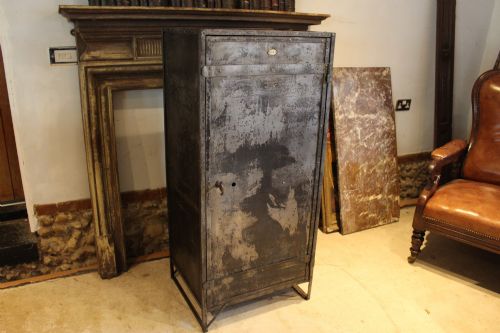
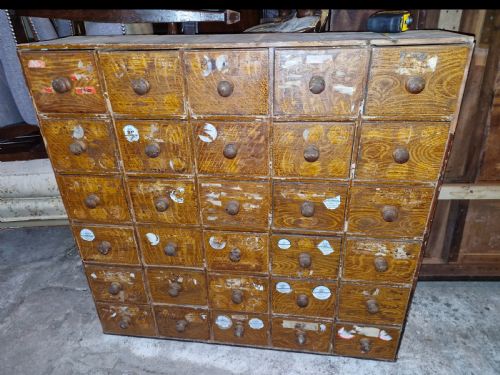
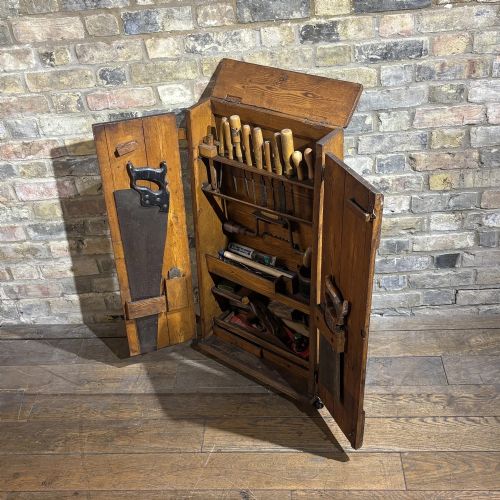
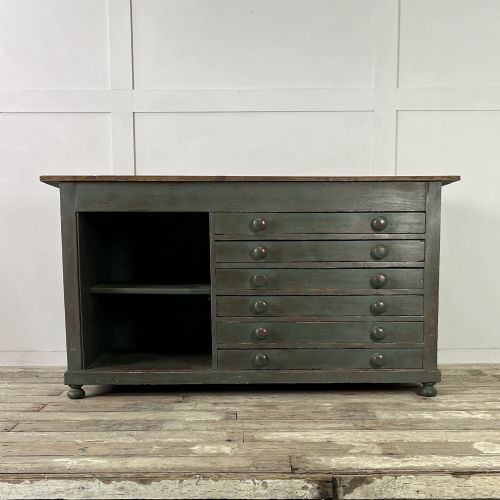
The items span several periods, from late Victorian pieces and nineteenth-century examples through to the 1920s and 1930s. Forms range from multi-drawer banks and spice cabinets to portable tool chests and tall metal cupboards.
Origins vary between British and French workshops, encompassing industrial, rustic country, and Victorian utility styles. Buyers are most likely to meet wooden banks of drawers in pine and pitch pine, alongside metal and iron cabinets from industrial contexts.
How they were made
Construction relies heavily on timber such as pine, pitch pine, elm, and mahogany, chosen for strength and daily endurance in working environments. Drawers and carcasses are built to withstand heavy handling, frequently featuring practical locking mechanisms or simple pull handles.
Metal elements incorporate iron, steel, brass, and wrought iron, often seen on handles, hinges, and reinforcement brackets. Surviving examples frequently retain remnants of original paint from their working life in factories, shops, and tradesmen's shops.
Several cabinets retain traces of old paint and drawer labels from past contents like watch parts and spices.
What varies in quality
Quality rests in the integrity of the original construction and the degree of intact working hardware, such as brass pulls and locking mechanisms. Denser hardwoods like mahogany or elm indicate a higher tier of making compared to utility softwood carcases.
The character of the surface finish also distinguishes pieces, where untouched original paint remnants or honest patination from industrial use command greater interest. Proportion and scale further separate standard utility boxes from large multi-drawer banks tailored for specific trades.
The Workshop Storage Cabinet Glossary
- Bank of drawers
- A multi-drawer unit designed for sorting small parts, tools, or documents in a trade setting. These often feature numerous shallow drawers stacked vertically.
- Pigeon holes
- Open-fronted shelving compartments arranged in a grid for sorting letters, papers, or components. They are typically housed within a wooden cabinet frame.
- Pitch pine
- A resinous, durable softwood utilised in nineteenth-century furniture and trade cabinetry for its strength. It resists wear and bears a distinct grain pattern.
- Tool cabinet
- A specialised box or cupboard fitted with brackets, trays, or drawers to secure hand tools. Examples often include locking mechanisms to protect valuable contents.
- Wrought iron
- Iron beaten into shape by hand, utilised for structural brackets, hinges, and hardware on industrial furniture. It provides high tensile strength and resilience.
Workshop Storage Cabinet: Frequently Asked Questions
What is a workshop storage cabinet?
A workshop storage cabinet is a functional piece originally designed for factories, tradesmen, and commercial premises to hold tools, hardware, or documents. These units prioritize utility and durability over decorative refinement.
Today, they serve as practical storage furniture in domestic settings, offering substantial compartmentalisation through drawers, pigeon holes, and cupboards.
How do I date a workshop storage cabinet?
Dating relies on examining the materials, construction methods, and hardware present on the piece. Nineteenth-century examples often feature solid pine or elm with hand-cut joints, while 1920s and 1930s pieces may incorporate steel or industrial metal elements.
Paint remnants and fastening types also provide chronological clues, distinguishing Victorian utility pieces from later twentieth-century industrial designs.
Where were these cabinets used?
These cabinets were utilised in workshops, factories, ironmongers, watchmakers' benches, and artist studios. Each trade required specific storage configurations, from shallow drawer banks for small parts to deep chests for heavy tools.
French and British workshops produced diverse variants tailored to the specific demands of engineers, joiners, and merchants.
Are these cabinets made of metal or wood?
They are made from both materials, depending on the specific trade and period of manufacture. Wooden examples frequently utilise pine, pitch pine, mahogany, and elm.
Metal variants incorporate iron, steel, and wrought iron, sometimes featuring original painted finishes acquired during their industrial working life.