


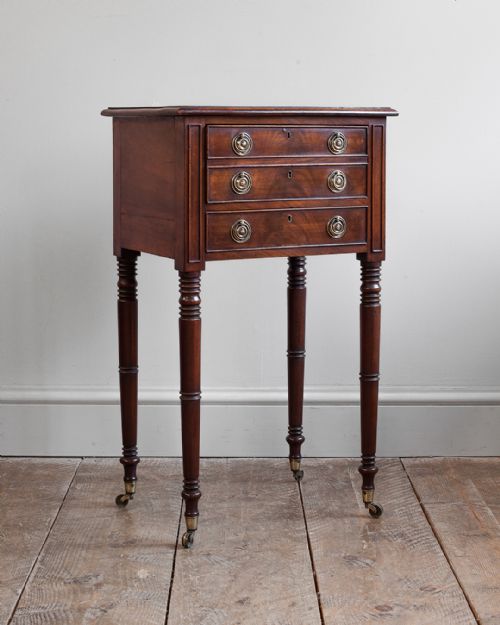
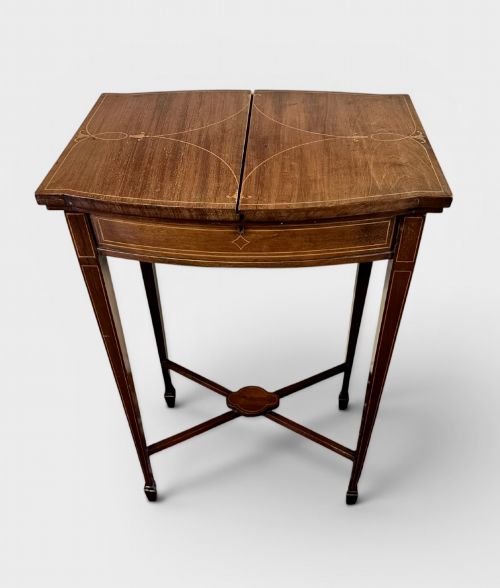
Work Box Side Table
A work box side table combines a compact display surface with a concealed compartment for needlework, writing, and small pursuits.
Work Box Side Table
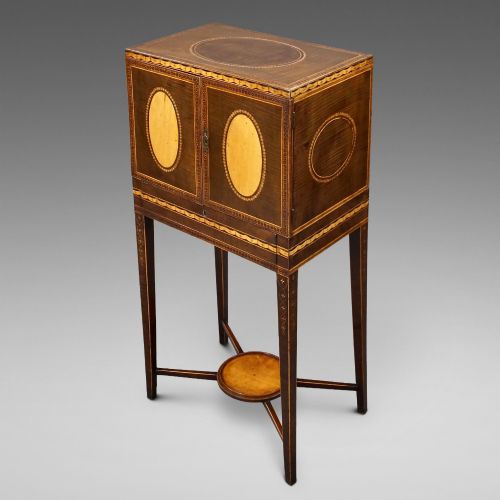
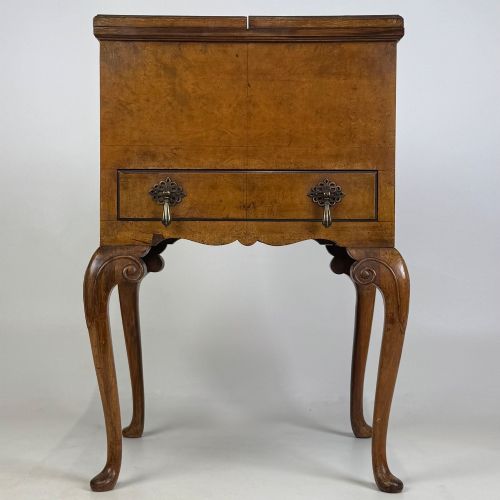
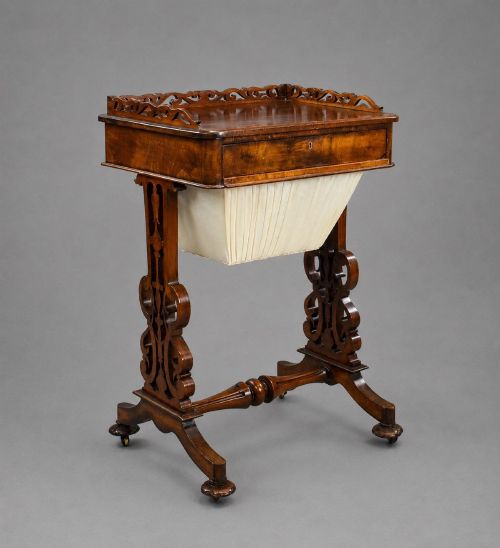
A work box side table stands as a dual-purpose piece intended for domestic parlours and sitting rooms, merging the surface utility of an occasional table with the storage of a sewing chest. The primary forms seen here span from the 18th century through the Edwardian period, with Victorian and Regency examples appearing most frequently.
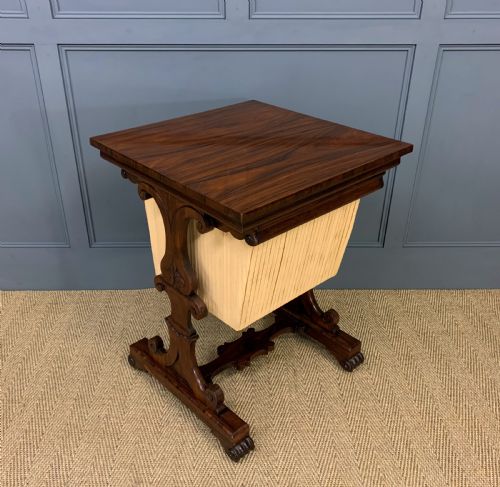
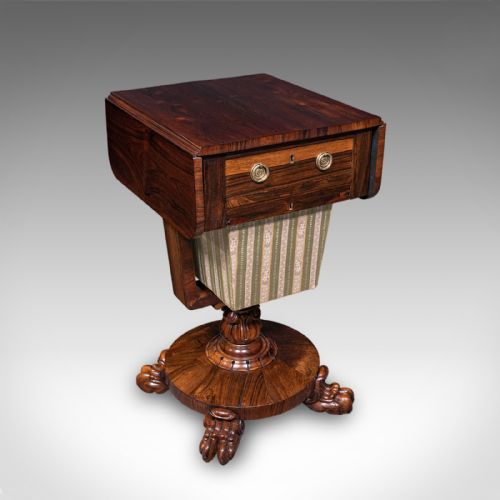
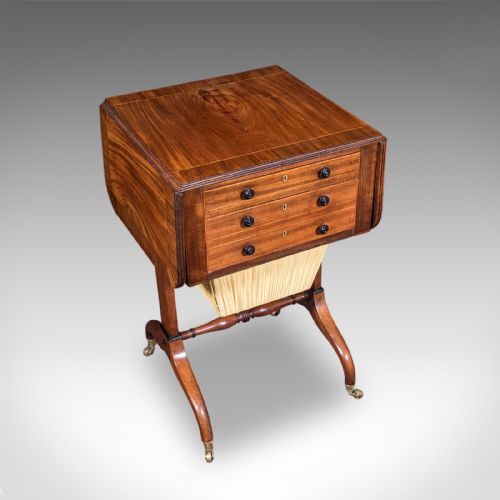
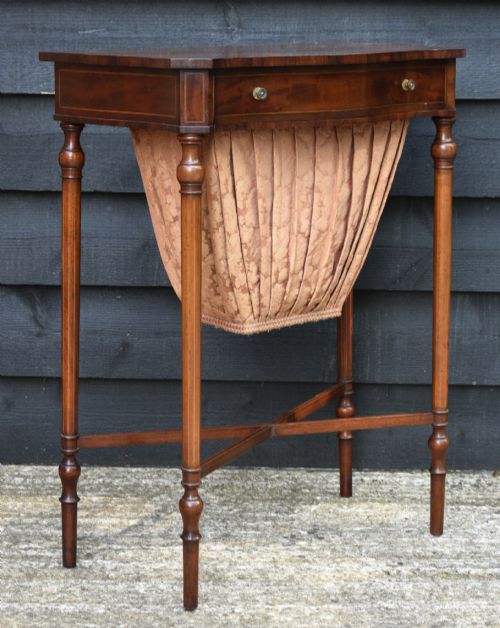
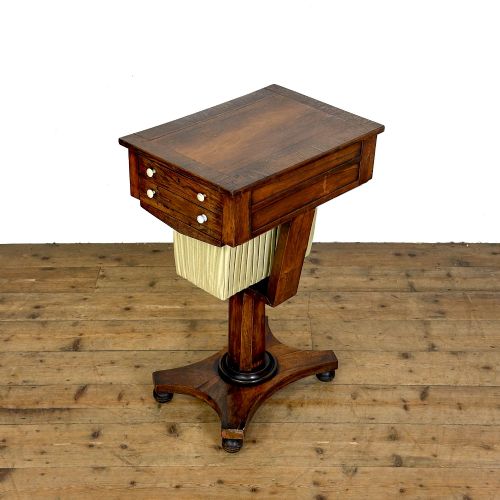
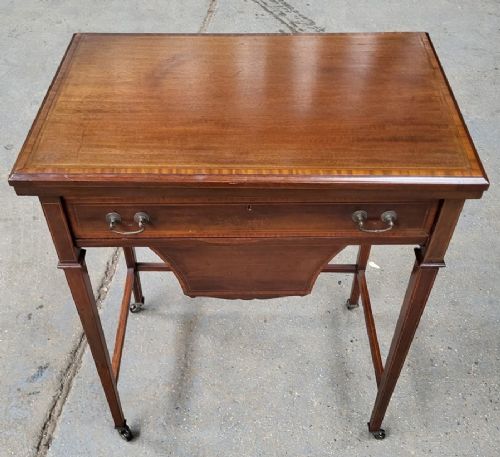
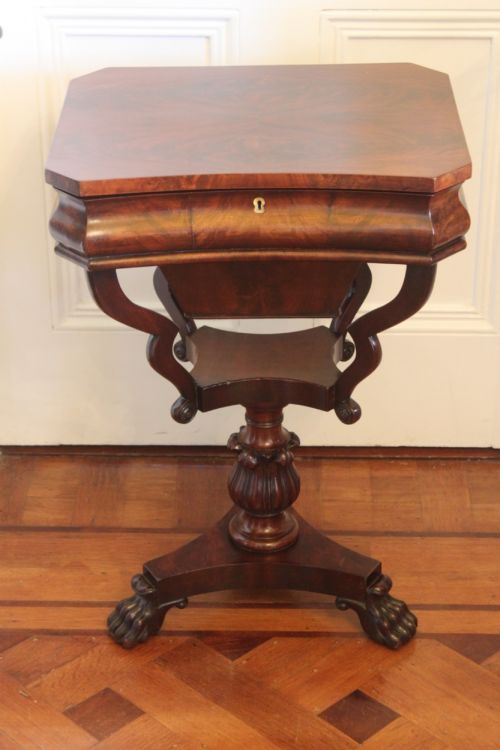
Buyers encounter drop-leaf sewing tables, trumpet forms, octagonal models, and cabinet configurations equipped with fitted interiors, silk baskets, or internal compartments. These tables often double as lamp tables or games tables, reflecting the versatile furnishing habits of their original owners across mahogany, walnut, and rosewood constructions.
Materials and Technique
Cabinetmakers utilised dense timbers such as mahogany, rosewood, and walnut, frequently selecting figured veneers like burr walnut, curl grain, and flame mahogany to cover primary surfaces. Inlays in boxwood, satinwood, and marquetry enrich the tops and friezes of finer examples, while brass fittings secure drop leaves and internal compartments.
Structural elements include lyre-ended pedestals, turned pillars, and box stretchers supporting the central shaft or legs. Specialised interiors incorporate fitted compartments for needles, threads, and writing implements, often paired with suspended fabric bags or silk baskets for sewing materials.
Many surviving sewing tables still retain their original silk gathering bags, whispering of centuries spent holding loose threads and forgotten buttons.
Craftsmanship and Materials
Quality rests upon the selection of timber veneers and the precision of decorative inlays, where finely figured burr walnut, rosewood, and marquetry distinguish superior pieces from plain mahogany models. The integration of the internal compartments demonstrates the maker's skill, particularly where fitted trays and lidded boxes remain intact within the drawer or under-box.
Structural integrity relies upon solid joinery in the pedestals, legs, and drop-leaf hinges, ensuring that hinged flaps and supporting lyres operate smoothly without sagging. Secondary details, such as original brass hardware and well-balanced proportions in small-scale tables, separate standard production from exceptional parlour furniture.
The Work Box Side Table Glossary
- Drop leaf
- A table featuring hinged side flaps that fold down to reduce the footprint or lift to extend the surface area.
- Trumpet table
- A pedestal table characterised by a flaring, trumpet-shaped body that conceals a fabric sewing bag beneath.
- Marquetry
- Decorative veneer work formed by fitting pieces of various woods, shells, or ivory into a patterned ground.
- Fitted interior
- An organised set of small compartments, lidded boxes, and slots built into the drawer or upper section for sewing or writing tools.
- Box stretcher
- Horizontal rails connecting the legs near the base to provide structural rigidity and support.
Work Box Side Table: Frequently Asked Questions
What is a work box side table?
A work box side table is a domestic piece of furniture that combines a flat top surface for lamps or ornaments with a built-in compartment for sewing, needlework, or writing materials.
These tables were popular in sitting rooms and parlours from the Georgian period through the Edwardian era, offering concealed storage alongside everyday table utility.
How were sewing tables used in the past?
Original owners used these tables to hold ongoing needlework projects, threads, bobbins, and writing supplies within easy reach during leisure hours.
The drop leaves and fitted compartments allowed users to sort small items while keeping the main surface clear for lamps, books, or tea.
How do I identify a Regency work table?
Regency work tables typically feature classical proportions, dark timbers like mahogany or rosewood, and distinct supports such as lyre-ended pedestals or turned brass-accented columns.
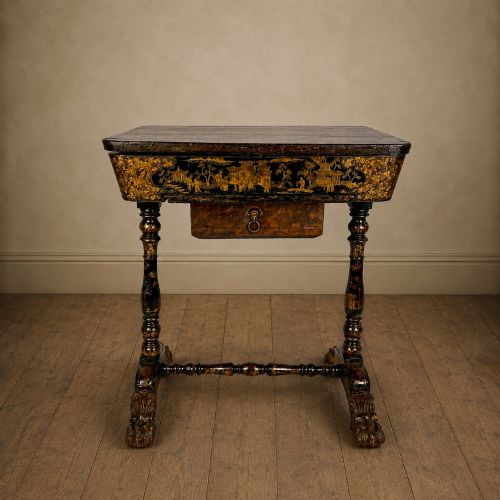
Cabinetmakers of this period often incorporated gilt lacquer work, brass inlay, and neat flame mahogany veneers inspired by classical and Chinese export styles.
What woods were commonly used?
Makers relied heavily on dense hardwoods, with mahogany, rosewood, and walnut forming the structural and external surfaces of most pieces.
Figured veneers such as burr walnut, curl grain, and flame mahogany were applied to key display areas, complemented by lighter stringing and inlay timbers like satinwood and boxwood.
Can these tables be used as lamp tables?
Yes, their compact proportions and sturdy flat tops make them well-suited for holding small lamps, books, and decorative objects in modern interiors.
The internal compartments also provide practical storage for household items while maintaining the appearance of a standard side table.