
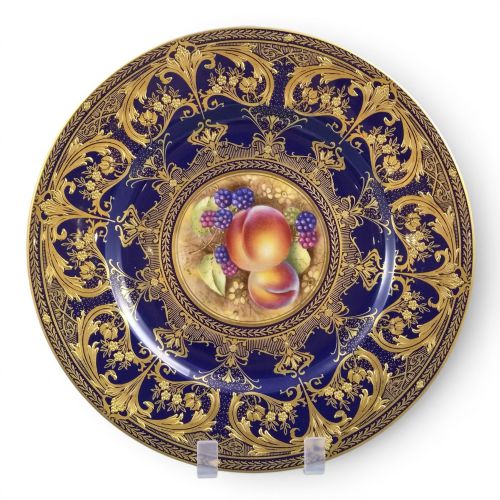
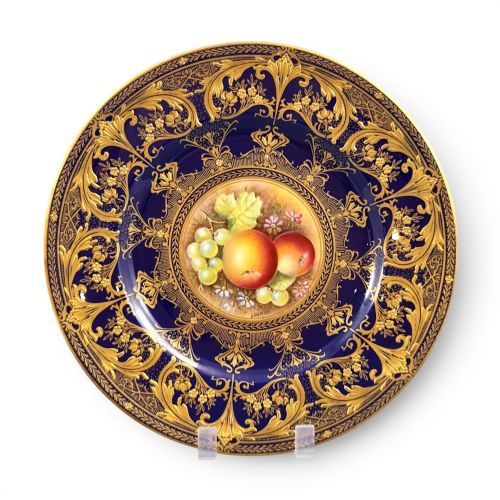


Worcester Fruit Painted Plate
A worcester fruit painted plate brings hand-painted naturalism and rich gilding to the table, combining delicate artistry with lasting porcelain substance.
Worcester Fruit Painted Plate
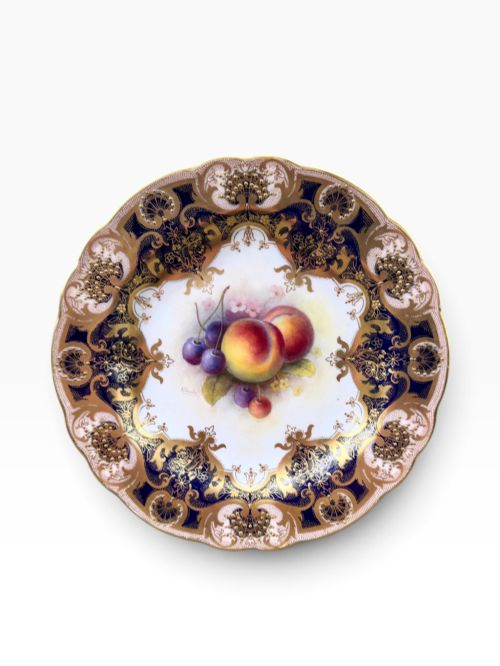
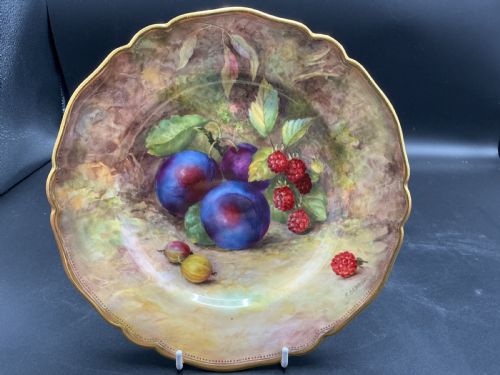
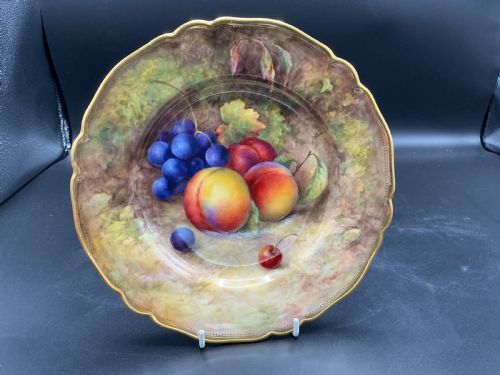
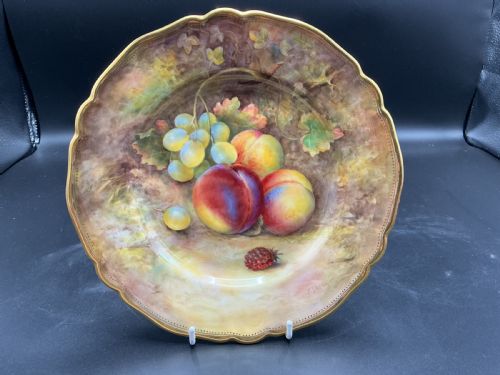
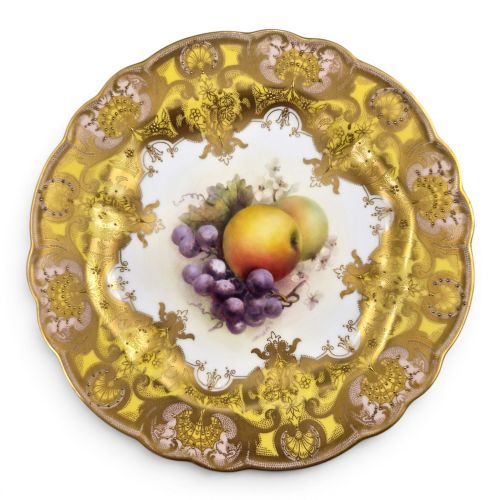
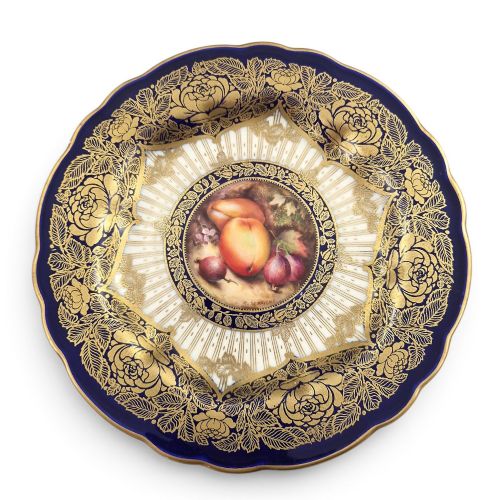
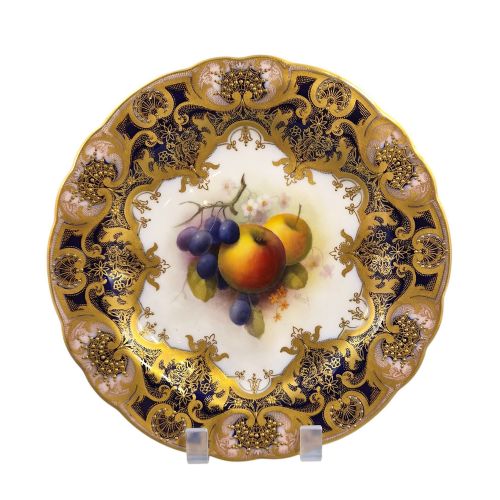
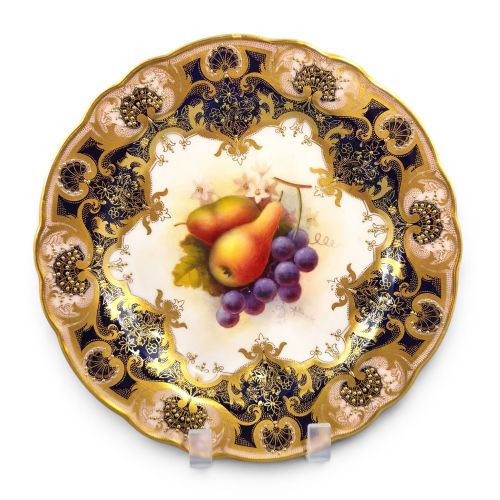
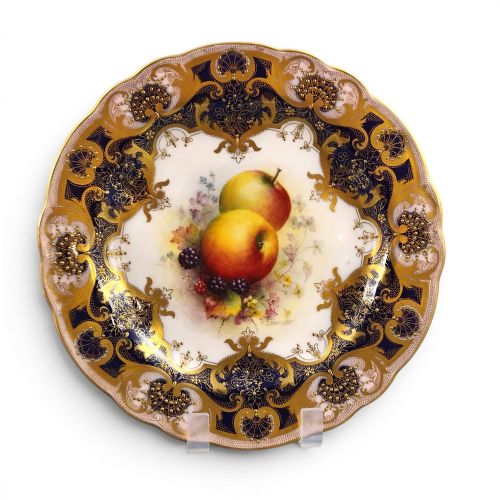
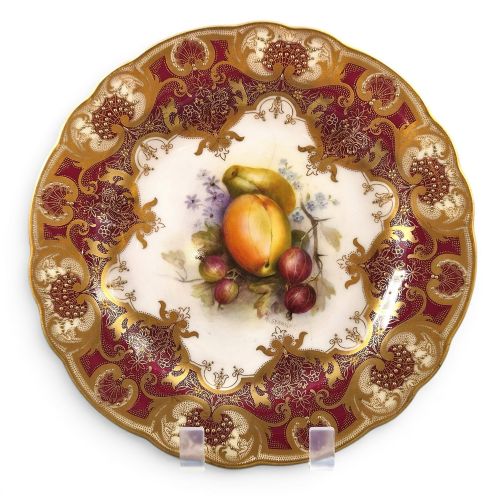
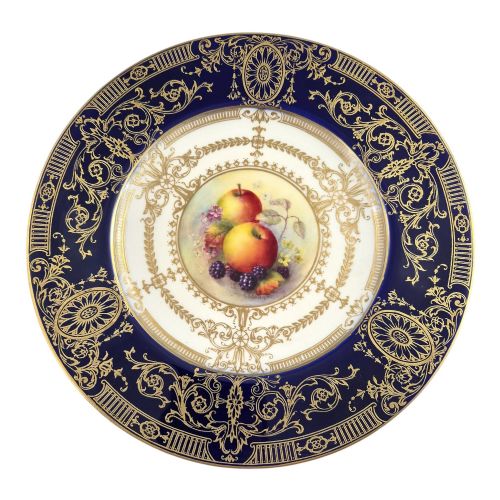
When you search for a worcester fruit painted plate, you encounter items designed primarily for display rather than daily dining. The selection ranges from eighteenth-century soft-paste dessert dishes to twentieth-century cabinet plates featuring detailed botanical studies.
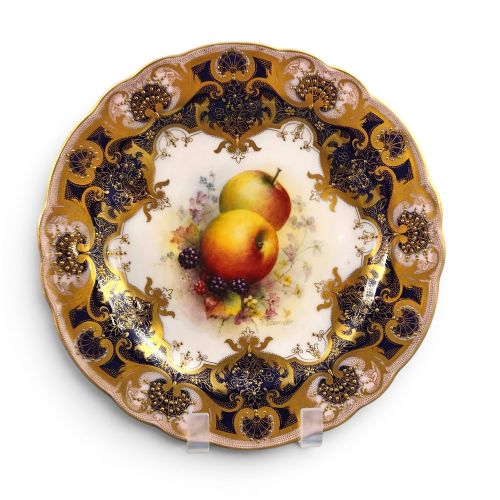
The most common examples on this page date from the Edwardian era through the mid-twentieth century, typically bearing signatures from notable studio painters. These pieces take various forms including cabinet plates, large rope-edge dinner plates, and square lobed dessert dishes.
How they were made
Makers utilised porcelain and bone china as the base for these works, applying soft-paste porcelain techniques in earlier eighteenth-century examples. Artisans then painted naturalistic fruit subjects using fine enamel colours.
Gilding completed the process, with gold leaf and gilt enamel applied to borders, edges, and rims. Some later twentieth-century productions incorporated acid-etched gilt patterns around the painted fruit centres.
What varies in quality
The distinction between standard items and superior examples lies in the execution of the painted fruit and the complexity of the surrounding gilding. Master painters achieved a depth of colour and realism that elevates certain pieces above standard factory output.
Edge treatments also differentiate the range, moving from simple plain borders to elaborate star edges, ribbon handles, and heavy raised gilding. Signed works by documented artists command greater attention due to the individual skill recorded on the surface.
Albert Shuck·Richard Sebright·Brian Leaman·J Smith·Ayrton·Richard Budd·Ricketts·HH Price·Freeman
The Worcester Fruit Painted Plate Glossary
- Cabinet plate
- A decorative plate intended for display in a cabinet rather than for serving food. These items often feature intricate hand-painted central motifs and rich gilt borders.
- Soft-paste porcelain
- An artificial porcelain compound fired at lower temperatures than hard-paste porcelain. Eighteenth-century pieces frequently utilise this material, giving them a distinct warmth and glaze texture.
- Gilding
- The application of gold leaf or gold powder to the ceramic surface. This technique highlights rims, edges, and embossed details with metallic lustre.
- Enamel
- Vitreous coloured glass fused to the porcelain surface during firing. Artists used these pigments to render the lifelike tones found in the fruit subjects.
Worcester Fruit Painted Plate: Frequently Asked Questions
Were these plates used for dining?
Most pieces categorized as cabinet plates or decorative dishes served a purely ornamental function in the home. Their intricate enamel work and delicate gilding meant owners displayed them on walls or inside furniture rather than using them at the dinner table.
Earlier eighteenth-century forms like dessert dishes saw actual service during formal meals, but later twentieth-century examples functioned primarily as works of art.
How do I identify the artist?
Painters frequently signed their work directly onto the painted fruit surface, usually near the edge of the central motif. Initials or full surnames such as Sebright or Shuck appear in fine script among the leaves and shadows.
Matching these signatures with period backstamps on the reverse helps confirm the exact era of production.
How do eighteenth-century pieces differ?
Pieces from the eighteenth century utilise soft-paste porcelain and feature simpler forms like square lobed dessert dishes or saucer dishes with spotted fruit. The painting style reflects the aesthetic of the period, predating the elaborate Edwardian cabinet plates.
These earlier items provide a distinct contrast in weight and paste composition compared to later bone china versions.