
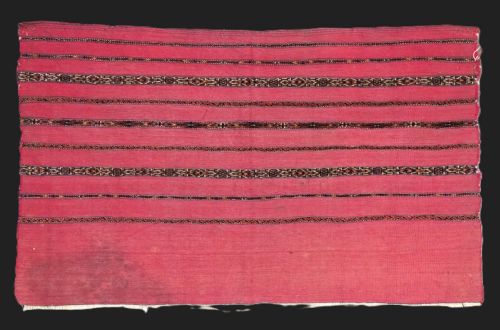


Wool Turkmen Panel
When you search for a wool turkmen panel, you enter the world of tribal weaving from Central Asia designed for nomadic utility and tent decoration.
Wool Turkmen Panel
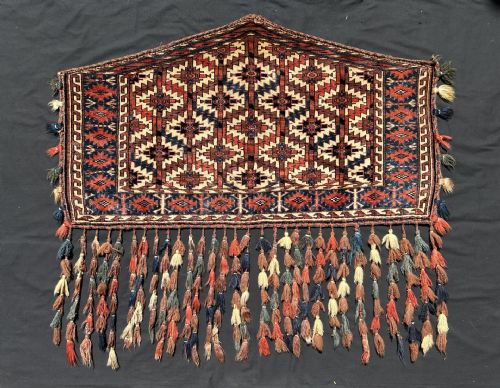
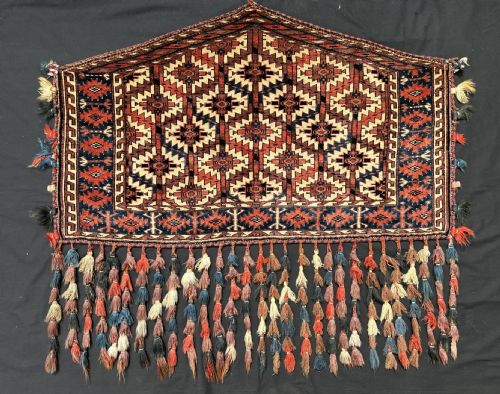
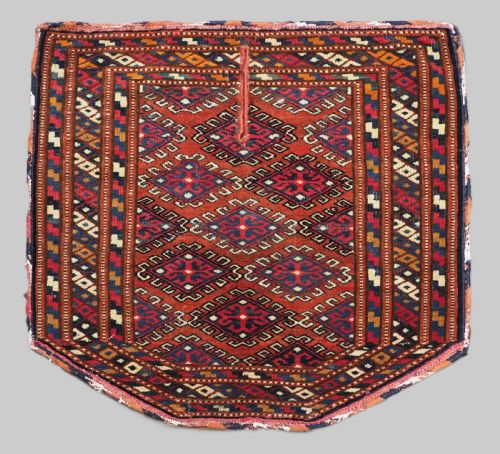
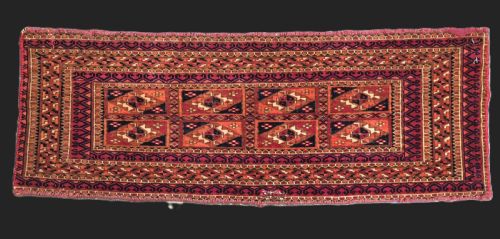
A wool turkmen panel typically originates from nineteenth-century nomadic and tribal groups such as the Yomut, Tekke, Ersari, and Saryk tribes inhabiting the Trans-Caspian steppes and the Amu Darya region. These items include bag faces like torbas and chuvals, asmalyks used as camel trappings, and kap or mafrash storage pieces.
Many examples function today as wall hangings or decorative interior textiles, having originated as functional household goods within tribal encampments. The forms span various bag formats, tent door surrounds known as ensis, and specialised fragments preserved from the nineteenth century.
Materials and Construction
Weavers utilised hand-spun wool as the primary foundation and pile material, supplemented by cotton, linen, and silk details for structural contrast and decorative highlights. Natural dyes provided the deep red, crimson, and secondary palettes characteristic of these tribal textiles.
The construction involves precise knotting and flatweave techniques, yielding dense pile surfaces on bag faces and supple banded flatweaves on utility containers. Fine weaves appear frequently in specific chuval and torba productions from the region.
Listings feature nineteen-century nomadic material, predominantly spanning the 1850s to the 1920s across various tribal attributions.
Evaluating Quality and Execution
Superior examples display crisp drawing within the tribal guls and secondary motifs, reflecting the weaver's command over traditional geometry. Balanced colour saturation, particularly in the reds and contrasting white or silk accents, elevates the visual depth of the textile.
The fineness of the weave and the structural integrity of surviving backs or margins distinguish exceptional nomadic works from standard utilitarian pieces. Ground proportions and clarity in panel elements such as elems indicate the standard of tribal craftsmanship.
The Wool Turkmen Panel Glossary
- Gul
- A primary octagonal medallion or motif repeated across Turkmen carpets and bag faces. Each tribal group utilised distinct gul variants to signal lineage and identity.
- Chuval
- A large tent storage bag produced by nomadic tribes for household organisation. These pieces frequently feature multiple guls arranged in grid formats.
- Torba
- A smaller utility bag utilised within the yurt for storage and domestic decoration. They display tribal patterns akin to larger chuvals.
- Asmalyk
- A pentagonal or asmalyk-shaped trapping created for wedding processions and camel decoration. These decorative panels represent some of the most elaborate tribal weaving.
- Mafrash
- A rectangular storage bag or box face constructed in pile or flatweave technique. They formed part of the nomadic household furnishings.
Wool Turkmen Panel: Frequently Asked Questions
What is a wool turkmen panel used for?
Historically, these woven panels served as functional storage bags, tent door surrounds, and decorative camel trappings within nomadic communities across Central Asia.
Today, collectors and interior designers use these textiles primarily as wall hangings or decorative display pieces to introduce tribal history into modern interiors.
How do I identify different Turkmen tribes?
Tribal attribution relies heavily on the specific gul shapes, border arrangements, and primary colour palettes utilised in the weaving. Yomut, Tekke, and Ersari weavers each employed distinct structural layouts and secondary ornamentation.
Examining the structural materials, such as the inclusion of cotton or silk details alongside wool, also aids in separating tribal origins.
Are these pieces from the nineteenth century?
The recorded evidence for these textiles centres primarily on the nineteenth century, ranging from the mid-1800s through the early 1900s. Pieces from this era reflect traditional nomadic production methods before commercial dyes became widespread.
Dating relies on stylistic analysis, material wear, and structural characteristics recorded across historical tribal production.
How do I care for a tribal wool textile?
Preserving these antique textiles requires mounting them securely for wall display to avoid putting stress on the historic wool and cotton foundations. Keep them away from direct sunlight to protect the natural dyes from fading over time.
Gentle vacuuming through a mesh screen helps remove surface dust without disturbing the pile or flatweave structure.