

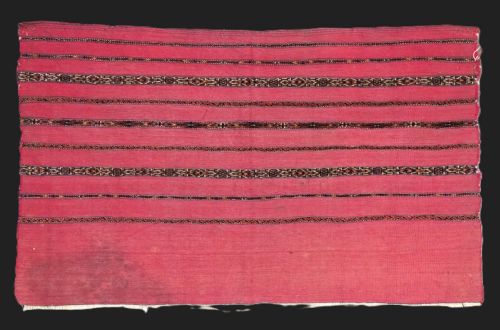


Wool Turkmen Bag Face
These wool turkmen bag face examples are tribal weavings originating from Central Asia, prized by collectors for their intricate geometric guls and deep madder red tones.
Wool Turkmen Bag Face
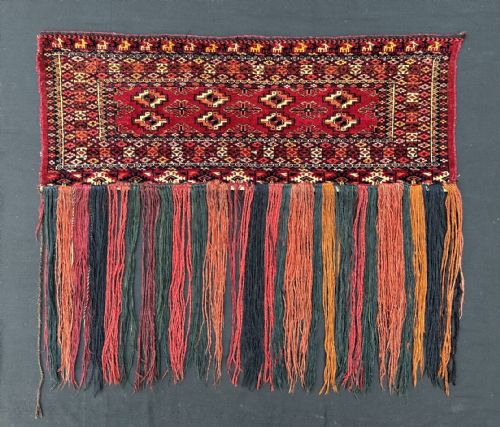
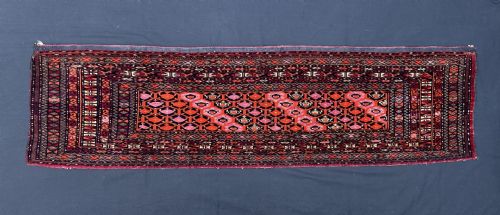
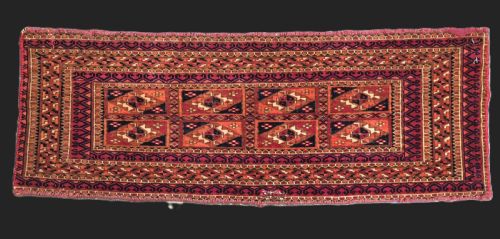
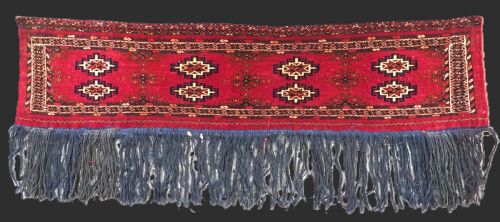
When you examine a wool turkmen bag face, you are looking at the front panel of a utilitarian nomadic storage sack utilised within tribal camps. These items include torbas, chuvals, and mafrashes that once hung inside tents to store personal possessions, bedding, or household goods.
The versions most commonly met on this page originate from tribal groups such as the Tekke, Yomut, Saryk, and Ersari tribes of Turkmenistan and the Trans-Caspian steppes. Dating primarily from the nineteenth century, these woven artefacts survive as fragments or complete bag faces separated from their original plain weave backs.
Each piece displays specific tribal iconography, including primary motifs like the gul, kepse, or curled leaf design. Collectors encounter these textiles as autonomous works of tribal art rather than functional containers.
How they were made
Weavers constructed these textiles using hand-spun wool for the pile, foundation warp, and weft, occasionally incorporating cotton or silk highlights for contrast. Natural dyes provided the rich palette, dominated by deep madder reds alongside ivory, indigo, and dark brown.
The wool knotting sits upon a sturdy woven foundation, executed with meticulous density in finer examples to produce a durable surface. Artisans integrated flatweave bands, hanging loops, or embroidered elements to complete the functional construction of the storage sack.
Materials recorded across current inventory consist of hand-spun wool, natural dyes, cotton, silk, and linen utilised in pile and flatweave techniques.
What varies in quality
Knot density and structural fineness separate standard examples from exceptional pieces, with tightly packed wool creating a crisp definition in the geometric drawing. The precision of the weaving influences how sharply the traditional gul motifs render across the field.
Colour saturation and the harmonious balance of natural dyes dictate visual appeal, particularly the depth of the red ground and the clarity of contrasting ivory or dark tones. Superior examples display careful proportion in the drawing and an absence of clumsy drawing within the major motifs.
The Wool Turkmen Bag Face Glossary
- Gul
- A primary medallion motif used by Central Asian weavers to identify specific tribes and clans. These repeating octagonal or gabled forms sit in orderly rows across the field of the textile.
- Torba
- A small horizontal storage bag traditionally used in nomadic tents for domestic items. These pieces feature decorated faces and are frequently encountered as separated fragments.
- Chuval
- A large tent bag utilised for storing bedding and heavy household possessions. They display multiple major guls and often survive as decorative bag faces.
- Mafrash
- A rectangular storage container or travel bag used in tribal households. Their flatweave or pile faces show banded geometric patterns.
- Madder
- A natural red dye derived from the root of the Rubia plant. It forms the dominant rich reddish-brown background colour characteristic of these tribal weavings.
Wool Turkmen Bag Face: Frequently Asked Questions
What is a bag face?
A bag face is the decorative front panel of a nomadic storage sack that has been separated from its plain weave back. These panels were preserved for their intricate pile weaving and tribal designs while the utilitarian backs were discarded.
They function today as wall hangings or collector textiles rather than storage containers.
How do I identify tribal groups?
Tribal attribution relies on the specific shape and arrangement of the primary guls, secondary motifs, and minor border ornaments. Groups like the Tekke, Yomut, and Saryk used distinct geometric vocabularies.
Examining the colour palette and structural characteristics also helps distinguish between different regional workshops.
Where were these bags made?
Nomadic and semi-nomadic tribes produced these textiles across the oases and steppes of Turkmenistan and Central Asia. Regions such as the Merv and Yolatan oases were primary centres for these weaving traditions.
Weavers worked within specific clan groups across the Trans-Caspian region during the nineteenth century.
How do I care for wool textiles?
Keep textile pieces away from direct sunlight to prevent natural dye fading and protect the hand-spun wool from moisture and insect damage. Gentle vacuuming through a mesh screen removes surface dust without stressing the old foundation.
Professional textile conservators should handle any necessary cleaning or mounting.