
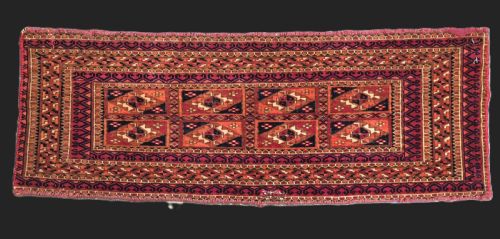


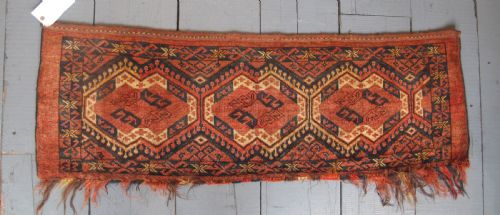
Tekke Turkmen Torba Face
These tekke turkmen torba face pieces are tribal weaving works designed for storage, prized by collectors for their striking guls.
Tekke Turkmen Torba Face
A tekke turkmen torba face represents a tribal textile piece originating from Central Asian nomad traditions, specifically utilised as a bag face or wall hanging. These items emerge primarily from the nineteenth century, with dates spanning across the eighteen fifties, sixties, eighties, and nineties.
The objects take the form of small storage bag faces decorated with distinct patterns like 'aina gul', 'salor' guls, chuval guls, or curled leaf designs. Buyers frequently encounter examples displaying multi gul arrangements or ivory grounds within tribal textile categories.
Materials and construction
Makers constructed each tekke turkmen torba face using wool combined with natural dyes to achieve deep colour palettes. Artisans employed very fine weave techniques, particularly visible in nineteenth century fragments and small size formats.
The structural composition relies upon traditional nomadic textile methods, resulting in durable tribal rugs and wall hangings. Natural dyestuffs provide the characteristic tones seen across these Central Asian tribal works.
Current listings feature pieces dated across the nineteenth century, spanning from eighteen fifty to eighteen ninety.
Judging quality in these textiles
Quality in a tekke turkmen torba face depends upon the precision of the drawing and the fineness of the weave. Tighter knotting and clearer execution of motifs distinguish superior examples from standard pieces.
Colour saturation and the handling of natural dyes determine the visual impact of the design. Well executed gul proportions and scarce design layouts separate finer pieces from simpler iterations.
The Tekke Turkmen Torba Face Glossary
- Torba
- A small storage bag produced by Turkmen tribes. These were traditionally used within nomadic dwellings for household storage.
- Gul
- A medallion motif utilised in carpet and textile designs. Different tribal groups employed specific gul patterns to indicate identity.
- Mafrash
- A storage sack or bag face associated with nomadic weaving. These items share structural traits with torbas.
- Chuval
- A large tent bag used by Turkmen nomads. Chuval guls frequently appear as primary design elements on related smaller bag faces.
- Kedjebe
- A camel wedding trapping design featuring lattice patterns. This motif occasionally appears in Turkmen weaving.
Tekke Turkmen Torba Face: Frequently Asked Questions
What is a torba face?
A torba face is the front section of a traditional Turkmen storage bag, preserved as a textile flat piece.
Nomadic groups utilised these items inside tents for possessions before they entered the collector market as wall hangings.
How old are these pieces?
The available examples date from the nineteenth century, specifically spanning the eighteen fifties to the eighteen nineties.
Most pieces originate from the eighteen eighties, while earlier specimens reach back into the first half of the century.
How do I hang a textile?
Mounting a tribal textile safely requires a non damaging sleeve or a specialised display system that distributes weight evenly.
Keep woven wall hangings away from direct sunlight to protect the natural dyes used in the wool.
What do the different guls mean?
Guls are primary medallion motifs that identify the specific tribal group or sub group responsible for the weaving.
Designs like the salor gul or aina gul help scholars attribute pieces to specific Central Asian traditions.