
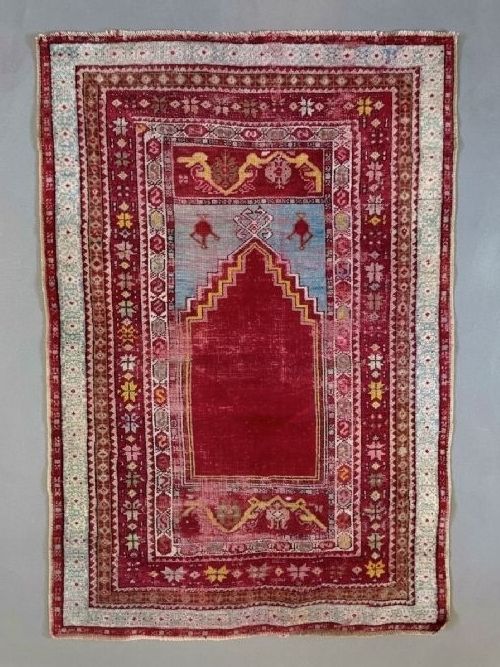
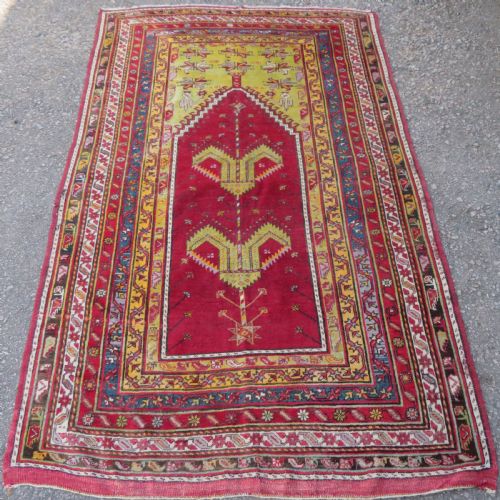
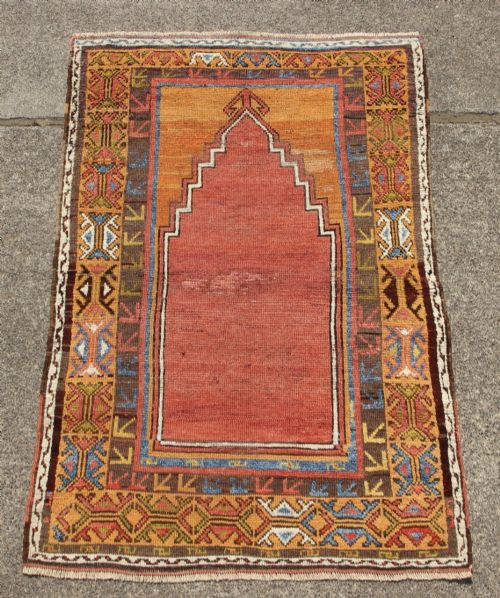


Wool Turkish Prayer Rug
A wool turkish prayer rug brings the concentrated geometry of Anatolian weaving into a room, offering both traditional mihrab designs and enduring textile history.
Wool Turkish Prayer Rug
A wool turkish prayer rug centres on the distinct architectural mihrab design, serving historically as a portable niche for devotional use. These pieces emerge from regional Anatolian weaving traditions spanning village and town workshops.
Dating primarily across the eighteenth and nineteenth centuries, these floor coverings reflect the stylistic evolution of Ottoman rug production. Village examples often display idiosyncratic local interpretations of classic town designs.
Materials and Construction
Makers utilised hand-spun wool and cotton foundation threads, sometimes incorporating soft angora wool to achieve a supple pile. Natural dyes and vegetable dye sources provided the characteristic palette of rich earth tones and saturated blues.
Weavers knotted the wool onto vertical looms using traditional Turkish symmetrical knots, securing the ends with woven flatweave skirts. The structural integrity relies on sturdy cotton or wool warps and wefts.
Documented regional forms on this page include prayer rugs, multi-niche safs, and flatwoven kilims originating from centres such as Konya and Kirsehir.
Evaluating Craftsmanship
Quality rests in the handling of natural dyes, where depth of colour and subtle abrash indicate skilled preparation of vegetable pigments. Finer knots per square inch allow for sharper delineation of geometric motifs within the prayer arch.
Structural preservation and wool condition define the upper tiers of the surviving output. Village pieces with intact original borders and minimal pile restoration command attention from serious collectors.
Tuduc
The Wool Turkish Prayer Rug Glossary
- Mihrab
- The arched niche design at the top of a prayer rug that symbolises the direction of prayer. This architectural element directs the viewer's eye toward the central field.
- Abrash
- Variations of shade within a single field of colour caused by changes in batch dyeing or hand-spun yarn. It adds a subtle, variegated texture to the wool surface.
- Warp
- The vertical foundation threads stretched parallel on the loom before knotting begins. The warps terminate in fringes at both ends of the rug.
- Weft
- The horizontal threads passed across the warps between rows of knots to bind the structure together. Wefts maintain the width and tension of the textile.
- Saf
- A multi-niche prayer rug featuring several arched fields placed side by side in a row. This format accommodated multiple worshippers simultaneously.
Wool Turkish Prayer Rug: Frequently Asked Questions
What is a wool turkish prayer rug?
A wool turkish prayer rug is a hand-knotted textile featuring a pointed arch or mihrab design, traditionally used for Islamic prayer. They were woven across various regions of Anatolia utilising local wool and vegetable dyes.
These pieces function as portable works of art, defined by distinct regional patterns associated with weaving towns like Konya, Ghiordes, and Milas. Their portable nature meant they were easily moved and preserved over centuries.
How were they used historically?
Historically, these rugs served a devotional purpose by providing a clean, defined space for daily prayers. The pointed mihrab arch was oriented toward Mecca during use.
Beyond religious observance, fine examples held status value within Ottoman households and were sometimes displayed on walls or used as furnishings. Their durable wool construction also suited them for floor placement in domestic interiors.
How do I live with one?
Living with an antique textile requires balancing appreciation with sensible conservation practices. Placing the rug in a low-traffic area or on a wall helps protect the historic wool pile from excessive wear.
Keep these pieces away from direct sunlight to prevent fading of the natural vegetable dyes. Use a breathable, high-friction underlay to keep the rug stable on hard flooring.
How do I tell periods apart?
Differentiating periods relies on examining structural shifts, wool quality, and palette evolution. Eighteenth-century examples often exhibit a sparser, more archaic drawing style with saturated natural colours.
Nineteenth and early twentieth-century pieces frequently introduce broader commercial dye palettes and denser village motifs. Comparing border structures and knot density helps align a piece with its production era.