


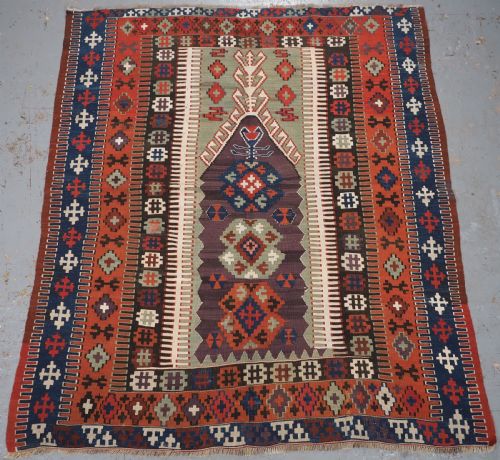


Geometric Turkish Tapestry
These geometric turkish tapestry pieces are flatweave rugs and cushions carrying Anatolian and Balkan tribal designs that warm a room with history.
Geometric Turkish Tapestry
When you search for geometric turkish tapestry, you find flatweave rugs, kilim rugs, kilim cushions, and embroidered panels designed for wall hanging or floor use. These textiles originate from diverse regions including Ushak, Konya, Pirot, Sarkoy, Obruk, and Fethiye.
The pieces on this page span from the mid nineteenth century through the early twentieth century, taking forms such as prayer kilims and banded design flatweaves. Each piece reflects the traditional weaving practices of Anatolian and Balkan makers.
How they were made
Makers utilised wool and cotton as the primary materials for these flatweaves and cushions, constructing them through traditional weaving techniques. Certain panels also incorporate embroidery over the woven base.
The construction relies on flatweave methods rather than pile knotting, resulting in durable textiles that showcase sharp angles and geometric motifs.
Listings feature wool and cotton materials shaped into kilim rugs, flatweave rugs, cushions, and embroidered panels spanning the mid nineteenth to mid twentieth centuries.
What varies in quality
Quality rests in the precision of the geometric design and the clarity of the banded patterns across the field. Stronger examples maintain balanced proportions and purposeful colour placement.
The integrity of the flatweave structure and the preservation of the original wool or cotton threads distinguish superior items from more heavily worn alternatives.
The Geometric Turkish Tapestry Glossary
- Kilim
- A flatweave textile made without a pile, produced across Anatolia and the Balkans. These versatile pieces serve as floor coverings or cushions.
- Cicim
- An embroidered flatweave technique where supplementary threads are added to the woven foundation to create raised geometric patterns. This method appears on specific panels.
- Prayer kilim
- A rug featuring a mihrab or niche design, traditionally used for personal prayer. The Obruk region is known for this specific form.
Geometric Turkish Tapestry: Frequently Asked Questions
How were these flatweaves used historically?
These textiles served multiple domestic purposes, acting as floor rugs, seating cushions, and wall hangings. Families utilised them for daily comfort and interior decoration.
Nomadic and village communities also relied on these flatweaves for bedding and transport bags, adapting the durable wool and cotton construction to everyday life.
How do I care for a vintage kilim cushion?
Gentle vacuuming without a rotating brush helps remove surface dust from wool and cotton flatweaves. Professional cleaning suited for antique textiles preserves the fibres.
Keeping cushions out of direct sunlight prevents the natural dyes from fading over time, maintaining the warmth of the banded patterns.
How can I tell regions apart?
Regional identity often reveals itself through specific design structures, such as the banded layouts found in Pirot and Sarkoy pieces. Specific prayer niches point directly towards origins like Obruk.
Materials and local weaving traditions also guide identification, linking particular geometric arrangements to towns like Ushak, Konya, or Fethiye.
What is the difference between a rug and a panel?
Rugs are structured as floor coverings with durable flatweave construction designed for foot traffic. Panels are often intended for wall hanging uses or cushion conversion.
Panels may incorporate additional embroidery techniques, such as the cicim work seen on Konya pieces, which differs from standard flatweave structures.