




Wool Tapestry Cushion
These wool tapestry cushion pieces bring centuries of woven texture and historic pattern into a room, offering tactile warmth for a period interior.
Wool Tapestry Cushion
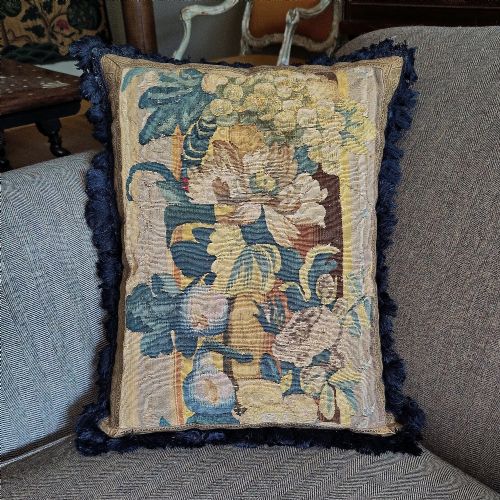
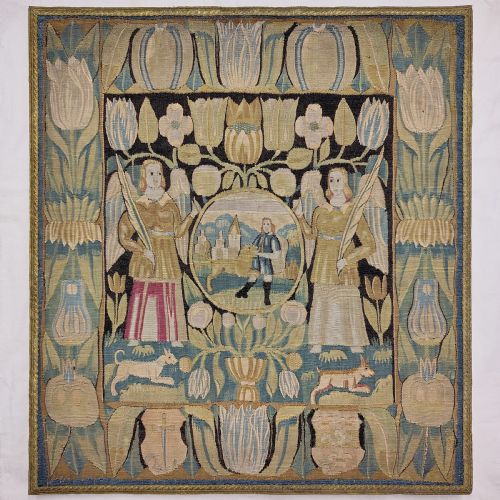
A wool tapestry cushion takes historic woven fragments, antique French Aubusson panels or tribal flatweaves and works them into soft furnishings for the home. When you search for this phrase, you encounter items fashioned from sixteenth-century fragments, seventeenth-century Flemish borders and nineteenth-century needlework.
The most common versions on this page are constructed from French Aubusson panels and seventeenth-century Flemish tapestry borders, alongside tribal bag faces and Swedish pillow embroidery. These pieces transform wall-hung textile art into functional objects for seating and display.
The range spans European chateau aesthetics and Scandinavian folk art to Turkmen and Shahsavan tribal flatweaves. Each piece relies on the survival of durable textile fragments to create a decorative furnishing with genuine age.
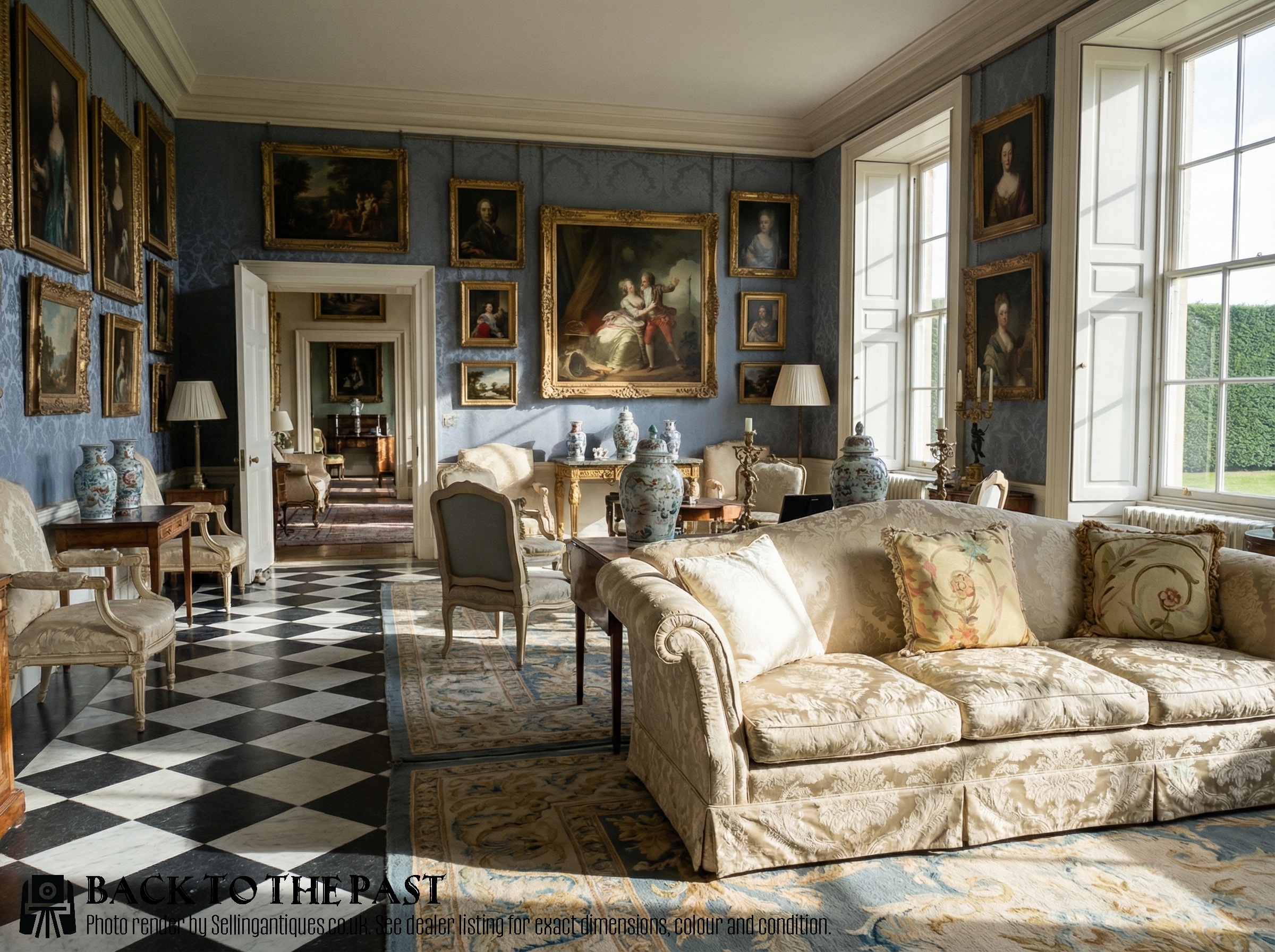
How they were made
Makers constructed these items using wool, silk, cotton and linen woven onto sturdy canvas foundations, often utilising natural dyes to achieve rich, enduring palettes. The textile elements frequently incorporate soumak technique, flatweave construction or intricate needlework known as Berlin work.
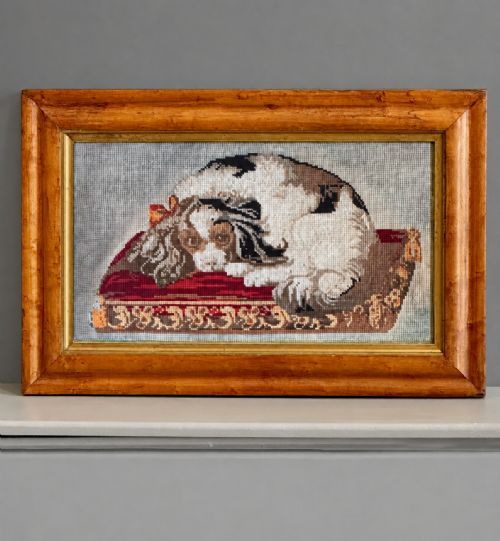
Many of these furnishings repurpose historic fragments, mounting antique textile panels onto supportive backings and occasional wooden frames like burr maple. The careful stitching preserves fragile antique weaves while adapting them for daily domestic use.
Wool Tapestry Cushion Retail Price Guide 2026
Typical asking prices for wool tapestry cushion among the pieces listed under this phrase on Sellingantiques today, from the lower quarter to the upper quarter. They describe what is for sale here now, not the wider market.
Listings feature textiles spanning from the 16th century through the 19th century, incorporating wool, silk, linen, cotton and natural dyes.
What varies in quality
The distinction between standard examples and exceptional ones rests upon the age, integrity and origin of the textile fragment itself. Pieces utilising seventeenth-century Flemish or sixteenth-century North German panels carry a different weight of history compared to later nineteenth-century adaptations.
The quality of survival determines the character of each piece, including the stability of the weave, the clarity of the natural dyes and the preservation of the original design. The skill involved in mounting and framing these textiles, such as a burr maple border, further separates ordinary examples from finer works.
The Wool Tapestry Cushion Glossary
- Aubusson
- A historic style of tapestry woven in France, known for floral and architectural motifs that frequently appear on decorative cushions. These panels bring a distinct chateau aesthetic to soft furnishings.
- Soumak
- A flatweaving technique that creates a durable, slightly raised texture resembling braiding on the surface of tribal bags and saddlebacks. It provides both strength and intricate pattern detail.
- Berlin work
- A type of nineteenth-century needlework stitched on canvas from charted designs, often depicting animals or figurative scenes. King Charles spaniels and similar motifs are typical of this colourful embroidery style.
- Mafrash
- A Turkmen storage bag or chest panel featuring banded flatweave design and tribal motifs. These historic fragments are frequently repurposed into durable cushions.
- Flatweave
- A textile produced without knotted piles, resulting in a smooth, tapestry-like fabric used by Turkmen, Shahsavan and Scandinavian makers. This technique creates geometric patterns of considerable complexity.
Wool Tapestry Cushion: Frequently Asked Questions
Are these cushions made from old fragments?
Many examples utilise genuine historic fragments, including sixteenth and seventeenth-century Flemish and North German tapestry borders, repurposed into usable soft furnishings.
Other pieces incorporate nineteenth-century Aubusson panels or tribal flatweaves, giving old textiles a new function while preserving their original woven art.
How do I care for an antique textile cushion?
These pieces require gentle handling, keeping them away from direct sunlight to protect natural dyes from fading over time. Light surface dusting and occasional professional textile cleaning help maintain the wool and silk fibres.
Because they incorporate antique materials, they are best suited for decorative placement rather than heavy everyday use.
What periods do these pieces come from?
The selection spans several centuries, ranging from sixteenth-century and seventeenth-century European tapestries to nineteenth-century French Aubusson work and tribal flatweaves from around nineteen hundred.
Each period brings distinct materials and aesthetic styles, from Baroque Flemish borders to Scandinavian folk embroidery and Turkmen tribal designs.
Can I use them on everyday seating?
While constructed as cushions, many incorporate fragile historic textiles and delicate needlework that respond best to gentle placement on armchairs or beds.
Their primary appeal lies in their historical texture and decorative presence, making them ideal accents for period interiors.