




Antique Floral Pillow
An antique floral pillow brings tactile history into a room, offering authentic period textiles reconfigured into decorative cushions.
Antique Floral Pillow
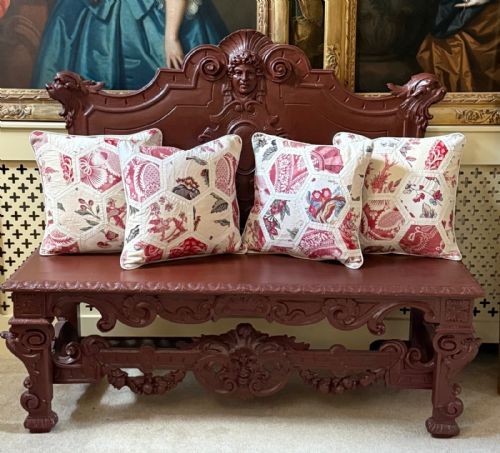
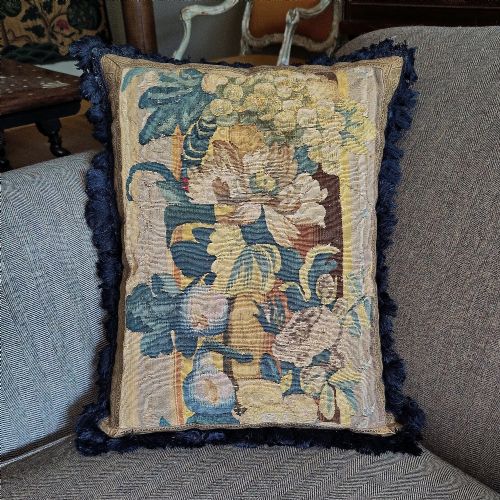
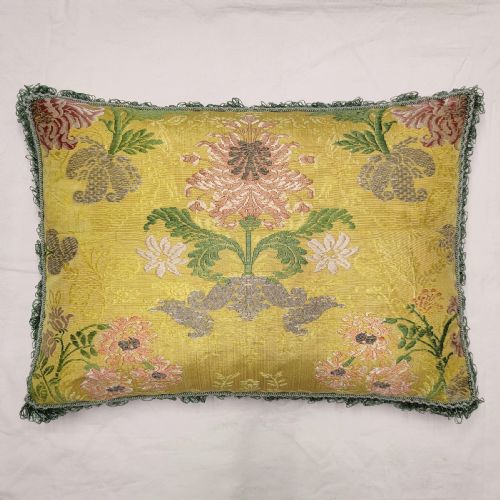
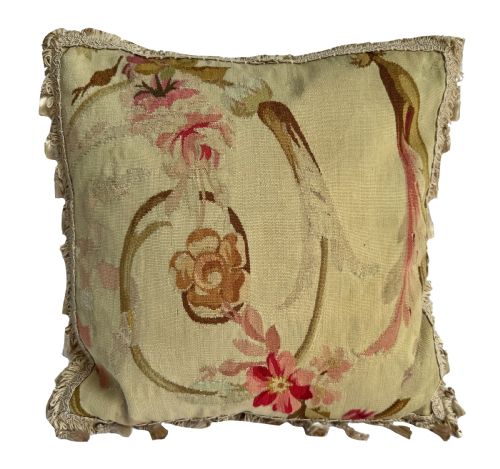
The inventory on this page most frequently presents French Aubusson cushions and 17th century tapestry cushion covers. Alongside these, buyers find Edwardian sets utilising 18th century Belgian linen backs, as well as distinct examples featuring French silk and Flemish tapestry borders.
Origins span across French Chateau and French Country styles, alongside Baroque and Rococo influences. Object types primarily encompass cushions, cushions and soft furnishings, and textile art, reflecting both decorative utility and historic needlework.
Materials and construction
The construction of these cushions relies on historic textiles combined with supportive backings and fillings. Materials recorded in the inventory include silk, wool, cotton, linen, silk brocade, and fabric fringe, alongside feather inners.
Maker techniques involve utilising surviving fragments of antique tapestries, such as 17th century Flemish borders and Aubusson weaves, paired with period linens. Some pieces combine Edwardian construction methods with older fabric elements to ensure practical longevity.
Some Edwardian cushions enjoy a second lease on life by pairing brand new feather inners with rugged 18th-century Belgian linen backs.
Assessing quality
Quality in these textiles rests upon the preservation and integrity of the original weave. Pieces utilising 17th century tapestry or Aubusson panels demonstrate superior artistic execution compared to later interpretations.
The distinction also lies in the authenticity of the supporting materials, such as period Belgian linen versus modern additions. The complexity of the weave and the richness of the wool and silk threads directly influence the visual impact of the cushion.
The Antique Floral Pillow Glossary
- Aubusson
- A type of tapestry woven in the town of Aubusson in France, famous for floral and scenic designs. These panels frequently form the decorative front of period cushions.
- Tapestry
- A form of textile art woven on a vertical loom, depicting pictorial or floral motifs. Seventeenth-century examples often incorporate dense foliage and border designs.
- Silk Brocade
- A class of richly decorative shuttle-woven fabrics, often made with coloured silks. They provide a luxurious sheen to antique cushion covers.
- Fabric Fringe
- An ornamental border consisting of pendulous threads or strips, used to trim the edges of soft furnishings. It adds a traditional finishing touch to period cushions.
- Belgian Linen
- A durable, high-quality textile woven from flax grown and processed in Belgium. Historic versions of this material frequently serve as the backing for antique cushion covers.
Antique Floral Pillow: Frequently Asked Questions
What is an antique floral pillow?
An antique floral pillow is a decorative cushion constructed from historic woven textiles, including Aubusson and tapestry fragments.
These pieces repurpose centuries-old fabrics to create functional soft furnishings for modern interiors.
How were these cushions used?
These textiles serve as decorative cushions and soft furnishings within domestic spaces.
Historically, fragments of tapestries and silks were salvaged and mounted onto cushion backs to preserve fine needlework while allowing daily use.
How do I care for silk cushions?
Historic silk and tapestry cushions require gentle handling to protect fragile antique fibres.
Keeping them away from direct sunlight prevents the fading of natural wool and silk dyes over time.
How are different periods identified?
Periods are identified through the specific weave structure, material composition, and stylistic motifs present in the textile. Seventeenth-century Flemish borders differ noticeably in technique from 19th-century Aubusson weaves.