







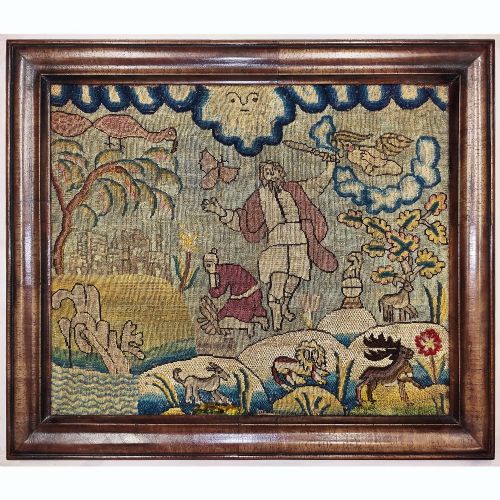
Wool Needlepoint Artwork
Wool needlepoint artwork brings centuries of detailed textile tradition directly to your walls, offering a rich historical narrative in every stitched scene.
Wool Needlepoint Artwork
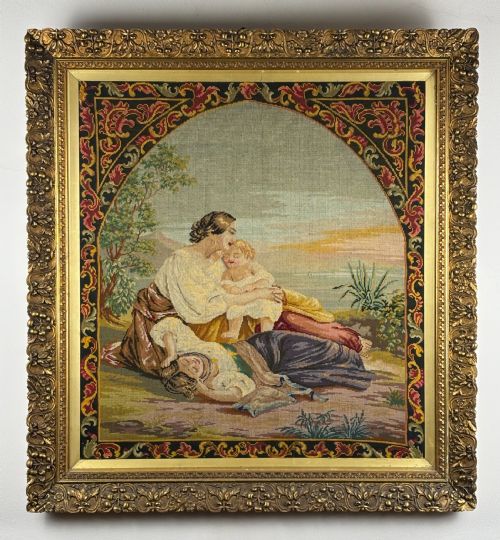
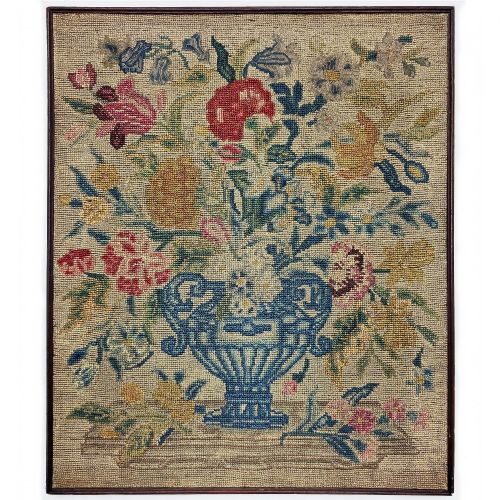
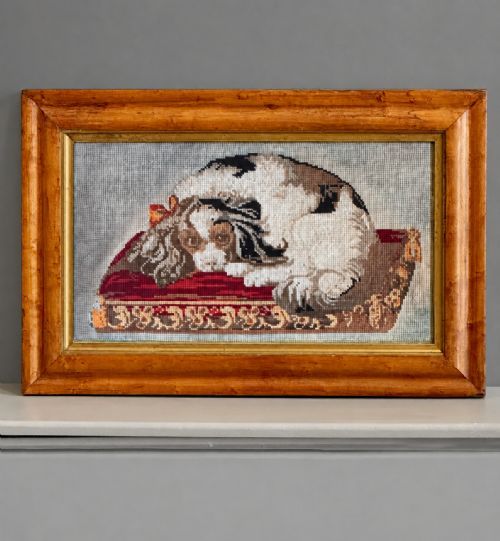
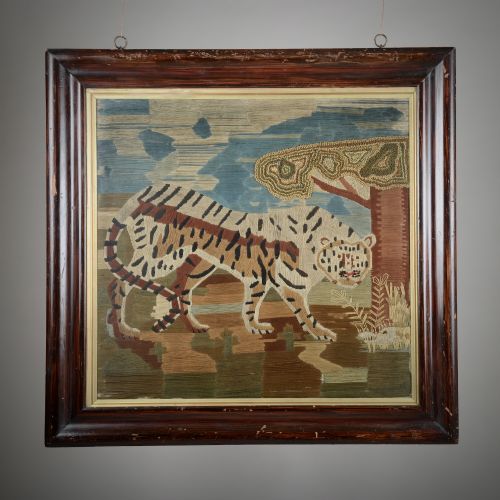
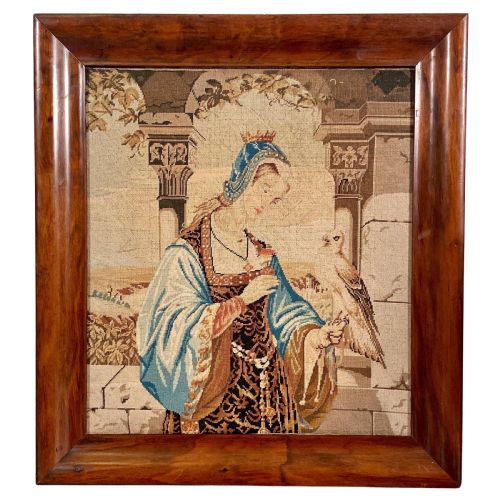
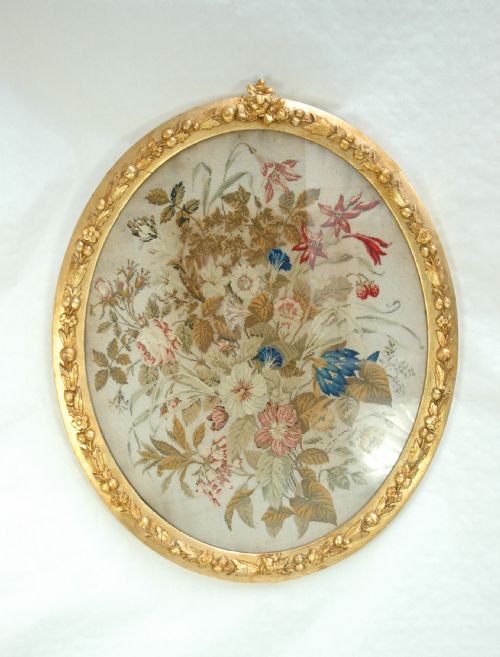
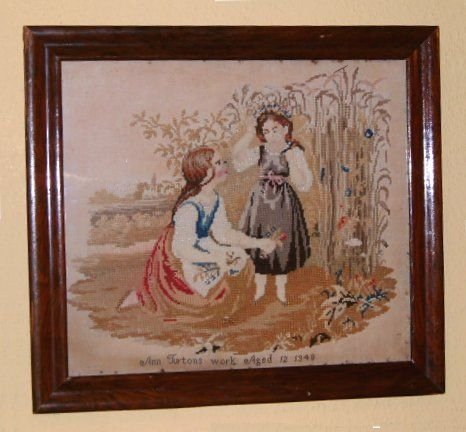
Wool needlepoint artwork encompasses framed textile pieces, wall art, and tapestry cushions spanning from the seventeenth century through to the Victorian era. These pieces frequently depict pastoral scenes, portraits, religious subjects, and animals.
The most common forms encountered on this page are framed wool work pictures and tapestries housed in period wooden frames such as burr maple, oak, and rosewood. Examples range from eighteenth-century pastoral farming pictures to nineteenth-century Berlin work.
The selection includes continental classical embroidered panels, Italian needlepoint portraits, and Victorian folk art samplers. Each piece reflects the decorative tastes and domestic handwork skills of its specific period.
Materials and construction
These works are constructed using wool, silk, and linen stitched onto a canvas foundation. Needlepoint techniques such as gros point and Berlin work are utilised to build up dense, textured pictorial surfaces.
Framing often incorporates traditional materials including glass, wood, giltwood, and gold leaf. Some pieces utilise verre églomisé glass panels within the frame to complement the needlework.
Wool Needlepoint Artwork Retail Price Guide 2026
Typical asking prices for wool needlepoint artwork among the pieces listed under this phrase on Sellingantiques today, from the lower quarter to the upper quarter. They describe what is for sale here now, not the wider market.
Frame materials recorded across the pieces include burr maple, oak, rosewood, and giltwood, alongside specialist glass treatments.
Assessing quality in needlepoint
Quality in wool needlepoint artwork depends heavily on the fineness of the stitchwork and the complexity of the pictorial composition. Pieces with subtle shading, detailed facial expressions, and well-executed perspective stand apart from simpler designs.
The Wool Needlepoint Artwork Glossary
- Berlin work
- A type of coloured needlepoint chart-work popular in the nineteenth century. It allowed stitchers to create complex pictorial patterns using brightly dyed wools.
- Gros point
- A coarse needlepoint stitch executed on canvas. This technique creates a durable, raised texture frequently employed for backgrounds and substantial pictorial elements.
- Verre églomisé
- A process of applying cold painting and gilding to the rear of glass. It appears in frames to provide a decorative border around historical pictures.
- Sampler
- A piece of fabric embroidered to demonstrate proficiency in various stitches. Early examples often record alphabets, motifs, and the maker's name or date.
- Tapestry
- A form of textile art traditionally woven on a loom, though the term is also applied to heavy needlework panels. These items frequently illustrate historical, literary, or pastoral narratives.
Wool Needlepoint Artwork: Frequently Asked Questions
How old is my wool needlepoint?
Dating wool needlepoint relies on examining the style of the figures, the type of canvas, and the framing materials used. Eighteenth-century pieces often feature refined pastoral or classical subjects, while nineteenth-century works frequently include Berlin work or Victorian folk art.
The framing offers further clues to age. Rosewood, burr maple, and oak frames typical of specific eras are often original to the textiles they house.
What is Berlin work?
Berlin work refers to a popular nineteenth-century style of needlepoint that utilised printed pattern charts and brightly coloured wool yarns. This method enabled makers to produce highly detailed images ranging from animals to religious scenes.
The style marked a shift in domestic embroidery towards pictorial realism and heavily shaded floral or figural compositions.
How do I care for antique needlepoint?
Antique needlepoint requires protection from direct sunlight to prevent the wool and silk threads from fading. Maintaining a stable indoor environment away from excessive moisture preserves the textile fibres and wooden frames.
Cleaning should be limited to gentle surface dust removal with a soft brush. Professional conservation is recommended for any structural repairs.
Are these pieces original?
The listings comprise historic textiles created during their respective periods, ranging from the seventeenth to the nineteenth century. Many retain their original frames, such as period rosewood or burr maple surrounds.
Examining the reverse of the panel and the construction of the frame helps confirm the period authenticity of the work.