
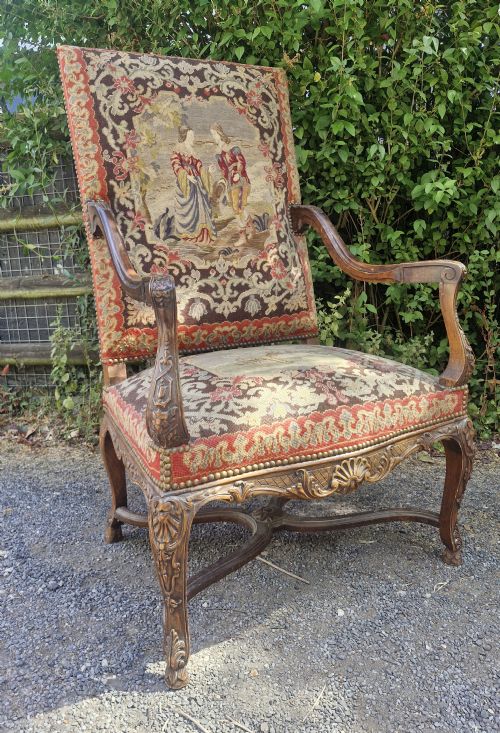
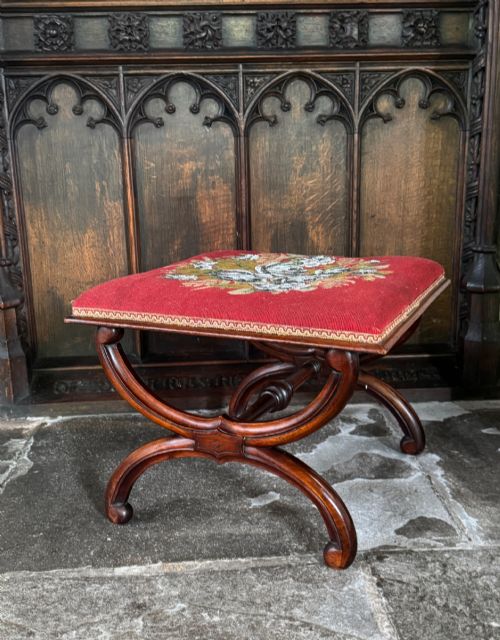

Framed Needlework Tapestry
A framed needlework tapestry brings tactile historical depth to interior walls, combining centuries of textile craft with period framing.
Framed Needlework Tapestry
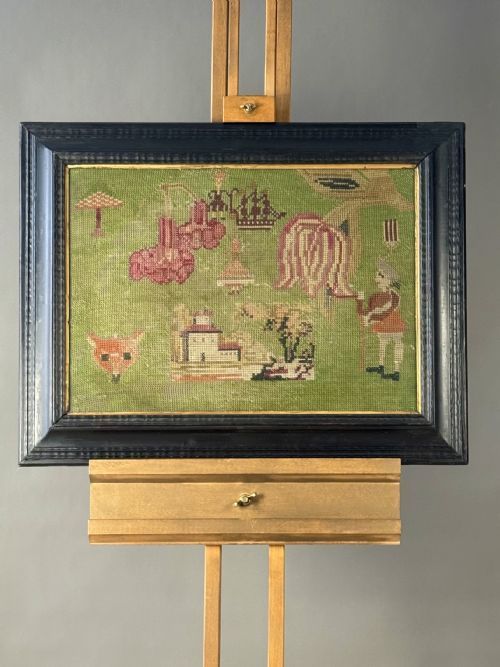
A framed needlework tapestry encompasses embroidered wall art, samplers, and woolwork pictures produced across the seventeenth, eighteenth, and nineteenth centuries. Buyers encounter domestic needlework pictures alongside formal panels created in styles ranging from Stuart and Georgian to Victorian folk art.
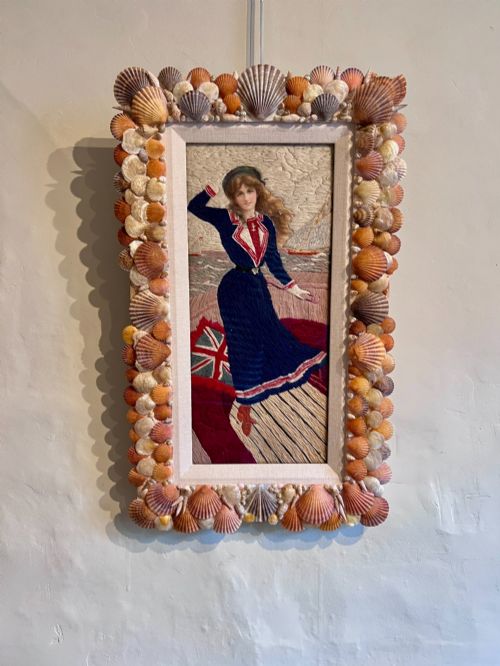
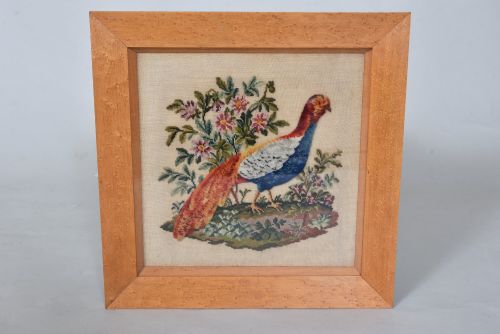
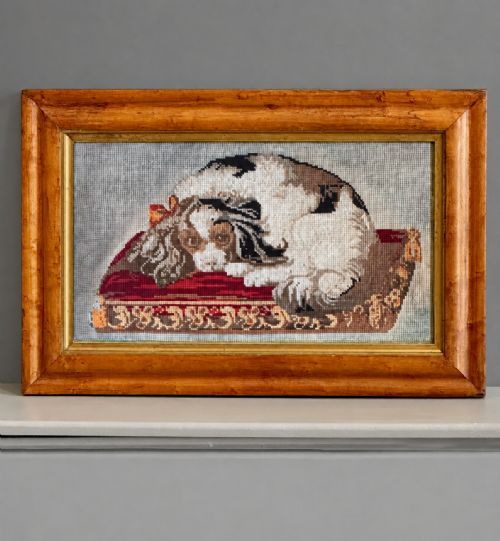
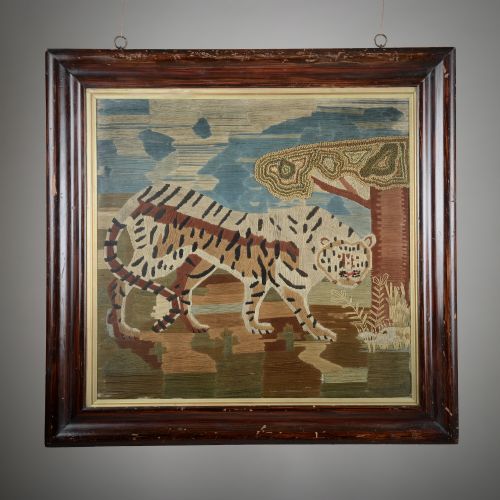
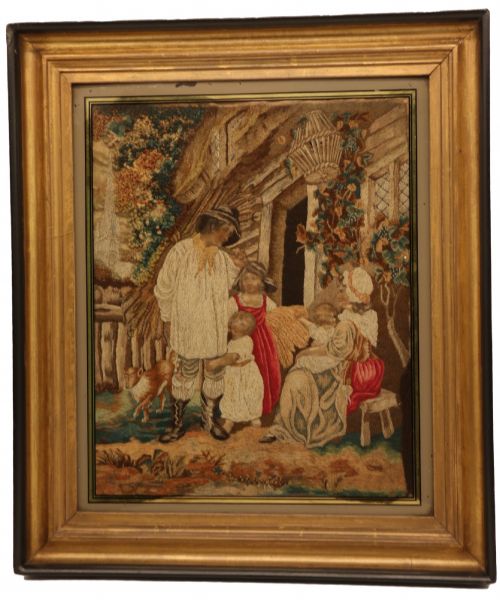
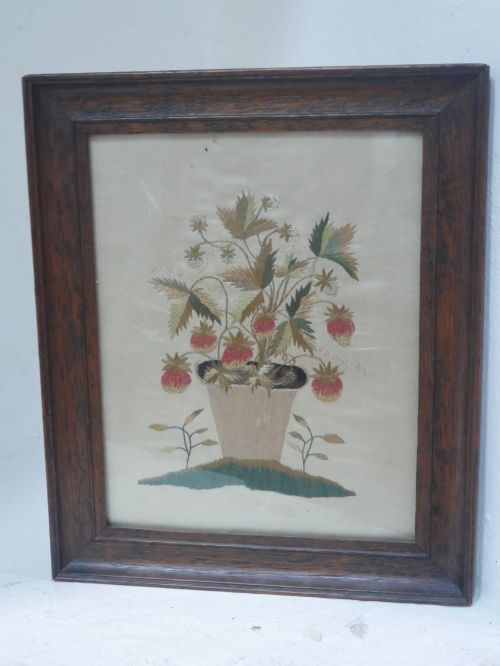
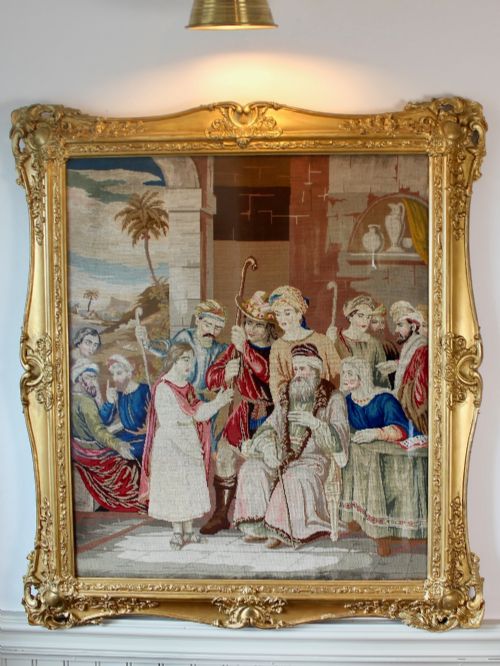
The selection on this page relies heavily on Victorian woolwork and eighteenth-century needlework pictures, often framed in burr maple, giltwood, or carved wood. Subjects extend from classical figures and literary scenes to animals, botanical studies, and sporting themes.
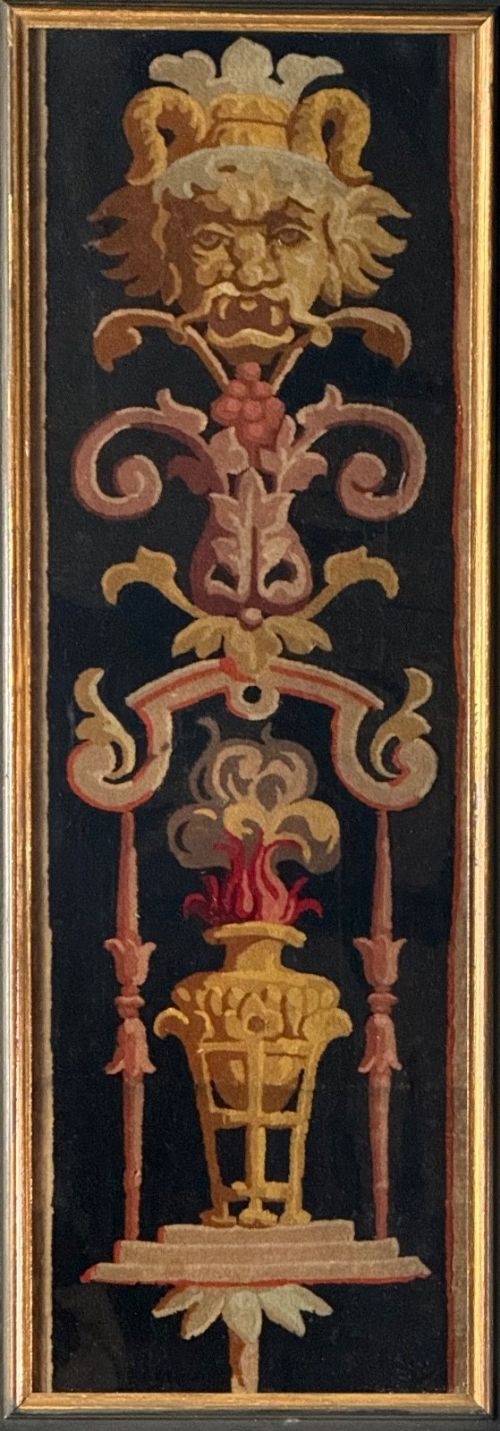
Earlier examples include seventeenth-century continental embroidered panels and cushion covers incorporating classical motifs or grotesque masks. Later nineteenth-century pieces frequently utilise Berlin woolwork or plushwork techniques to achieve high colour saturation.
Materials and construction techniques
Needlework pieces are constructed using wool, silk, linen, and canvas grounds, worked with varied thread weights and stitching methods. Artisans applied long stitch, gros-point, and beadwork to build pictorial depth and texture.
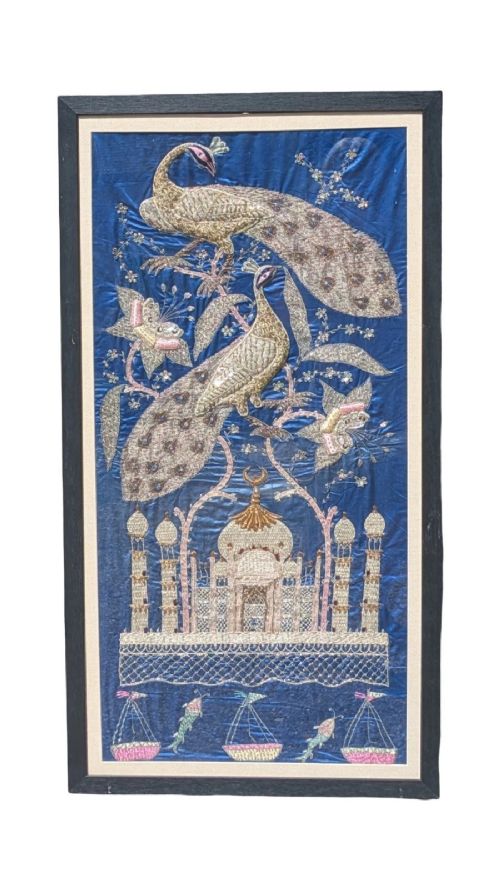
Metal threads and silk embroidery were frequently incorporated into eighteenth-century and nineteenth-century works to catch ambient light. Frames utilise timber such as walnut and maple, occasionally featuring verre églomisé glass panels to protect the textile surface.
King Charles spaniels and mischievous little red riding hoods stare out from nineteenth-century woolwork.
Assessing quality in needlework art
Quality rests upon the precision of the needlework execution, the complexity of the design, and the integrity of the original frame. Finer stitches allow for intricate facial expressions and tonal shading in figurative subjects.
The survival of vibrant colour in silk and wool elements distinguishes superior panels from faded examples. Original period frames, particularly burr maple or giltwood surrounds, enhance the contextual value of the textile.
The Framed Needlework Tapestry Glossary
- Berlin work
- A type of needlepoint embroidery worked on canvas from printed and hand-coloured grid patterns, popular during the nineteenth century. This technique allowed makers to produce shaded pictorial designs with ease.
- Plushwork
- An embroidery technique utilising looped stitches that are subsequently cut to create a velvet-like pile. It gives a tactile, three-dimensional texture to elements within woolwork pictures.
- Sampler
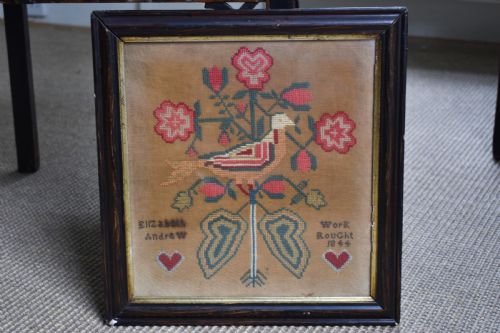
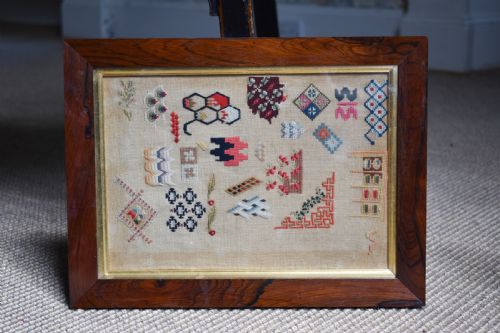
- A piece of cloth worked with various stitches and motifs to demonstrate needlework skill. Historical examples often include alphabets, numerals, and moral verses alongside maker signatures.
- Verre églomisé
- A process of applying gold or silver leaf to glass combined with engraving and painting. Frames utilising this method feature decorative mirrored borders around the textile artwork.
- Crewelwork
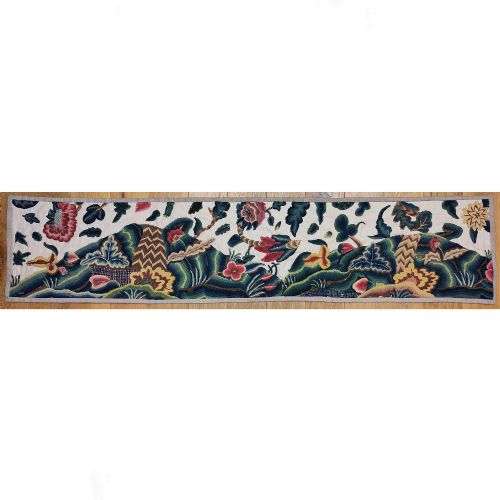
- Embroidery executed with two-ply wool yarn on a linen or cotton twill ground. It is traditionally associated with seventeenth-century English decorative wall hangings and furnishings.
Framed Needlework Tapestry: Frequently Asked Questions
How do I hang a framed needlework tapestry safely?
Needlework pictures require stable indoor wall spaces away from direct sunlight to prevent textile fibres and dyed wools from fading. Use appropriate picture hooks that distribute weight evenly across the original wooden frame.
Avoid hanging tapestries on exterior walls where dampness might affect the linen or canvas backing. Professional framing with UV-filtering glass provides essential protection for silk and wool components.
What is the difference between Berlin work and woolwork?
Berlin work specifically refers to counted-thread embroidery stitched from printed point paper charts using brightly coloured wools. It produced highly detailed pictorial scenes during the Victorian era.
Traditional woolwork encompasses a broader range of embroidered wool pictures, including naive subjects and sailor woolies. These often rely on freehand stitching rather than gridded charts.
How do I date an antique needlework picture?
Dating relies on stylistic clues, stitching materials, and framing techniques characteristic of periods from the seventeenth to the nineteenth century. Samplers often feature direct evidence through stitched dates and maker names.
Frame construction and timber types, such as burr maple or early giltwood, offer further chronological markers. Eighteenth-century works typically display refined silk and wool pictorial compositions, while Victorian pieces often utilise heavier Berlin wools.