



French Tapestry Panel
A french tapestry panel brings woven history into a room, offering tactile scenes from centuries past.
French Tapestry Panel
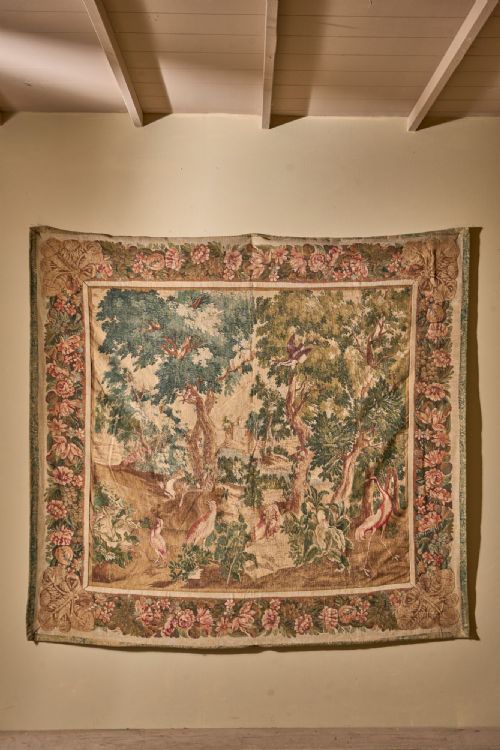
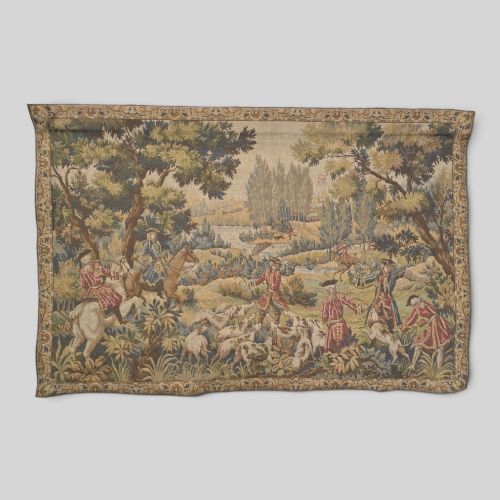
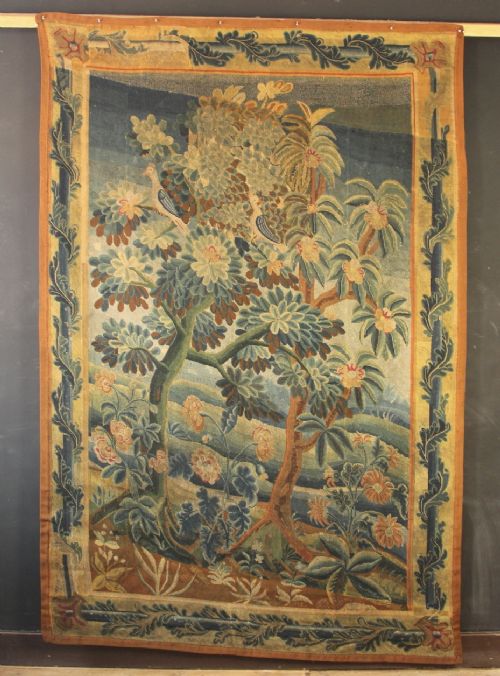
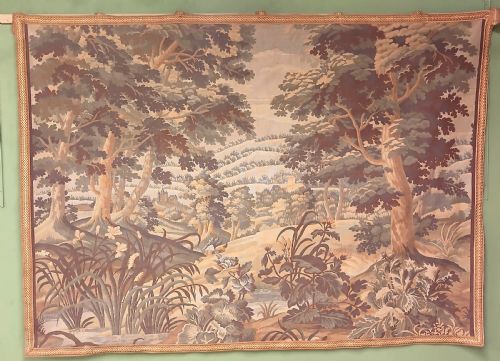
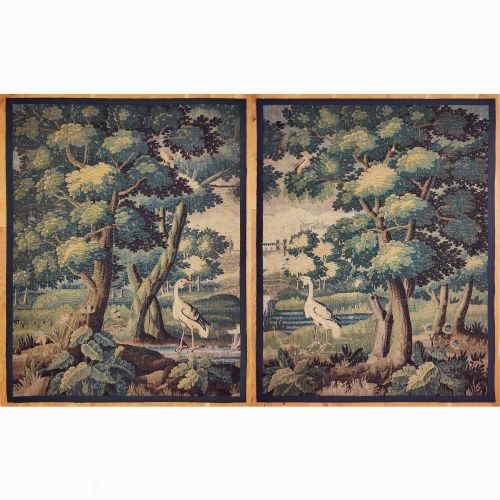
When you search for a french tapestry panel, you find woven wall art, framed textiles, and upholstered furniture spanning several centuries. The selections include large wall hangings, verdure fragments, needlepoint panels, and narrow entre-fenêtre pieces designed to fit between windows.
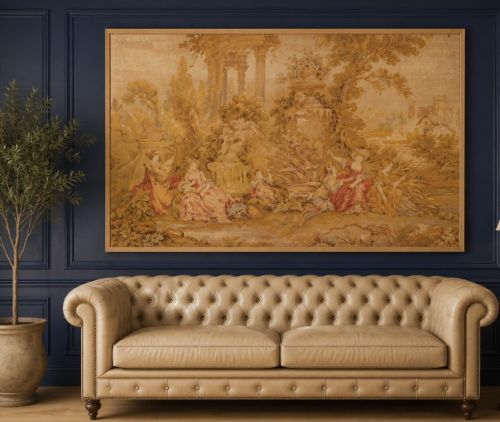
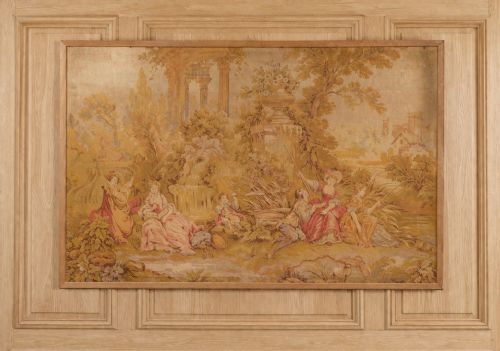
Most examples date from the 18th and 19th centuries, alongside late 17th-century works and early 20th-century revivals. Pastoral scenes, verdure landscapes with foliage, and needlework pictures dominate the forms seen on this page.
Beyond wall art, the inventory includes occasional seating such as open armchairs fitted with needlework panels, plus textile elements mounted on linen or framed in wood and giltwood.
How they were made
The pieces rely on natural fibres, principally wool and silk, often combined with cotton and linen support backing. Needlework and woven textile techniques create the dense surface textures recorded across these listings.
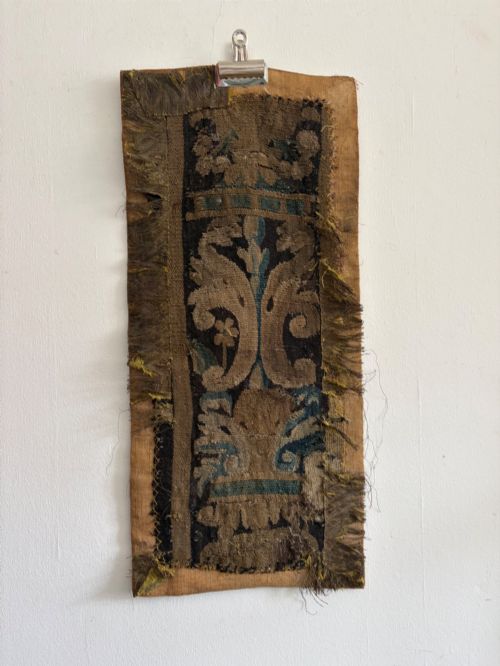
Frames and structural supports utilise wood, walnut, giltwood, and brass hardware. Certain fragments are mounted directly onto linen or fixed onto boards to preserve fragile textile grounds.
Listings span four centuries, featuring wool, silk, and linen textiles mounted in wood, walnut, giltwood, and brass.
What varies in quality
Quality rests in the fineness of the needlework or weave, with dense petit point panels showing greater detail than coarser stitching. The nuance of the wool and silk dyeing dictates the depth of verdure foliage and pastoral shading.
Condition and mounting also shape the piece, distinguishing intact framed panels and robust wall hangings from fragile fragments that require linen backing or border stabilization.
Aubusson
The French Tapestry Panel Glossary
- Verdure
- A tapestry or panel depicting lush foliage, trees, and plants, frequently populated by birds or animals. These pastoral landscape scenes are typical of 17th and 18th-century production.
- Entre-fenêtre
- A tall, narrow tapestry panel proportioned to hang on the wall space between two windows. These pieces match specific architectural dimensions of period rooms.
- Petit point
- A fine, count-stitch needlepoint technique executed on single-mesh canvas. This method permits intricate facial details and complex shading.
- Needlework
- Hand-stitched textile art created using yarn or silk threads on a canvas or linen ground. The category encompasses both framed pictures and upholstered furniture inserts.
- Ciséled silk velvet
- A cut and uncut velvet fabric that creates a patterned relief effect. This luxurious textile appears in period wall hangings.
French Tapestry Panel: Frequently Asked Questions
How were french tapestry panel works originally used?
These textiles served as functional wall insulation in stone-walled chateaux and grand houses, blocking drafts while displaying pastoral or verdure scenes. Narrow entre-fenêtre pieces hung specifically between windows to maintain continuous decoration around a room.
Over time, many panels were remounted, framed as wall art, or incorporated into seating such as open armchairs and screens as decorative accents.
How do I care for a textile panel?
Keep textile panels out of direct sunlight to prevent wool and silk fibres from fading. Gentle surface dusting with a soft brush helps maintain the weave without straining the fabric.
Mounted panels and framed needlework should hang in stable environments away from excessive moisture and heat fluctuations.
How can I tell an 18th century piece from a 19th century piece?
Eighteenth-century panels often display naturalistic verdure palettes, softer wool dyes, and hand-woven or fine petit point execution typical of period workshops. Eighteenth-century pastoral scenes also tend to reflect rococo or baroque artistic conventions.
Nineteenth-century examples frequently point towards revivalism, utilising machine-assisted elements or distinct needlework styles associated with Victorian and Edwardian production.
Are all panels designed for walls?
While most listings comprise wall hangings, framed displays, and friezes, several items serve secondary functions. The inventory includes textile cushion covers, room divider panels, and upholstered open armchair inserts.
Framed fragments on board or linen backing represent salvaged portions of larger historical wall hangings adapted for modern display.