
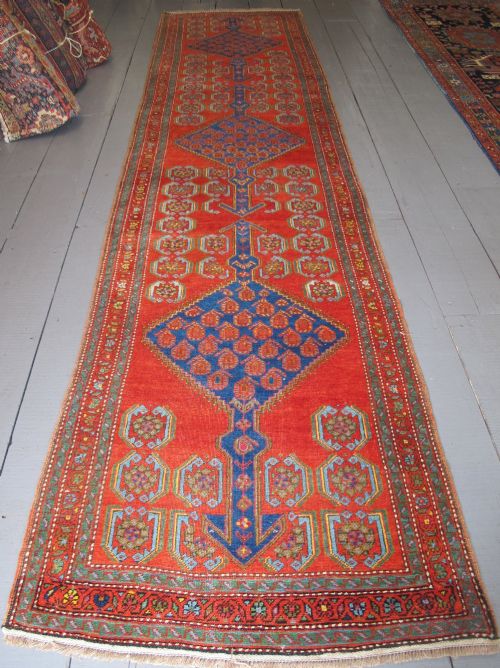


Wool Hall Runner Rug
A wool hall runner rug brings floor warmth and enduring geometry to a narrow corridor, combining regional patterns with heavy service.
Wool Hall Runner Rug
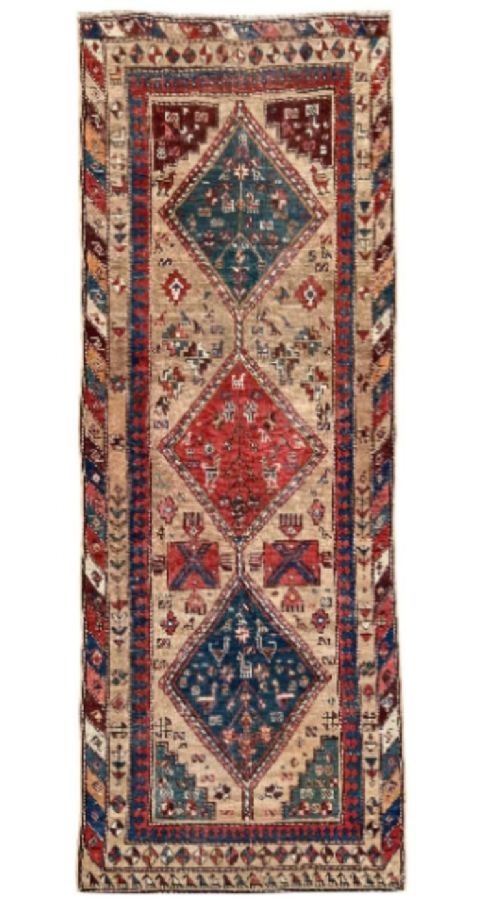
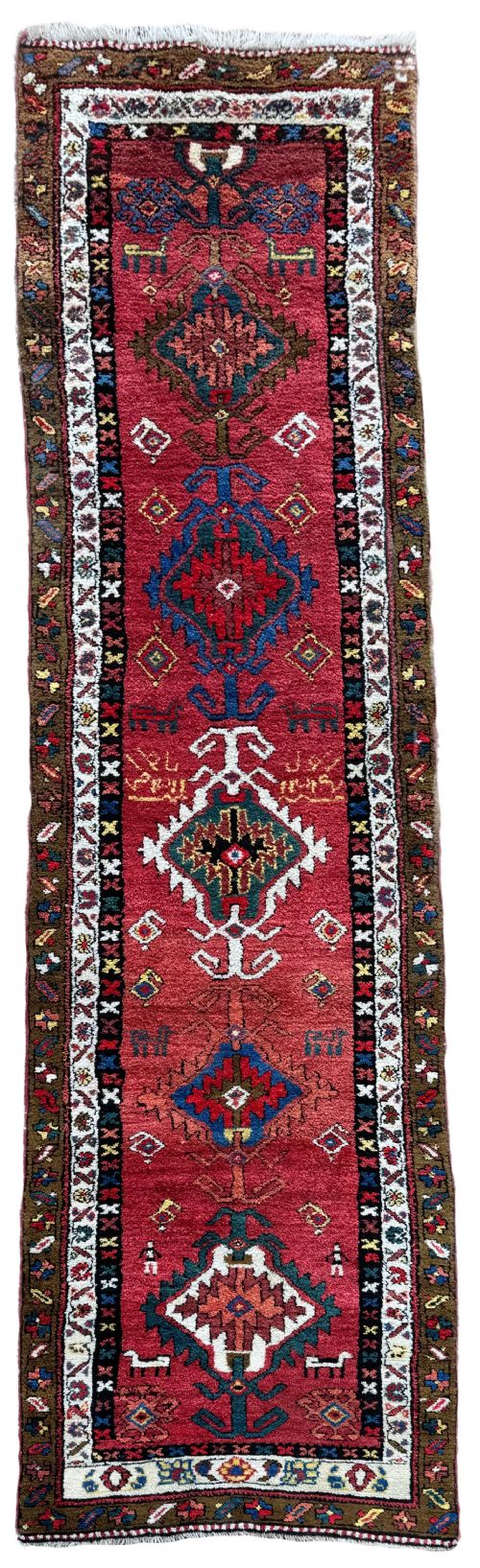
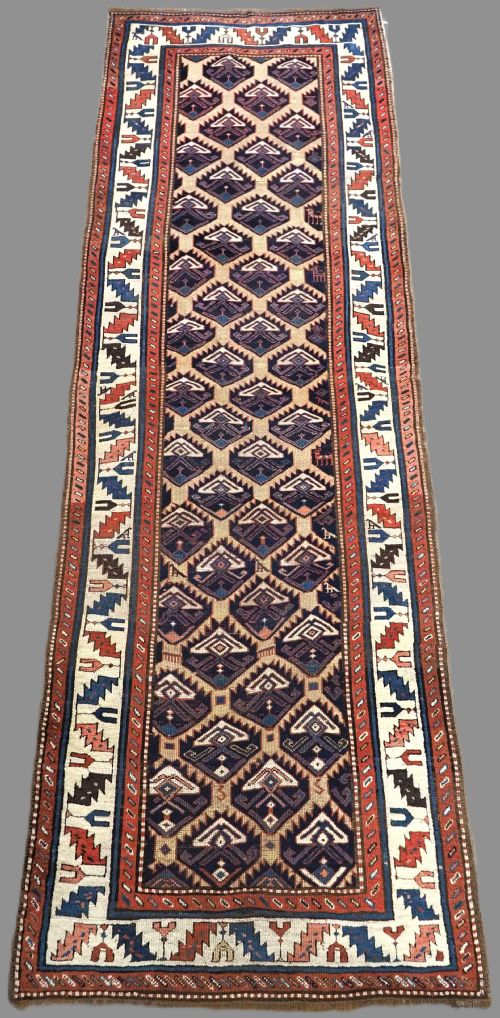
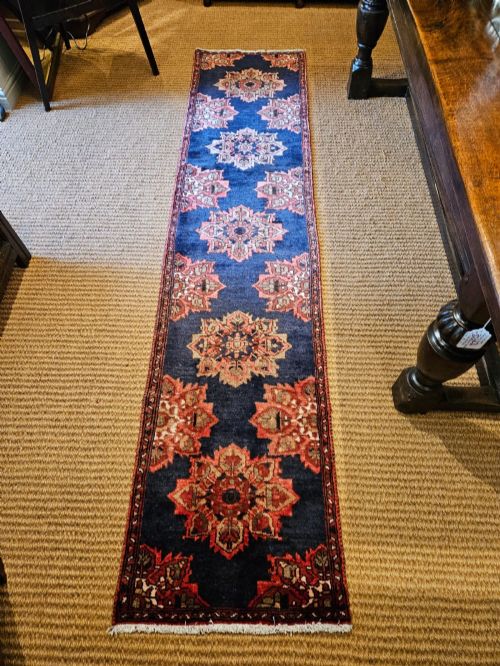
A wool hall runner rug is a long, narrow floor covering designed for corridors, landings and high-traffic thoroughfares. These pieces originate from Persian, Caucasian and Turkish weaving traditions, spanning periods from the nineteenth century through to the early twentieth century.
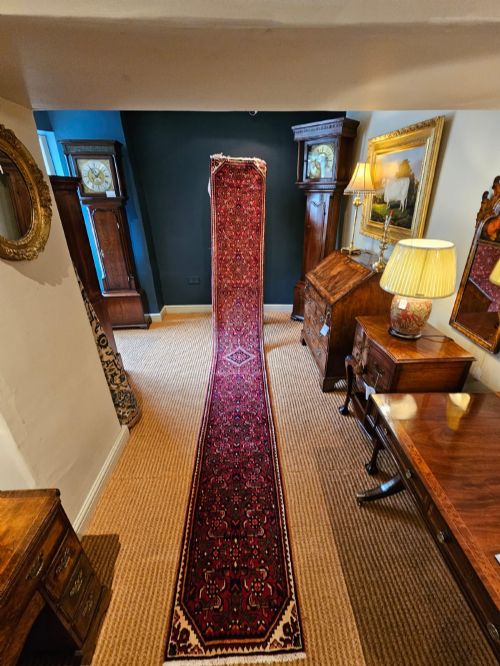
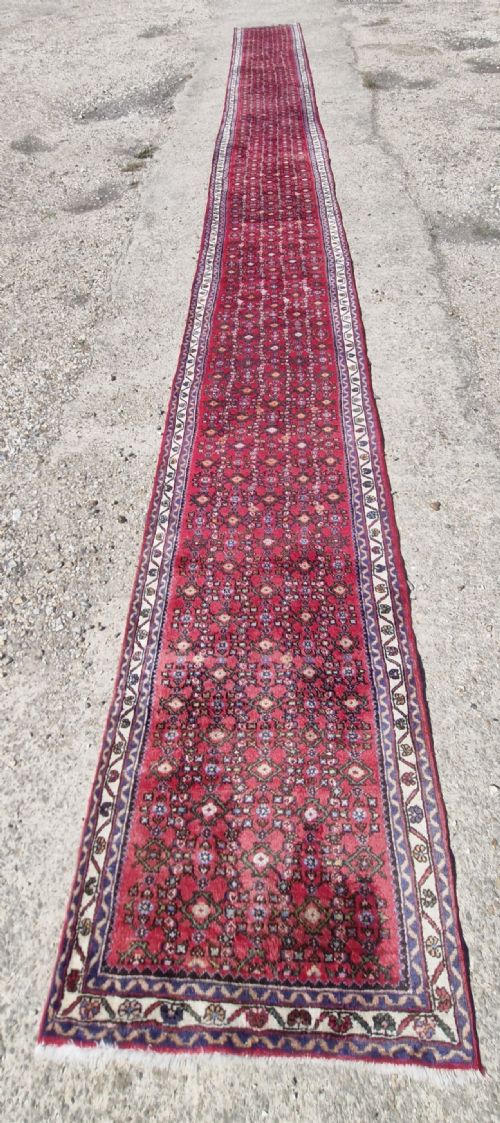
The format focuses on linear geometry, repeating medallions and border arrangements tailored to confined architectural spaces. Buyers encounter formats ranging from concise nineteenth-century village pieces to room-length runners reaching thirty feet or more.
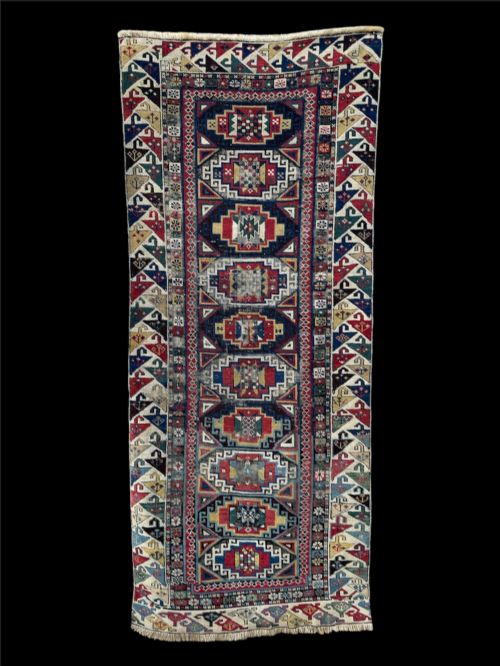
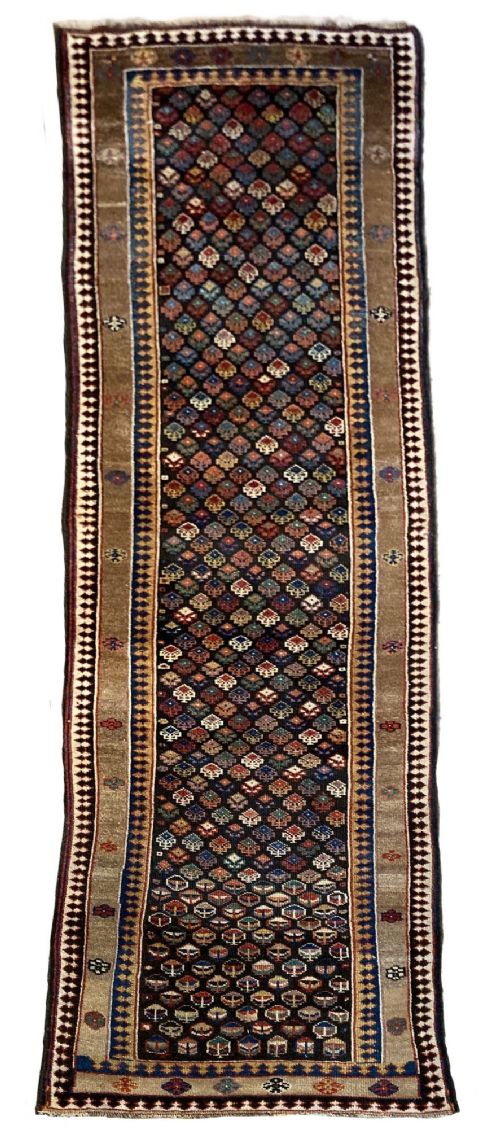
Tribal workshops and regional weavers produced these runners to withstand decades of foot traffic while displaying distinct local iconography. The designs utilise traditional motifs such as boteh, lattice patterns and geometric medallions associated with specific weaving groups.
What varies in quality
Quality rests in knot density, handle flexibility and the crispness of the drawn motif. Finer examples exhibit precise geometric alignment and resilient wool that retains its spring under pressure.
The depth and integrity of the dye palette separate standard village production from superior workshop pieces. Secondary materials and the regularity of the foundation weave further distinguish master outputs from everyday utility runners.
Current listings feature pieces spanning the nineteenth century up to the 1960s, constructed predominantly from wool, cotton and natural dyes.
The Wool Hall Runner Rug Glossary
- Runner
- A long, narrow carpet format intended for hallways, stairs and corridors. This shape highlights repeating border guards and central medallion sequences.
- Pile
- The vertical tufts of wool that form the upper tactile surface of the rug. Dense pile protects the structural foundation beneath.
- Warp
- The vertical threads stretched lengthwise on the loom that carry the weight of the rug. Visible fringe ends are typically extensions of these warp threads.
- Weft
- The horizontal threads passed across the warp to lock the knots in place. Proper tension here creates a stable, flat-lying fabric.
- Boteh
- A stylised almond or pear-shaped motif of Persian origin. This ancient symbol appears frequently in tribal and village runner designs.
Wool Hall Runner Rug: Frequently Asked Questions
Where should a runner go?
These long formats suit narrow transit zones such as hallways, long landings and entry corridors. They protect timber floors while defining circulation paths.
Heavier wool constructions absorb sound effectively in high-traffic domestic spaces, softening echoes in stone or wooden hallways.
How do I clean an old wool runner?
Routine maintenance requires gentle surface vacuuming without rotating brush attachments to protect the fragile wool pile and historic fringes. Professional specialist cleaning remains essential for deep saturation.
Water and harsh commercial detergents damage natural dyes and weaken hand-spun fibres, so liquid spills require immediate blotting rather than scrubbing.
Are these rugs durable?
Traditional village and tribal weaving methods produce dense structures built for daily household transit. Hand-spun wool contains natural lanolin that resists dirt and stands up to heavy friction.
Older pieces require sensible placement and quality underlays to prevent sliding and reduce mechanical stress on the foundation threads.
How are regional styles told apart?
Caucasian runners favour sharp geometry, stark primary colours and distinct lattice frameworks. Persian and Kurdish pieces often incorporate softer curves, richer field abrasions and repeating boteh or Heriz medallion systems.
Border arrangements and palette choices provide clear clues to the specific origin workshop or nomadic group responsible for the weave.