


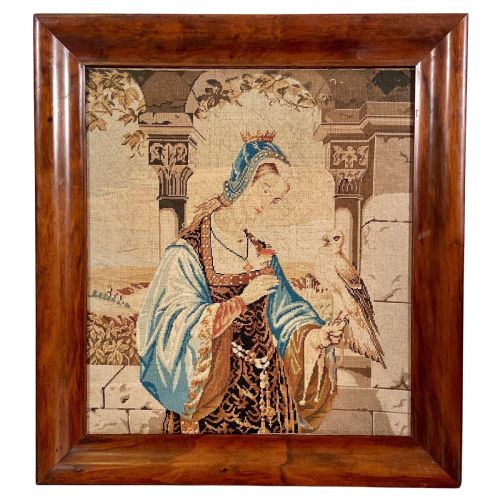


Wool Embroidery Picture
A wool embroidery picture brings tactile depth to a wall, recording pastoral scenes, portraits, and maritime subjects through centuries of hand stitching.
Wool Embroidery Picture
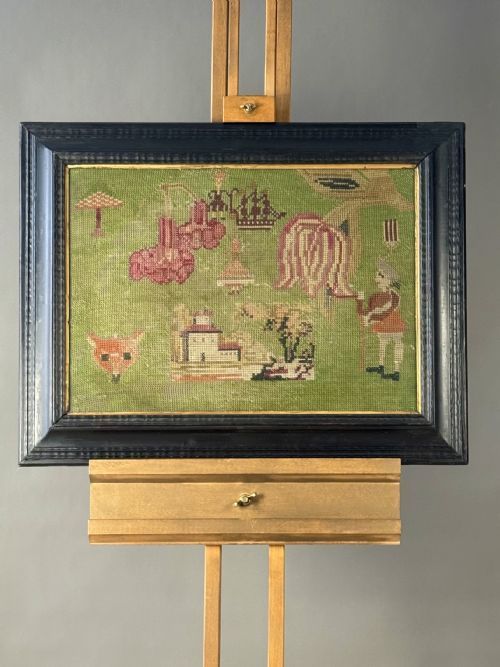
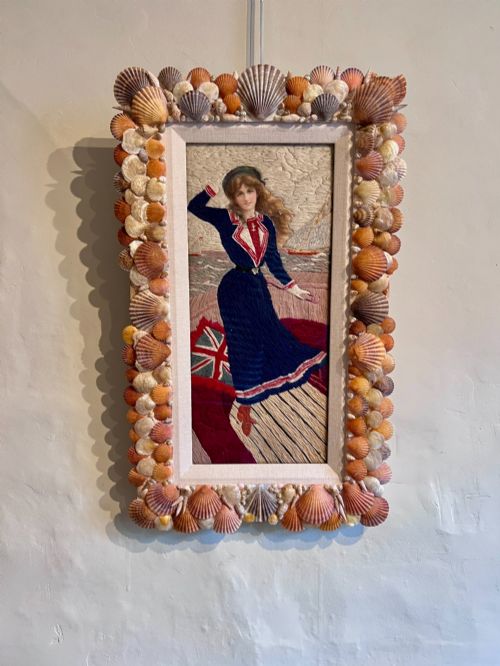
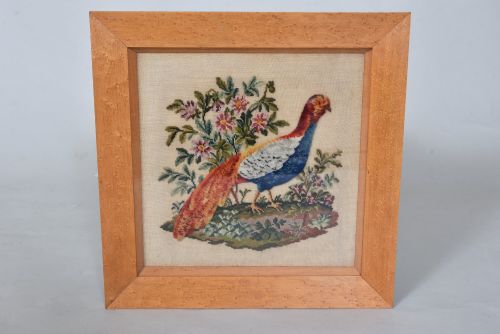
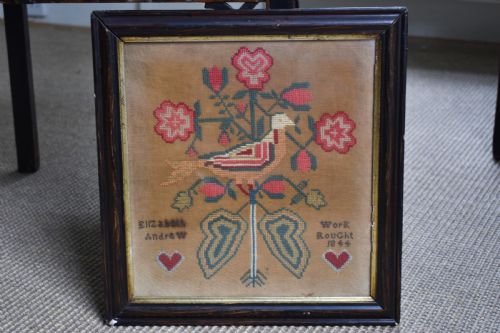
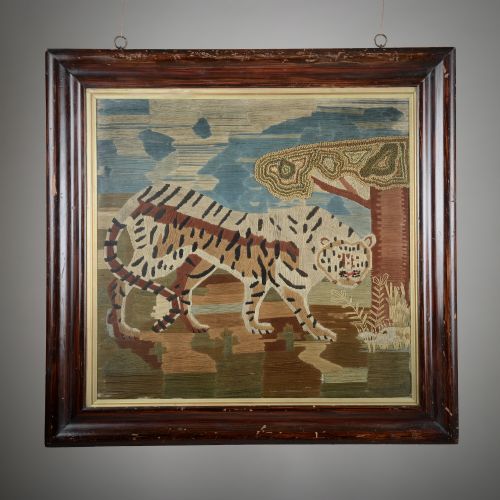
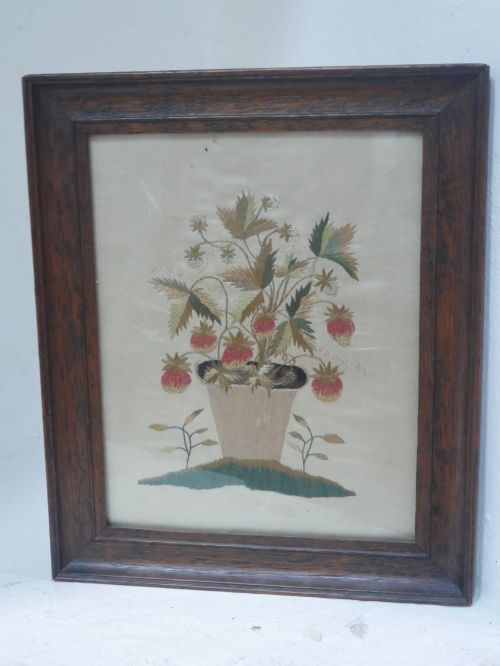
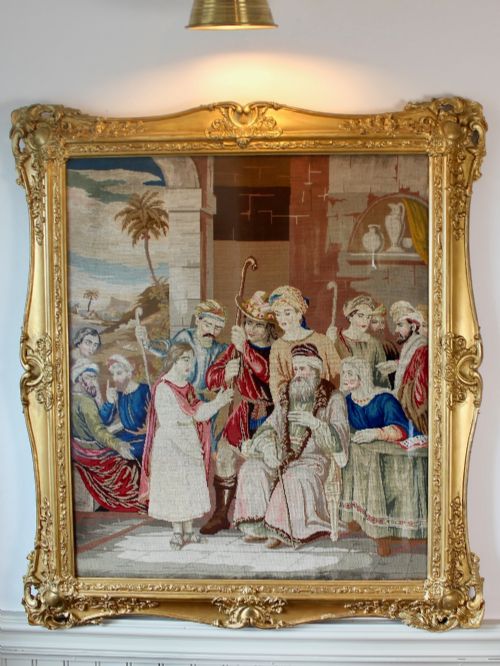
A wool embroidery picture forms part of a rich tradition of textile wall art spanning the eighteenth, nineteenth, and early twentieth centuries. These works range from naive folk art depictions and detailed Berlin woolwork to classical portraits and maritime woolies.
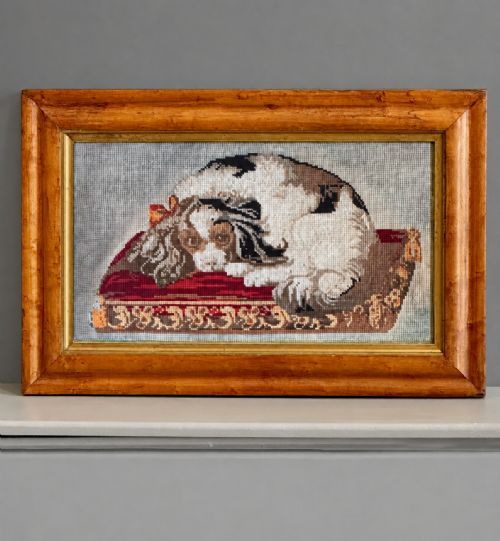
Buyers frequently encounter Victorian examples alongside eighteenth-century works, often framed in period rosewood, burr maple, or giltwood. The subjects stretch from domestic animals and botanical studies to historical scenes and religious narratives.
Formats vary from rectangular wall hangings to oval compositions housed beneath protective glass. Each piece preserves the hand of the maker through canvas, linen, and wool threads.
Materials and construction
Makers stitched wool yarns onto supportive foundations of canvas or linen, frequently combining gros-point and petit-point techniques to achieve varied levels of detail. Silk threads occasionally appear alongside wool to introduce subtle highlights to skin, clothing, or foliage.
Frames play a crucial role in the survival of these textiles, utilising wood, giltwood, or verre églomisé glass. Many surviving works retain their original frames, which protect the delicate fibres from environmental damage.
Watch for vigilant King Charles spaniels keeping eternal watch beside nineteenth-century hearth scenes.
Assessing quality and execution
Quality rests upon the precision of the stitching and the complexity of the design, distinguishing ambitious narrative tapestries from simpler samplers. The harmony of the wool palette and the preservation of the original fibres determine the visual impact of the work.
The Wool Embroidery Picture Glossary
- Berlin work
- A style of needlepoint popular in the nineteenth century, worked from printed and hand-coloured grid patterns using dyed wools.
- Gros-point
- A coarse needlepoint stitch used for the background or bolder areas of a tapestry, offering a robust texture.
- Woolie
- A specific type of sailor-made embroidery depicting British naval ships, often incorporating padded woolwork details.
- Verre églomisé
- A process of applying design and gilding to the rear of glass, frequently used for decorative antique picture borders.
Wool Embroidery Picture: Frequently Asked Questions
How do I hang a wool embroidery picture?
Protect the textile from direct sunlight to prevent the dyed wools from fading over time. Hang the piece on an interior wall away from moisture sources to maintain the fabric and the wooden frame.
Ensure the hanging wire or fixings securely support the weight of the framed glass and wooden mount. Professional framing with conservation glass offers additional protection against environmental dust and UV exposure.
What is a sailor woolie?
A sailor woolie is a nineteenth-century textile artwork produced by sailors at sea, typically depicting naval vessels under full sail. These pieces often employ padded woolwork techniques to create a three-dimensional effect for the hull and waves.
Such works frequently feature detailed rigging rendered in fine cotton or thread alongside stitched flags and maritime signals. They represent a distinct subcategory of folk art within needlework collecting.
How do I date an antique needlework picture?
Examine the framing materials, backing boards, and stitching style to establish a baseline period for the artwork. Eighteenth-century examples often lean towards pastoral or classical themes, while Victorian pieces frequently showcase Berlin work or plushwork techniques.
Inscriptions, dates worked directly into the canvas, and the specific weave of the linen foundation provide further clues. Comparing the subject matter to documented historical periods helps narrow down the decade of creation.
Are these works made from wool alone?
While wool forms the primary medium, many pictures incorporate silk, cotton, or metallic threads to add textural contrast and highlights. Foundations typically consist of open-weave linen or canvas stretched across wooden chassis.
Some specialised Victorian pieces utilise raised pile work or felt appliqués alongside standard embroidery stitches. Glass, wood, and gold leaf complete the physical materials found in framed examples.