
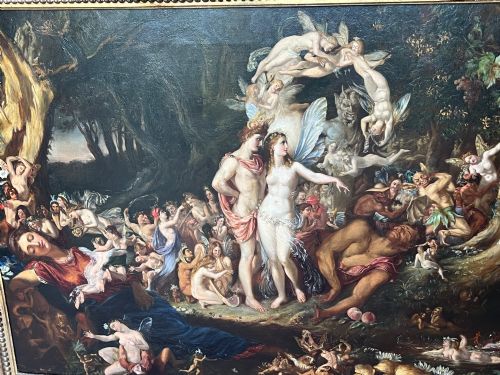

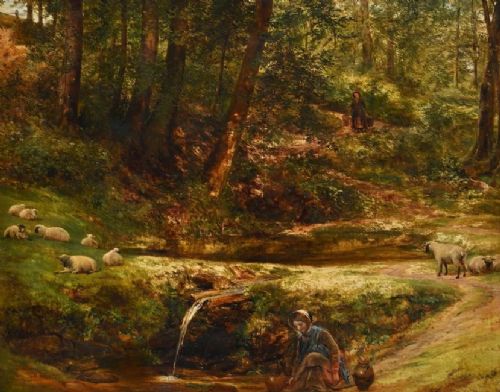


Woodland Scene Oil
A woodland scene oil brings the quiet interior of forest and glade into a room through pigment and canvas.
Woodland Scene Oil
A woodland scene oil captures trees, forest floors, and filtered light across various British and European artistic movements. You will most frequently encounter nineteenth-century canvases and board paintings alongside early twentieth-century and post-war interpretations.
The works span romantic landscapes, Victorian naturalism, and impressionist studies, often featuring figures, cattle, or rivers nestled among the trees. These paintings range from intimate cabinet pieces to large gallery-scale compositions.
Makers recorded in the archive and current selection include notable British and continental painters who specialised in the pastoral traditions of their eras.
How they were made
Artists built these compositions primarily using oil paint applied to woven canvas or prepared wooden boards. The medium allowed for slow blending of earthy pigments, capturing the deep greens and browns of woodland floors alongside luminous patches of sky.
Many works retain their original gesso and gilt frames, which provide structural support and historical context for the painted surface.
Several woodland scenes quietly hide stray cattle or children playing on gates deep within the painted foliage.
What varies in quality
Quality rests in the handling of light through the canopy and the structural confidence of the brushwork. Master hands convey depth and atmosphere with economy, while lesser works rely on repetitive formulaic foliage.
The preservation of the original paint layer and the integrity of the canvas tension separate enduring examples from those compromised by heavy restoration or poor storage.
Sir Joseph Noel Paton·Richard Sebastian Bond·William H Myers·Thomas W Lascelles·Richard Redgrave·James Mallard Bromley·David Watts·John Wright Oakes·James Proudfoot·Edward H Holder·George F Wetherbee·J McIntyre·Lester Sutcliffe·Frederick Bartman·Benjamin Callow·Walter Emsley·Charles Edmond Rene His·William Mellor·Everett W Mellor·Charles Duval·George Neil·Frederick Golden Short·Frederick Richard Lee·George Arthur Fripp·John Cuthbert Salmon
The Woodland Scene Oil Glossary
- Canvas
- A heavy woven fabric stretched across a wooden frame to serve as a painting support. It provides a flexible and durable surface for oil application.
- Gesso
- A traditional primer mixture of binder mixed with chalk, gypsum, or pigment used to prepare wood panels for painting. It creates a smooth and stable ground for the oil medium.
- Gilt
- A thin layer of gold leaf applied to wooden frames for decoration and protection. It highlights the decorative borders surrounding the canvas.
- Impressionist
- A style involving thin brush strokes and open composition emphasising accurate depiction of light. This approach appears in several twentieth-century works.
- Naturalism
- A movement dedicated to the realistic representation of the natural world without idealisation. It underpins much of the Victorian landscape tradition.
Woodland Scene Oil: Frequently Asked Questions
What periods do these paintings cover?
The selection spans from the nineteenth century through the mid-twentieth century. Works reflect evolving artistic movements from Victorian naturalism to post-war impressionism.
Most pieces date to the late nineteenth and early twentieth centuries, reflecting the enduring popularity of pastoral subjects among British and continental painters.
How should I hang an oil painting?
Secure the painting using appropriate wall fixings that match the weight of the frame and canvas. Avoid positioning the work in direct sunlight or above active heat sources.
Stable indoor humidity and temperature protect both the wooden stretcher bars and the oil pigment from premature cracking.
Are these paintings signed by the artist?
Many of the listed works feature original signatures or monograms applied by the painter, often located in the lower corners of the canvas. Documentation and archival records frequently accompany signed pieces.
Unsigned works remain common from the nineteenth century, attributed instead through stylistic analysis and framing evidence.
What subjects appear besides trees?
Woodland scenes frequently incorporate pastoral elements such as rivers, streams, cattle, and figures gathering firewood or walking along country lanes. Seasonal variations introduce winter snow effects and autumn foliage.
These additions provide narrative depth and scale to the overarching forest composition.