



Woodland Scene Artwork
Woodland scene artwork captures the quiet depth of nature through painted canvases and watercolours from the nineteenth and twentieth centuries.
Woodland Scene Artwork
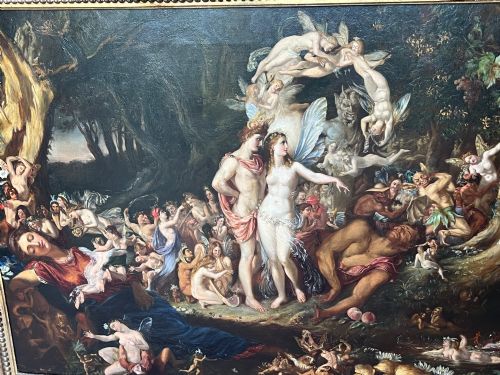
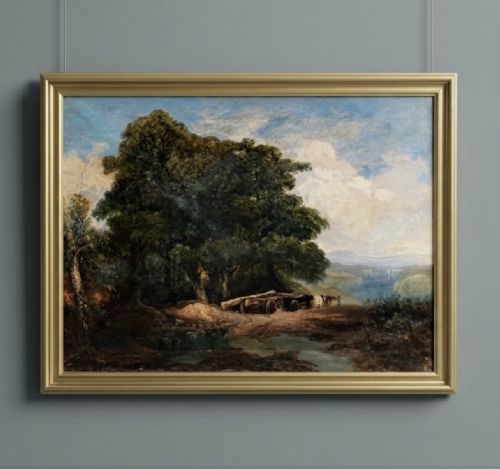
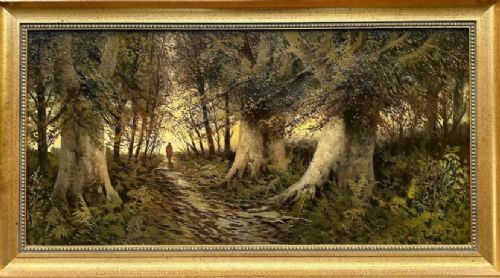
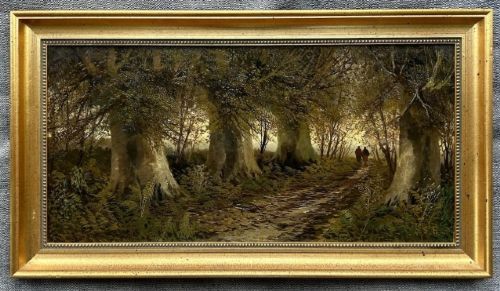
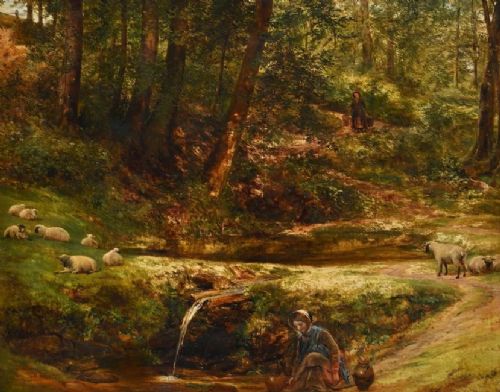
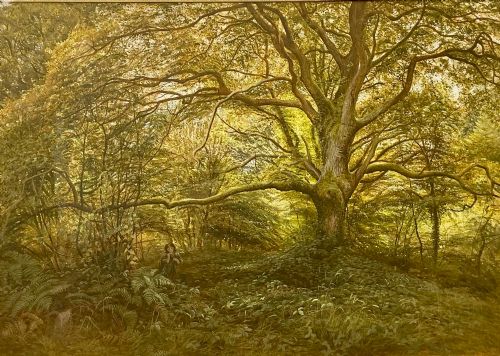
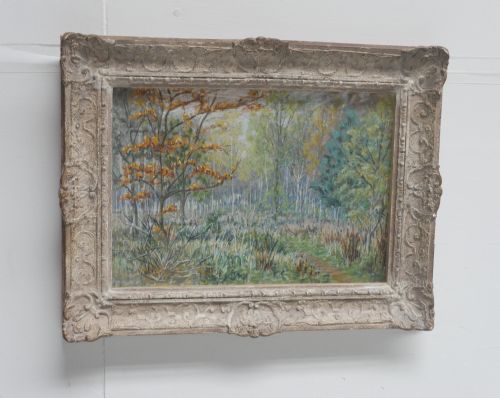
Woodland scene artwork spans framed oil paintings, watercolours and pastels depicting trees, forests and rural countryside. Buyers encounter Victorian landscapes alongside twentieth-century impressionist and post-war interpretations.
The selections on this page range from detailed nineteenth-century forest views with figures to mid-century rural scenes executed on canvas or paper. These pieces reflect shifting artistic approaches to natural environments over successive decades.
How They Were Made
Artists painted primarily in oil on canvas or applied watercolour and pastel to paper, mounted under glass within wood frames. Oil paint allowed for rich layering and texture, whereas watercolours offered fluid transparency.
Support materials varied from stretched canvas to heavy paper sheets, matched to the specific demands of studio or plein air painting techniques employed during the Victorian and later periods.
Woodland Scene Artwork Retail Price Guide 2026
Typical asking prices for woodland scene artwork among the pieces listed under this phrase on Sellingantiques today, from the lower quarter to the upper quarter. They describe what is for sale here now, not the wider market.
Materials documented here include canvas, wood, oil paint, paper, watercolour and glass.
What Varies in Quality
Quality rests upon the artist's handling of light, depth and natural atmosphere within the woodland setting. Accomplished brushwork creates convincing spatial depth and tactile bark or foliage rather than flat decoration.
The success of a composition depends on the balance between woodland elements, figures or animals, and the atmospheric conditions of sunset, autumn or winter recorded by the painter.
Sir Joseph Noel Paton·Richard Sebastian Bond·William H Myers·Thomas W Lascelles·Richard Redgrave·Bonomi Edward Warren·Arthur Herbert Rigg·James Mallard Bromley·David Watts·John Wright Oakes·Walter Follen Bishop·James Proudfoot·Rowland Henry Hill·Edmund George Warren·Charles James Adams·George Graham·Charles Edward Holloway·Edward H Holder·George F Wetherbee·J McIntyre·Charles Edward Wilson·Lester Sutcliffe·Frederick Bartman
The Woodland Scene Artwork Glossary
- Oil on canvas
- Pigment suspended in drying oil applied to a woven fabric support stretched across a wooden frame. This method was standard for durable, large-scale landscape paintings.
- Watercolour
- Paint consisting of water-soluble pigments used on paper supports. It creates luminous washes favoured for atmospheric landscape studies.
- Impressionism
- A style focusing on the visual impression of the moment, particularly shifting light and open-air conditions. Artists used visible brushstrokes and unblended colour.
- Pastel
- A dry drawing medium consisting of powdered pigment and a binder. It produces velvety surfaces requiring protection beneath glass.
Woodland Scene Artwork: Frequently Asked Questions
What periods do these artworks cover?
The pieces span the nineteenth century through the Victorian era and into the mid-twentieth century, including post-war examples.
This range records evolving British and European landscape painting traditions across multiple decades.
How should I frame an antique watercolour?
Watercolours require mounting behind glass using acid-free materials to protect the paper and pigments from atmospheric moisture and direct light.
Traditional wood frames complement the age and aesthetic of nineteenth-century paper works.
Are these paintings signed by the artists?
Many examples feature original signatures or attributions to named painters from the Victorian and Edwardian periods.
Signatures provide a direct link to the maker and assist in placing the work within their known corpus.
What subjects accompany the trees?
Compositions frequently incorporate figures, cattle, sheep-droving, or quiet rivers alongside the dominant woodland and forest scenery.
These elements introduce narrative depth and scale to the natural landscape views.