

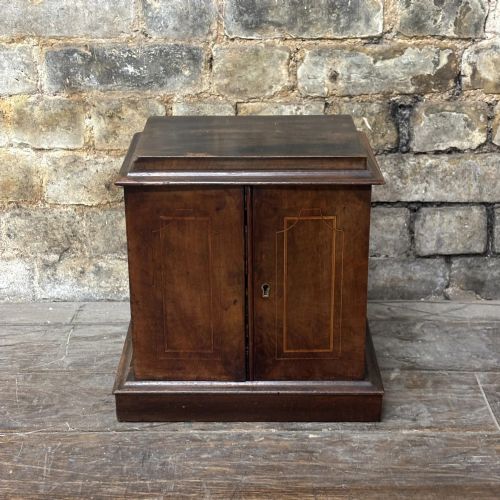


Wooden Writing Companion
A wooden writing companion organises your desk with fitted compartments, inkwells and slope surfaces for correspondence.
Wooden Writing Companion
A wooden writing companion encompasses portable slopes, desk stands and stationery cabinets designed for correspondence. These items organise pens, paper and ink in fitted compartments for daily use.
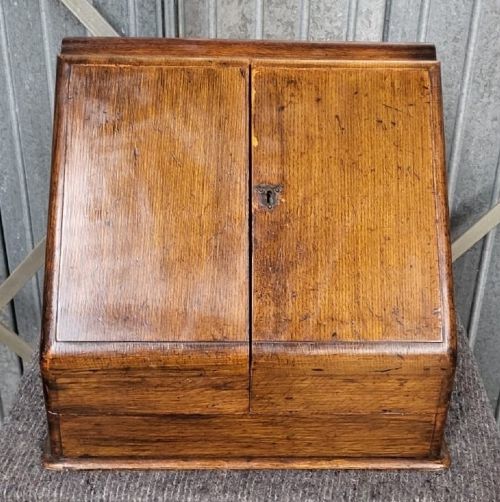
The versions most commonly met on this page date from the Georgian, Regency and Victorian periods up to the Edwardian era. They take forms such as folding writing boxes, inkstands with glass bottles and stationery cabinets in oak or walnut.
How they were made
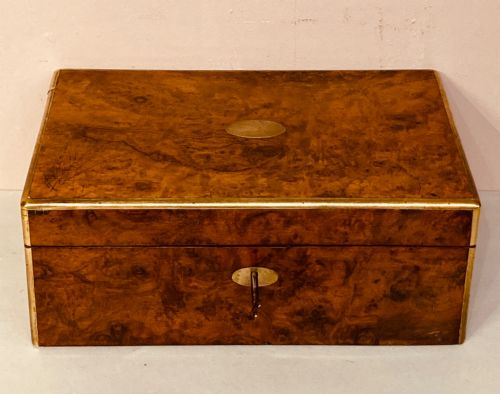
Cabinetmakers utilised hardwoods including mahogany, walnut, burr walnut, oak and coromandel, often mounting them with brass corners, hinges and handles for durability. Finer examples incorporated mother of pearl inlay, ebony carving or rosewood veneers.
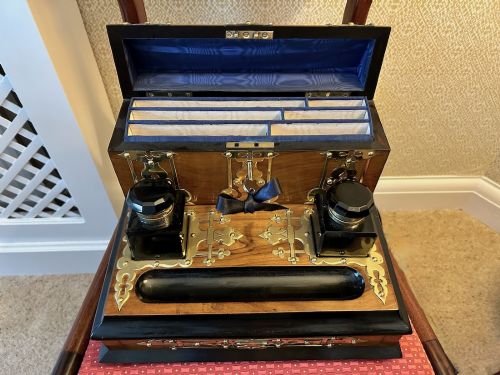
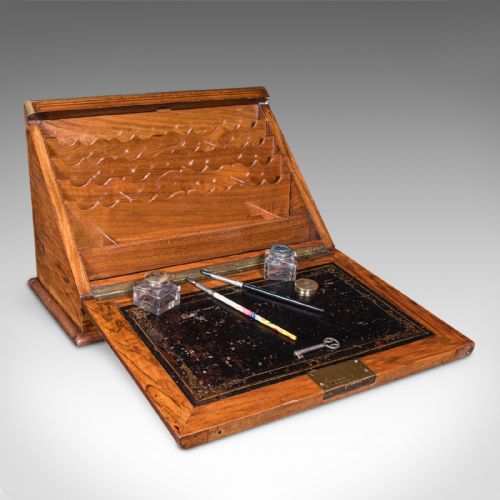
Interiors feature leather writing surfaces, fitted glass inkwells with brass collars, and velvet-lined compartments designed to hold nibs, stamps and stationery securely.
Wooden Writing Companion Retail Price Guide 2026
Typical asking prices for wooden writing companion among the pieces listed under this phrase on Sellingantiques today, from the lower quarter to the upper quarter. They describe what is for sale here now, not the wider market.
The listings on this page span the 19th Century, Victorian, Edwardian, Regency, and Late Georgian periods, constructed from oak, walnut, mahogany, and coromandel.
What varies in quality
Quality depends upon the selection of timber veneers, such as richly figured burr walnut or coromandel, matched across the exterior surfaces. Superior examples display precise dovetail joinery and well-fitted internal stationery racks.
The level of internal refinement distinguishes finer companions, including matching cut-glass inkwells with original brass or silver-plated lids, functioning locks with keys, and secret compartments.
The Wooden Writing Companion Glossary
- Writing slope
- A portable box with a hinged slanted lid that opens to reveal a writing surface and storage compartments. These pieces were designed for travel and home use.
- Inkstand
- A desk stand holding one or more inkwells, often accompanied by pen troughs and sanders. They gather the necessary utensils for writing in a single tray.
- Stationery cabinet
- An upright desk accessory featuring compartments, shelves or a drop-front to hold paper and envelopes. They became popular in the later nineteenth and early twentieth centuries.
- Burr walnut
- A wood veneer taken from the growth growths of a walnut tree, displaying swirling patterns. Cabinetmakers utilised this timber on high-status nineteenth-century pieces.
- Coromandel
- A dense, heavily figured timber from Asia with dark brown and black streaks. It was employed for luxury Victorian desk accessories.
Wooden Writing Companion: Frequently Asked Questions
What is a writing slope?
A writing slope is a portable wooden box that opens to provide an angled surface for writing letters. Inside, compartments store paper, pens and inkwells.
These pieces were essential for correspondence before fitted desks became universal in every room.
How do I use an inkstand?
An inkstand sits on a desk to hold glass inkwells, pens and blotting sand within easy reach. The tray catches drips and keeps the writing area tidy.
Modern users place them on desks to hold fountain pens and small stationery items.
What is the difference between a box and a cabinet?
Writing boxes and slopes are portable items designed to close flat for travel or storage. Stationery cabinets are stationary desk furniture meant to sit permanently on a surface.
Cabinets use vertical compartments to hold letters and envelopes rather than folding flat.
How do I date a wooden writing companion?
Dating relies on timber choices, brass hardware styles and construction techniques visible inside the compartments. Georgian and Regency pieces often feature simpler mahogany or rosewood forms, while Victorian examples introduce heavy oak and coromandel.
Edwardian stationery cabinets show later manufacturing methods and machine-cut dovetails.