


Wooden Trinket Drawers
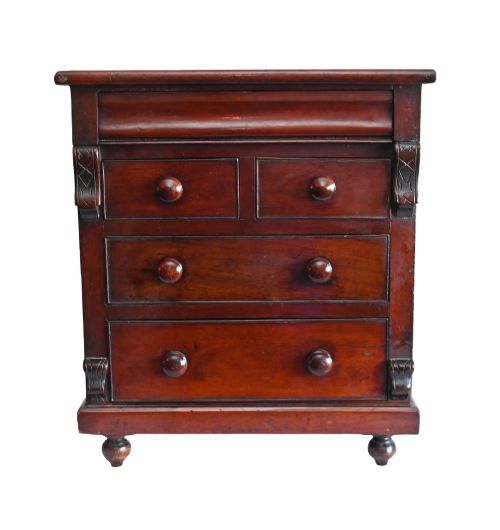
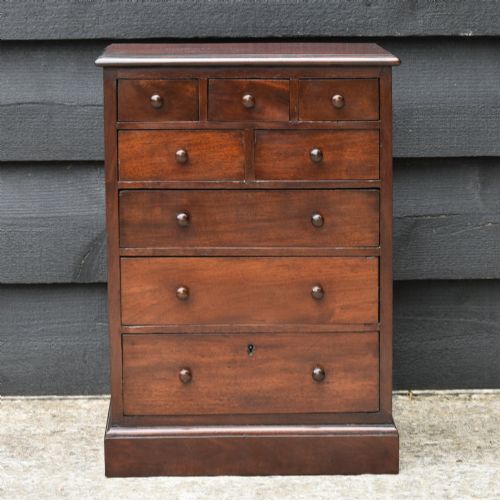
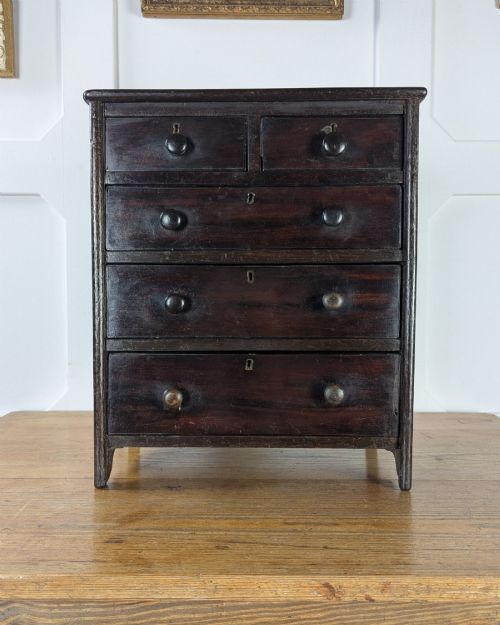
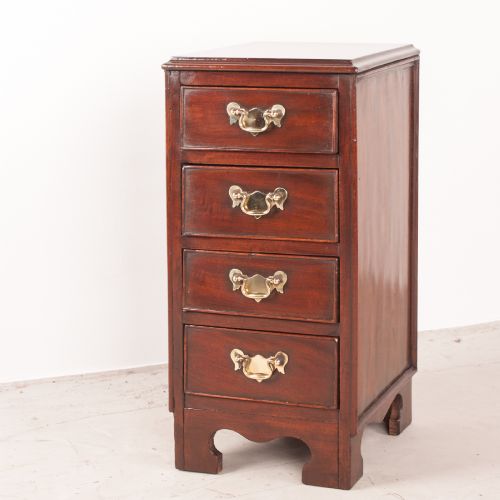
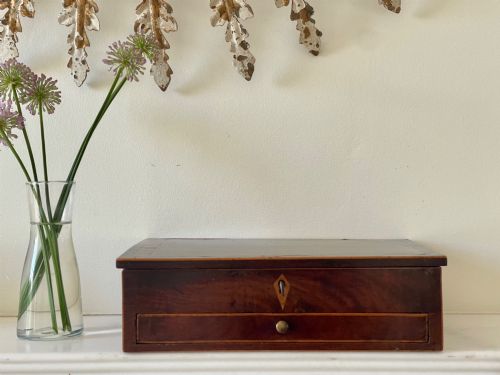
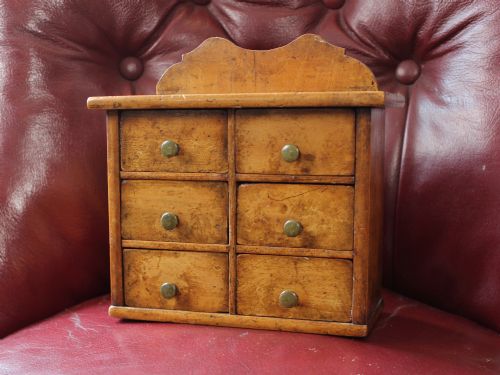
Wooden trinket drawers take the form of miniature chests, spice drawers, and small cabinets used for storing small valuables.
Wooden Trinket Drawers
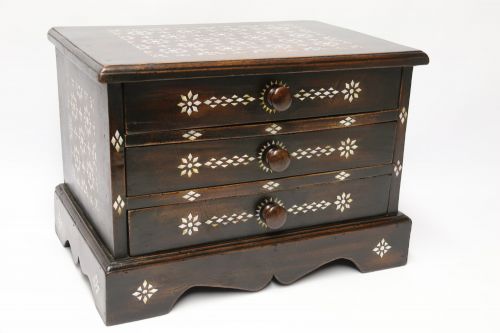
Wooden trinket drawers encompass miniature chests of drawers, jewellery boxes, and small cabinets designed to house personal valuables. These pieces mirror the architecture of full-size furniture down to the smallest detail, functioning as desktop storage or tabletop chests.
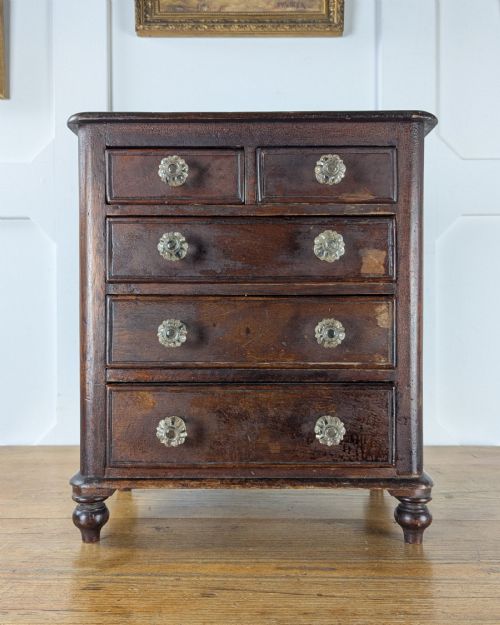
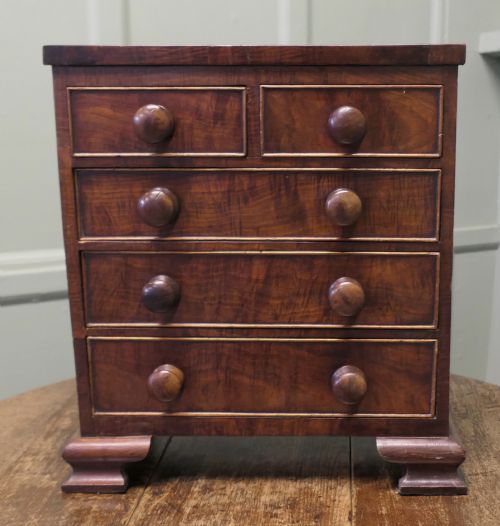
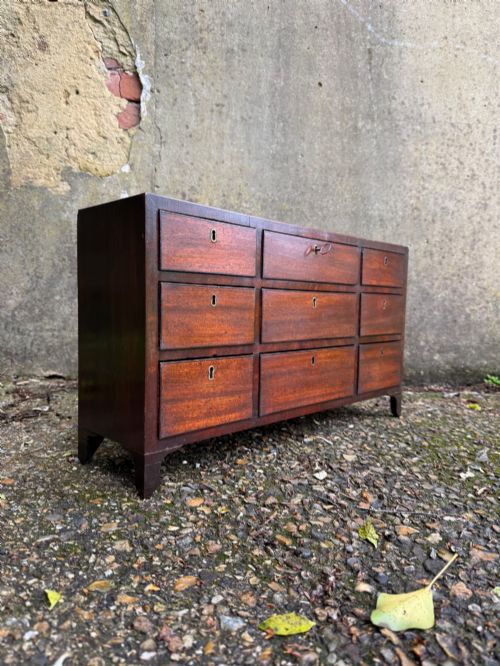
The most common version met on this page is the 19th-century or Victorian mahogany miniature chest of drawers. Often referred to as apprentice pieces, these items span various eras including the Georgian, Edwardian, and 18th-century periods.
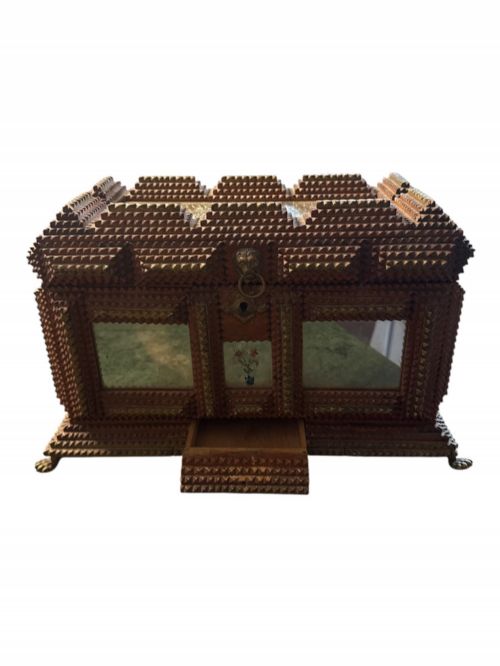
The selection includes specialised forms such as spice drawers, collector chests, and tramp art boxes. Materials range from native timbers like oak and pine to exotic woods like burr walnut and mahogany, occasionally featuring glass and brass elements.
The Spectrum of Quality
Quality in wooden trinket drawers rests on the fidelity of the miniature proportions and the skill shown in the cabinet work. Pieces exhibiting fine dovetailing, carefully matched timber veneers, and harmonious brass fittings sit at the upper end of the scale.
The presence of secondary timbers, the crispness of turned feet, and the depth of the finish determine how closely the miniature resembles its full-sized counterpart. Simpler items in pine or fruitwood rely on their vernacular charm and patination rather than intricate joinery.
Listings feature items spanning four centuries, from 17th-century oak table boxes to Edwardian mahogany dressing chests.
The Wooden Trinket Drawers Glossary
- Apprentice piece
- A small-scale item traditionally made by a craftsman to demonstrate skill for guild admission, though many surviving miniature chests served as decorative furnishings.
- Flame mahogany
- A timber cut that yields a distinctive flickering grain pattern, frequently utilised on the drawer fronts of Georgian and Victorian chests.
- Tramp art
- A style of woodworking where items are chipped, notched, or carved from scrap timber, often seen in small boxes and frames from the late 19th century.
- Patina
- The surface sheen and softening of colour developed on wood over decades of handling and exposure to light.
- Collector chest
- A small cabinet with multiple shallow drawers designed for housing specimens, coins, or jewellery.
Wooden Trinket Drawers: Frequently Asked Questions
What were wooden trinket drawers used for?
These small chests served to store jewellery, sewing accessories, letters, and personal valuables. Placed on dressing tables or desks, they kept intimate items organised and secure.
Craftsmen also produced them as miniature display pieces or sample items to show clients the standard of work available in larger furniture forms.
How do I tell a Georgian chest from a Victorian one?
Georgian pieces typically display restrained classical proportions, often featuring flame mahogany veneers and simple bracket feet or flush bases. The joinery is neat and timber selection prioritises rich grain.
Victorian examples frequently introduce turned wooden feet, darker finishes, and occasionally elaborate inlay work or brass fittings reflecting the industrial tastes of the later 19th century.
Are these drawers actually made by apprentices?
While traditional history links miniature chests to young trainees proving their competence, modern consensus suggests many were commercial items produced for affluent homes. They functioned as tabletop furniture rather than strict guild exams.
Regardless of origin, the term apprentice piece remains a common descriptor for these finely scaled wooden chests.
How should I care for antique wooden drawers?
Keep the wood away from direct sunlight and extreme temperature shifts to prevent the timber from warping or veneers from lifting. Dust gently with a dry, soft cloth rather than using modern chemical polishes.
Applying a traditional beeswax occasionally will help maintain the natural lustre and protect the patinated surface of the wood.