
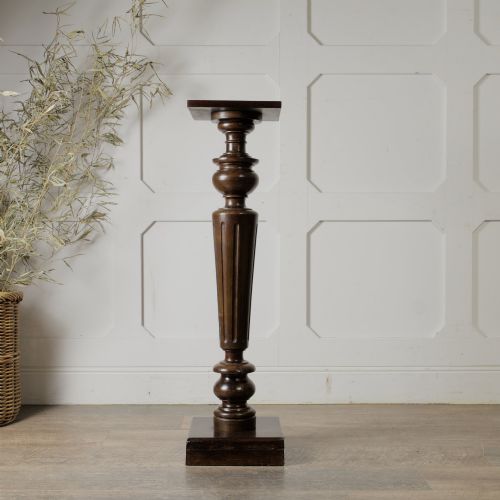
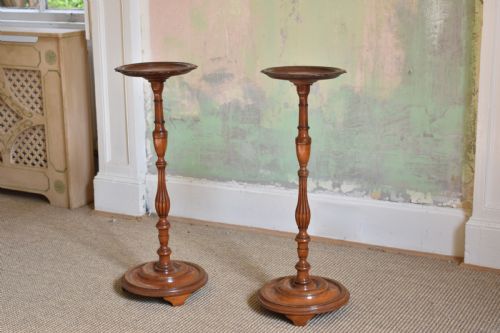
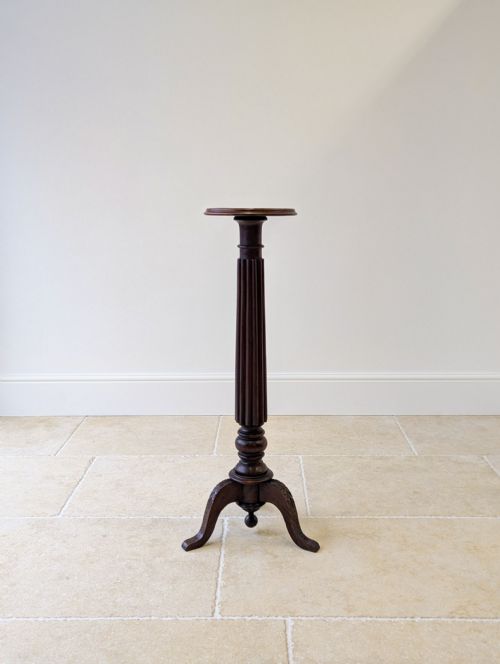
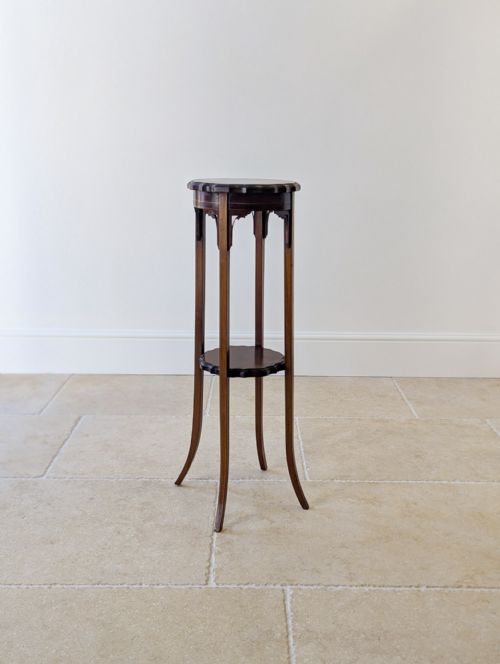

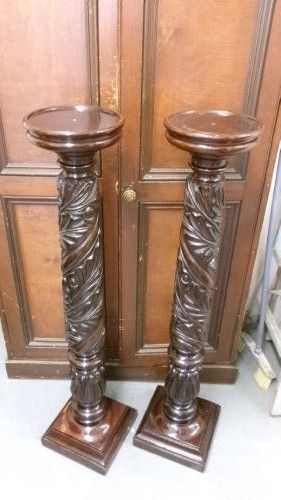
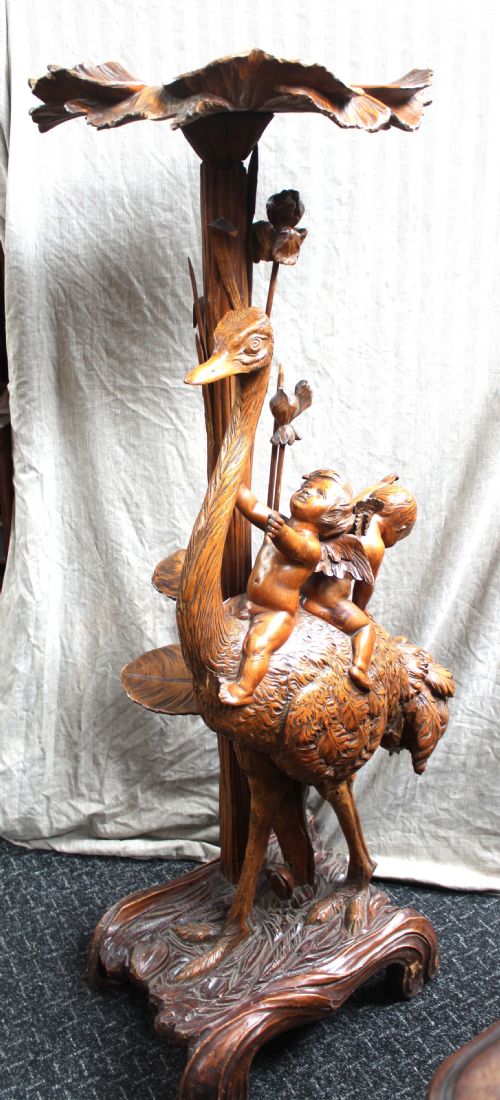

Wooden Torchere Column
A wooden torchere column elevates lamps, plants, and busts with vertical presence, drawing the eye upward through a room.
Wooden Torchere Column
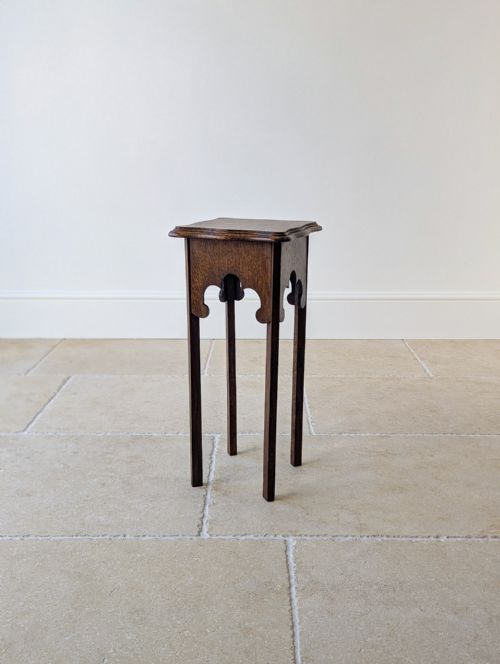
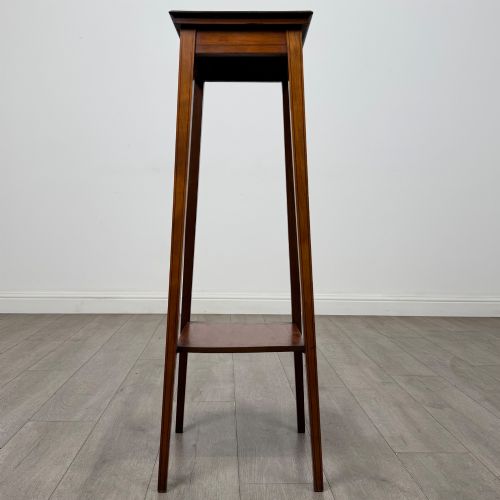
A wooden torchere column serves primarily as a plant stand, pedestal, or candle stand, raising decorative objects above the floor level. When you search for a wooden torchere column, you encounter tall supporting pillars designed to display urns, sculptures, and floral arrangements in domestic interiors.
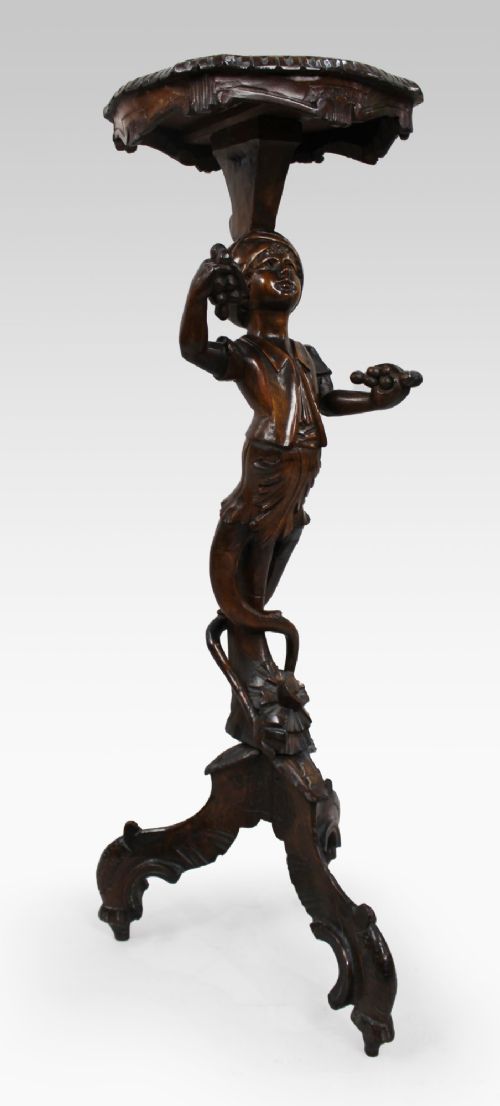
The pieces on this page span several periods, including the Victorian, Edwardian, and Georgian eras, alongside specimens from the nineteenth and early twentieth centuries. Forms range from simple turned plinths to elaborate figural carvings and tripod-based standards.
Origins vary from English country house workshops to Italian studios, utilising diverse regional aesthetics from Italian Baroque to Georgian Revival. Buyers will frequently meet mahogany and walnut examples alongside ebonised wood and satinwood variations.
Materials and Construction
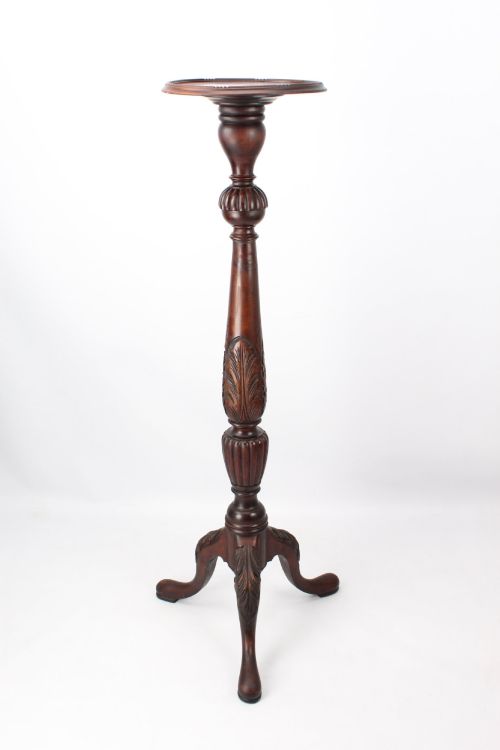
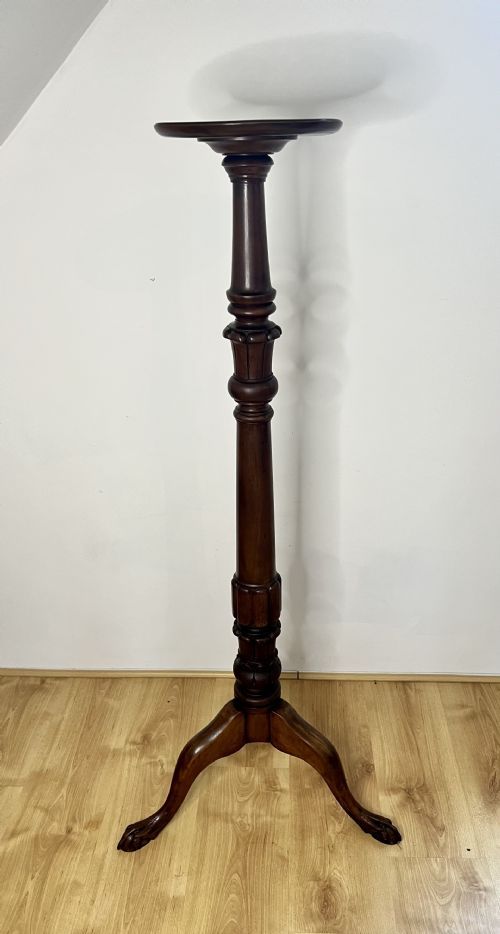
These columns rely on dense timbers such as mahogany, walnut, oak, and satinwood, frequently shaped by the lathe or worked by hand with intricate carving chisels. Craftsmen constructed stable bases using triform arrangements or heavy tripod feet to support the elevated weight of heavy jardinières and marble tops.
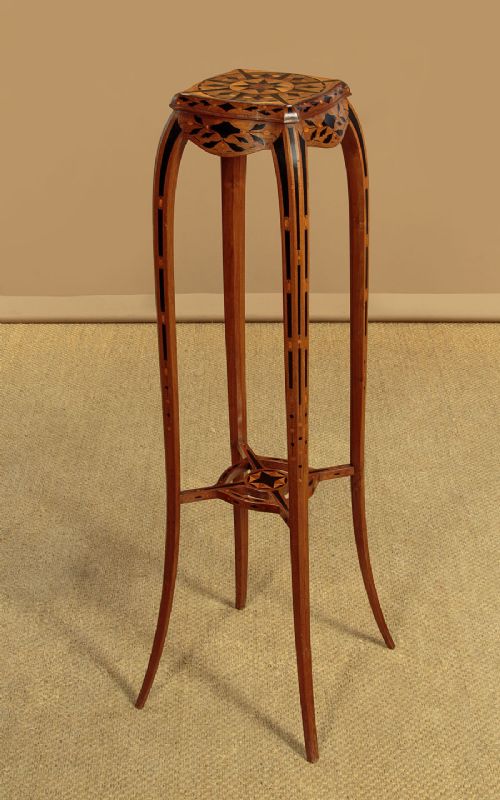
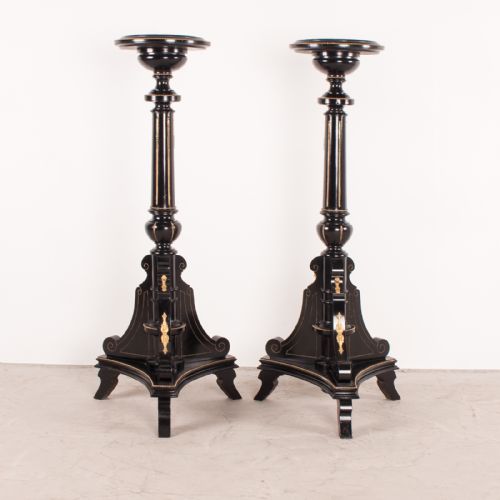
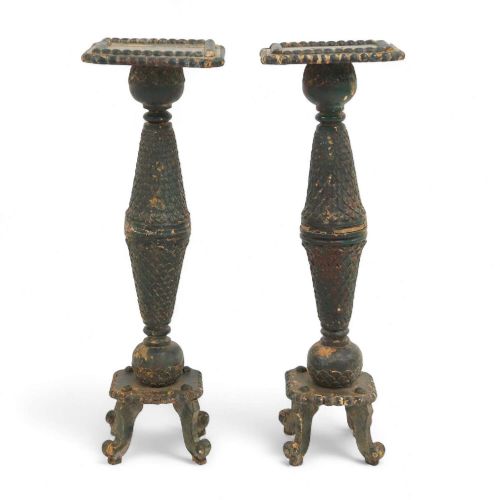
Surface finishes include applied gesso, gold leaf, original green paint, and ebonised treatments that alter the natural grain of the timber. Brass mounts, silver-plated figural statues, and inlaid contrasting woods occasionally accent the primary wooden structure.
Several columns double as silent companions, featuring carved figures, caryatids, and crouching statuary supporting the weight above.
Assessing Quality
Quality rests in the depth and sharpness of the carved detail, distinguishing fluid figural work or crisp acanthus leaves from soft or mechanical moulding. The choice of timber also dictates the standard, with richly figured solid mahogany or specialist specimen woods holding greater decorative impact than plain secondary alternatives.
Proportion and stability define superior examples, where the slender column balances securely upon its base without listing or relying on crude reinforcement. Original surface patination, whether aged paint, polished wax, or gilt, preserves the integrity of the period manufacture.
Shoolbred·WMF
The Wooden Torchere Column Glossary
- Torchere
- A tall stand originally intended to hold a torch or candle, later adapted for lamps, plants, and decorative sculpture. These pieces provide vertical punctuation in interior decoration.
- Pedestal
- A free-standing support used to elevate a bust, vase, or statue. They feature columns of varying height and top platforms in round or square configurations.
- Ebonised
- Wood treated with a chemical stain or finish to imitate expensive ebony. This dark, light-absorbing surface gained widespread popularity during the nineteenth century.
- Gesso
- A plaster-based material applied to wood surfaces to create a smooth layer for gilding or painting. It accepts fine detail work before leaf application.
- Plinth
- The lower square base of a column or a standalone flat-topped block supporting an object. It provides structural grounding for taller vertical stands.
Wooden Torchere Column: Frequently Asked Questions
What were wooden torchere columns used for?
Historically, these tall stands held candles or oil lamps to illuminate dark corners of large reception rooms. Over time, their function expanded to display prized botanical specimens, ornamental urns, and sculptural busts.
In modern interiors, they continue to serve these display purposes while adding architectural height to empty wall spaces and corners.
How do I style a torchere in a room?
Position a torchere column in an unused corner or beside a seating arrangement to introduce varied height levels to your furniture layout. Top the stand with a trailing houseplant, a heavy ceramic bowl, or a reading lamp.
Ensure the base sits on level flooring so that tall, slender columns remain stable and secure against accidental bumps.
How do I distinguish Victorian from Edwardian stands?
Victorian torchere columns frequently display heavier proportions, dense dark timbers like walnut or mahogany, and deep, elaborate carvings. They often lean towards ornate floral motifs or dramatic figural supports.
Edwardian examples tend to feel lighter and brighter, frequently utilising satinwood, delicate inlay work, and more restrained classical revival lines.
Can these stands support heavy items?
Most solid hardwood columns possess sturdy internal construction designed to bear the weight of substantial planters and marble-topped jardinieres. Tripod and triform bases offer wide footprints that distribute heavy loads effectively.
Check the base stability and top platform area before placing exceptionally heavy stone or cast-iron sculptures atop antique stands.