
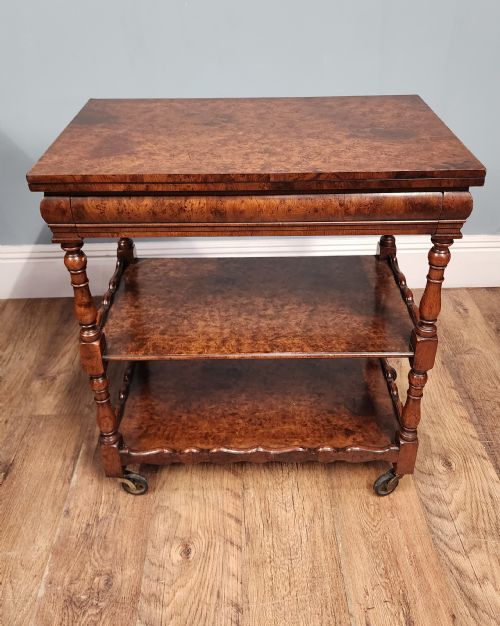


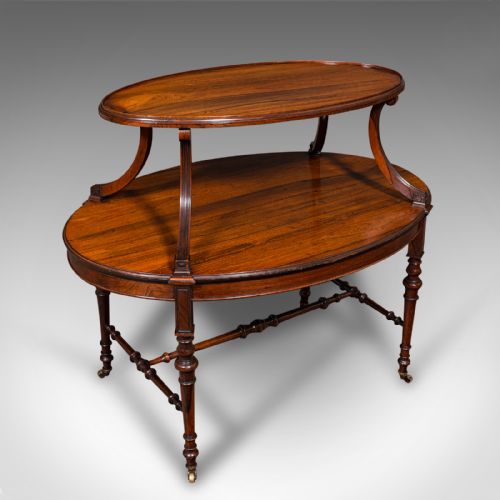


Wooden Tiered Serving Stand
A wooden tiered serving stand brings multilevel display and service to the dining room, drawing on centuries of ingenious furniture design.
Wooden Tiered Serving Stand
When you search for a wooden tiered serving stand, you encounter pieces historically known as dumb waiters, buffets, whatnots and serving tables. These multi-level pieces span the eighteenth century, the Regency and George IV periods, and the Victorian era.
The versions you meet most frequently on this page are mahogany dumb waiters and tiered stands featuring two or three graduated shelves or trays supported on central columns or sturdy legs. Many examples incorporate clever mechanisms, such as folding tiers or adjustable heights, reflecting their original purpose as flexible dining room furniture.
Materials and construction
Cabinet makers relied heavily on rich timbers such as mahogany, walnut, burr walnut veneer, pollard oak, oak, rosewood and padauk wood to construct these serving stands. These dense hardwoods provided the structural integrity required to support multiple stacked tiers without warping under weight.
Joinery methods involved sturdy central pillars, often turned or carved, paired with graduated circular or rectangular trays. Finer examples, such as Burmese carved padauk wood or pollard oak pieces, integrated intricate carving and brass fittings to enhance both durability and appearance.
Some Victorian butlers managed to read the news from a bookshelf while simultaneously serving port from the top tier.
Distinctions in quality
Quality in a wooden tiered serving stand rests upon the choice of timber and the sophistication of the joinery rather than mere age. Pieces utilising finely figured burr walnut veneer, solid mahogany or dense padauk wood sit at the upper end of the scale.
The presence of functional mechanics, such as fully adjustable heights or folding tiers that operate smoothly, distinguishes superior examples from standard utility pieces. Furthermore, crisp carving on the central column and well-fitted brass castors separate workshop standards.
Maple & Co
The Wooden Tiered Serving Stand Glossary
- Dumb waiter
- A multi-tiered freestanding piece of dining room furniture designed to hold dishes, glasses or books without the aid of a servant. These items typically feature two or three graduating round trays on a pillar support.
- Whatnot
- An open set of shelves used for displaying or storing small objects and books. They appear frequently in Victorian iterations alongside traditional serving stands.
- Pollard oak
- Oak timber taken from trees that have been pollarded, producing a highly figured, knotted grain pattern. Cabinet makers utilised this timber for decorative effect on prominent surfaces.
- Buffet
- A sideboard or serving table designed for food and drink presentation. In earlier periods, these frequently incorporated multiple tiers for enhanced capacity.
- Padauk wood
- A heavy, durable tropical hardwood with a reddish hue, often utilised in intricate nineteenth-century carvings. It provides exceptional stability for multi-tiered furniture.
Wooden Tiered Serving Stand: Frequently Asked Questions
What is a dumb waiter?
A dumb waiter is a multi-tiered wooden stand designed to hold food, tableware or books within reach of diners. They eliminated the need for servants during meals.
Over time, these pieces evolved into general display tables and whatnots used in living rooms and studies as well as dining spaces.
How many tiers do these stands have?
Most wooden tiered serving stands feature either two or three distinct levels for service and display. Graduated shelves decrease in diameter from bottom to top.
Three-tier configurations are particularly common among nineteenth-century mahogany and padauk wood examples.
Where should I place a tiered stand?
These stands suit dining rooms, hallways or living spaces where surface area is useful but floor space is limited. Their vertical design maximises display capacity without a large footprint.
Position them away from direct heat sources to protect historic hardwoods and veneers from drying out.
How do I care for antique wood?
Maintain antique mahogany, walnut and oak surfaces by dusting with a dry lint-free cloth. Avoid modern silicone sprays that can damage historic finishes.
Apply a traditional beeswax polish sparingly to nourish the timber when the surface appears dry.