
Antique Dining Table Server
An antique dining table server brings practical elegance to a room, offering surface space and storage for formal meals.
Antique Dining Table Server
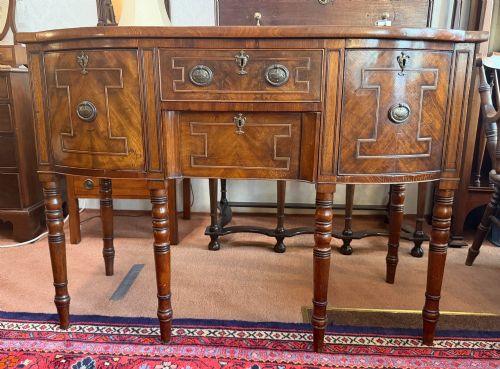
An antique dining table server encompasses sideboards, serving tables, and buffets designed to assist with dining and food presentation. These pieces originate from periods spanning the eighteenth, nineteenth, and early twentieth centuries, including Georgian, Regency, Victorian, and Edwardian eras.
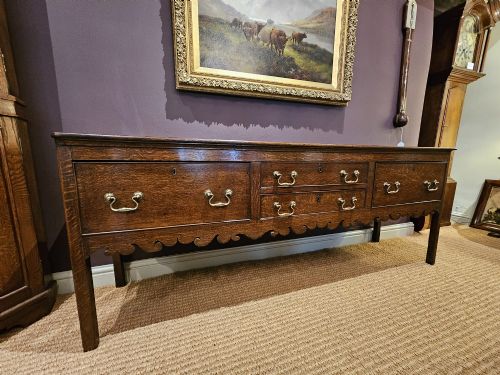
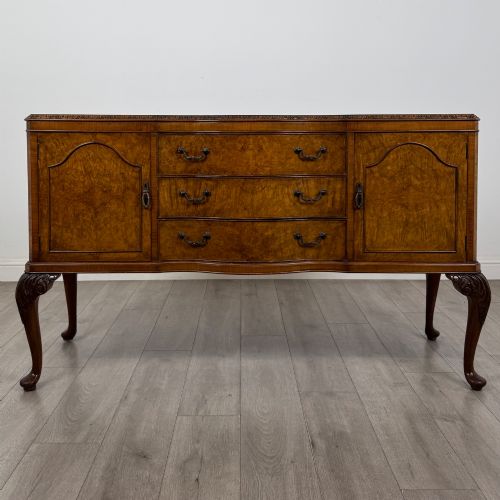
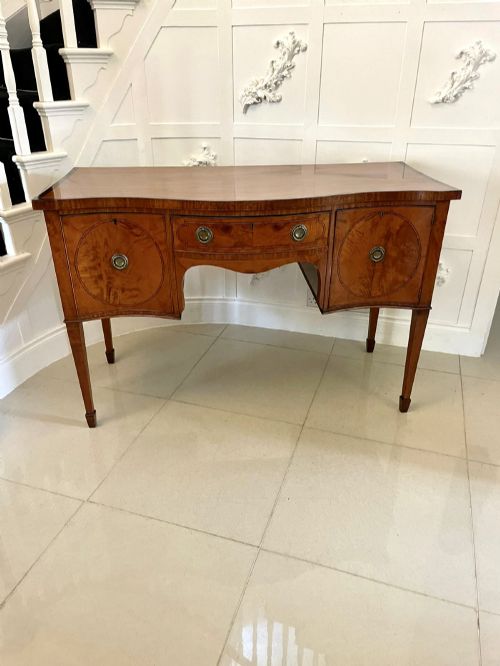
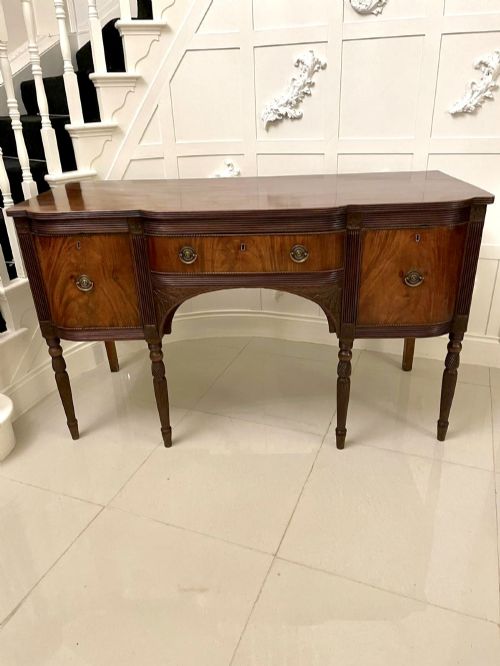
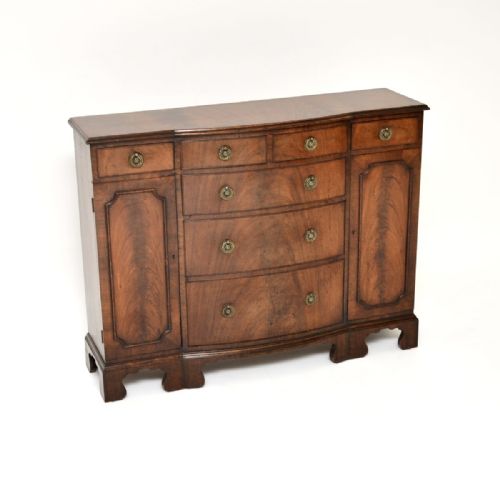
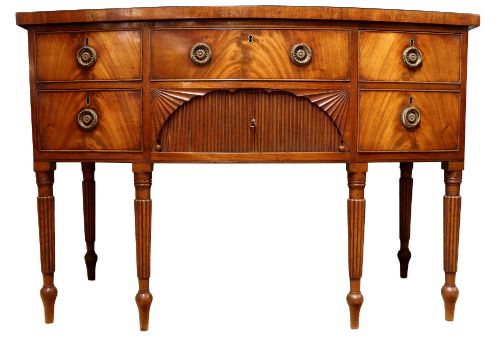
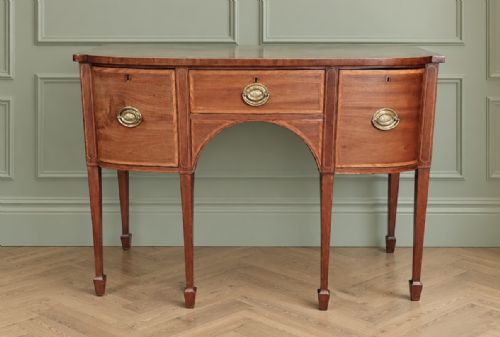
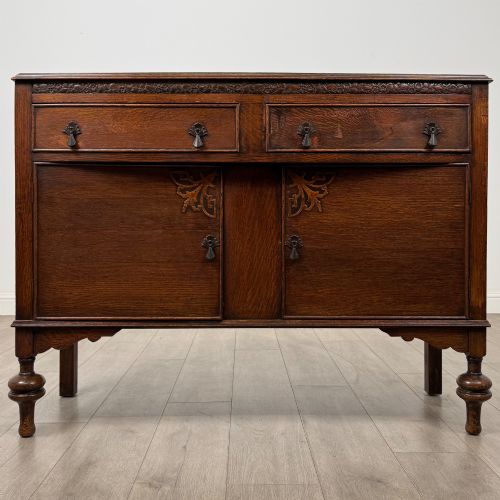
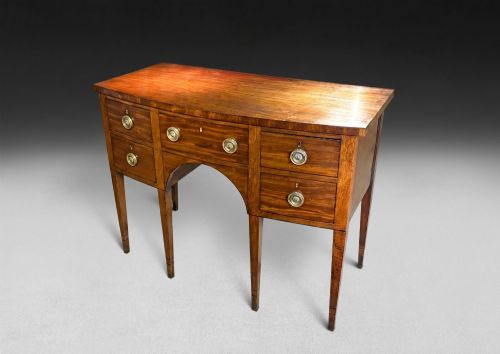
The most common examples encountered on this page are mahogany sideboards featuring bow fronts, serpentine shapes, or breakfront designs. Pieces range from large Scottish George III stage-back models to compact Edwardian flame mahogany buffet cabinets and oak servers.
Materials and Construction
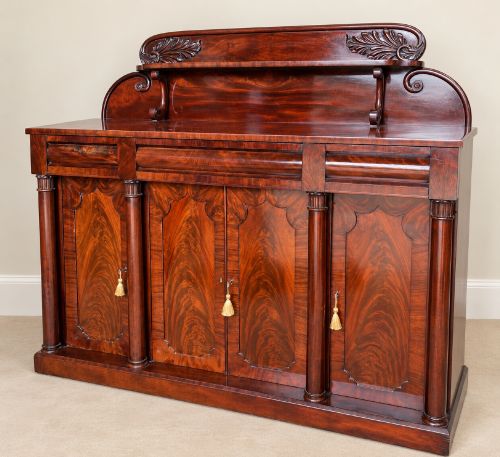
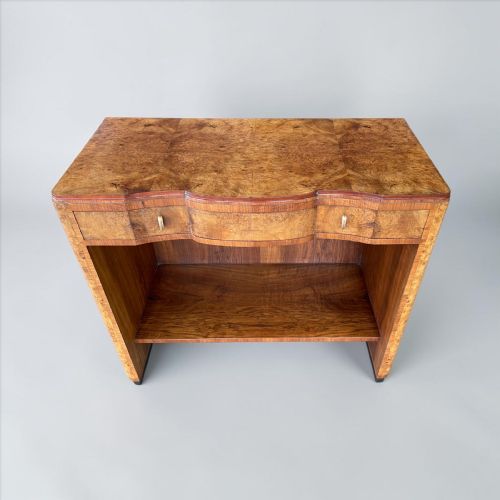
Makers relied primarily on solid timbers and veneers, predominantly utilising mahogany, oak, and walnut. Flame mahogany veneer and figured mahogany appear frequently on fine cabinet doors and drawer fronts, often accented by satinwood inlay, boxwood stringing, and brass hardware.
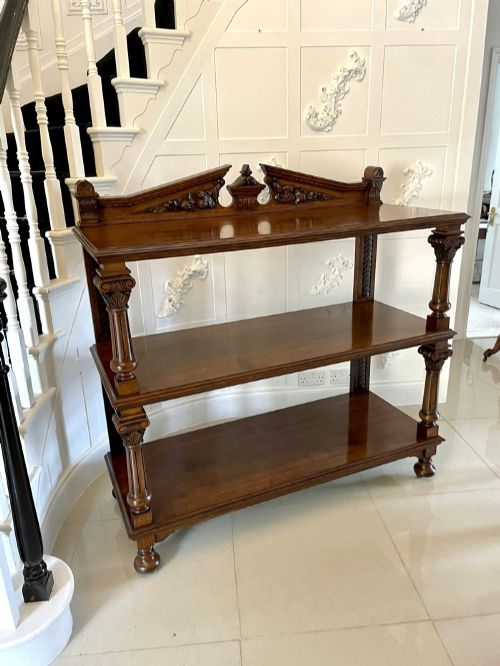
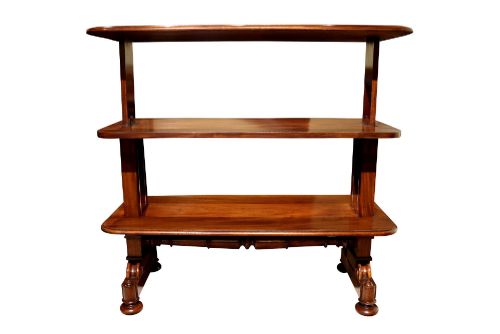
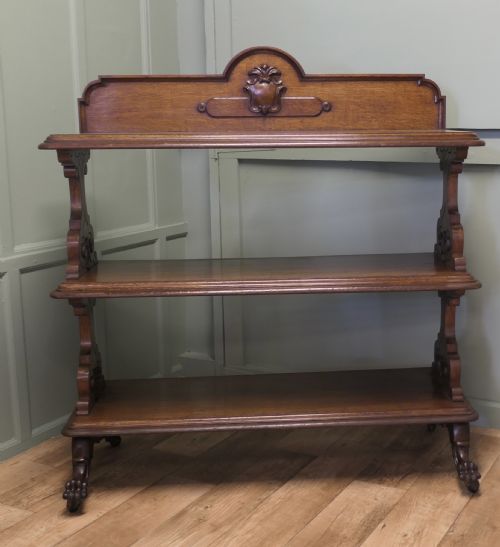
Joinery methods reflect the periods of manufacture, incorporating carved details, crossbanding, and structural framing suited to large serving tables and three-tier dumbwaiters. Metal components such as Old Sheffield plate meat domes and brass mounts complement the timber construction.
Listings feature mahogany, oak, and walnut across Georgian, Regency, Victorian, and Edwardian periods.
Distinctions in Quality
Excellence in these items rests upon the choice of timber and the sophistication of the cabinetmaking. Finely figured mahogany, balanced grain matching, and crisp carving distinguish superior examples from simpler utilitarian pieces.
The refinement of secondary details, such as delicate satinwood crossbanding, precise inlay work, and original brass hardware, elevates a piece. Proportion and structural integrity further separate standard regional pieces from ambitious workshop productions.
Maurice Adams·Roberts Cadman·M. D. Miller and Sons
The Antique Dining Table Server Glossary
- Serpentine sideboard
- A serving piece featuring a gently undulating front profile with a central convex curve flanked by concave sections. This shape demands high skill from the cabinetmaker.
- Bow front
- A convex, outwardly curved front design popular on nineteenth-century sideboards and servers. It softens the linear appearance of dining room furniture.
- Breakfront
- A large cabinet form where the central section projects forward from the flanking outer sections. This arrangement creates visual depth and generous internal storage.
- Dumbwaiter
- A multi-tiered freestanding serving stand used during meals to hold dishes without requiring a servant present. These typically feature graduating circular trays on a central column.
- Crossbanding
- A decorative band of veneer applied across the grain of the primary wood surface. It frames drawers and table tops to create a neat visual border.
Antique Dining Table Server: Frequently Asked Questions
What is an antique dining table server used for?
These pieces serve as functional furniture for holding dishes, silverware, and glassware during meals. They provide a surface for serving food while adding architectural interest to a dining room.
Historically, they supported the heavy service vessels that crowded the main dining table. Today, they function similarly while displaying decorative objects or serving drinks.
How do I distinguish a Georgian server from a Victorian one?
Georgian servers generally display restrained classical proportions, lighter wood tones, and refined inlay work such as satinwood or boxwood stringing. They often feature elegant tapered legs or bracket feet.
Victorian pieces tend to be heavier in scale, utilising deep mahogany or carved oak with bolder mouldings. They frequently incorporate larger cupboards and stage-backs suited to more ornate interiors.
Where should I place a server in my dining room?
Position the server against a primary wall close to the main dining table for easy access during meals. Ensure there is enough clearance to open drawers and cabinet doors fully.
Consider the traffic flow around the room so guests can reach the surface without obstruction. Lighting above or beside the piece helps highlight the timber grain.
Can I use a dining server in other rooms?
These versatile cabinets fit well in hallways, living rooms, or entrance halls as storage units or display surfaces. Their substantial drawers and cupboards accommodate linens, tableware, or books.
A serpentine or bow-front server adds character and surface area to a hallway without blocking narrow pathways.