
Wooden Tea Storage Chest
A wooden tea storage chest is a receptacle designed to hold precious dry leaves, offering both functional preservation and refined domestic display.
Wooden Tea Storage Chest
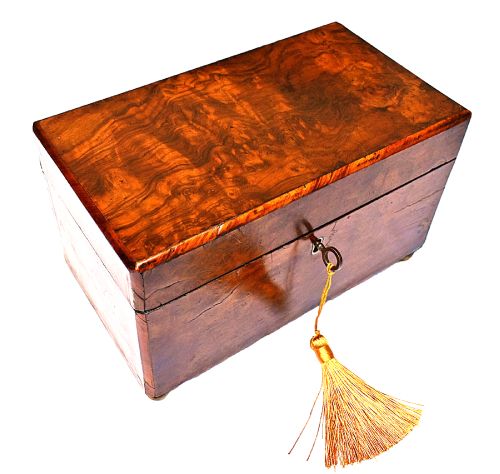
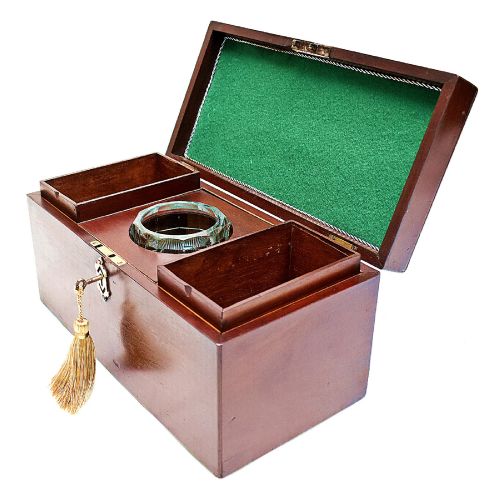
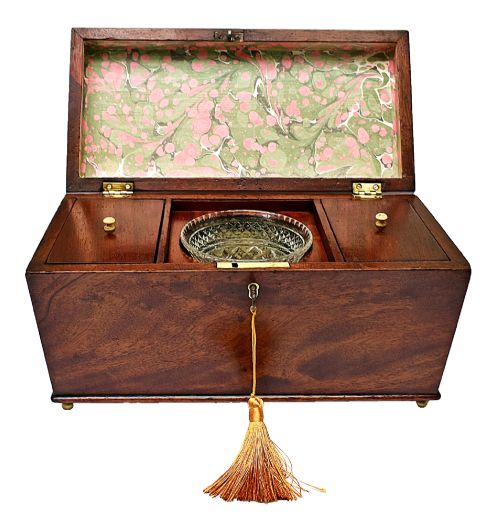
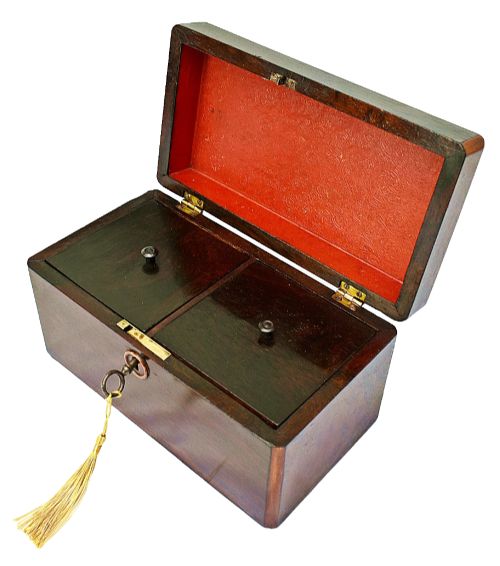
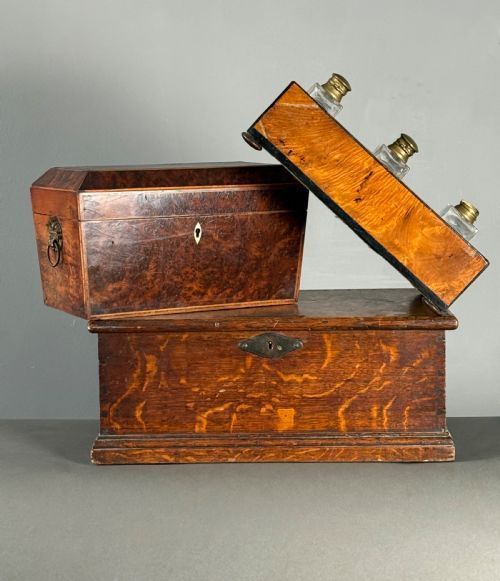
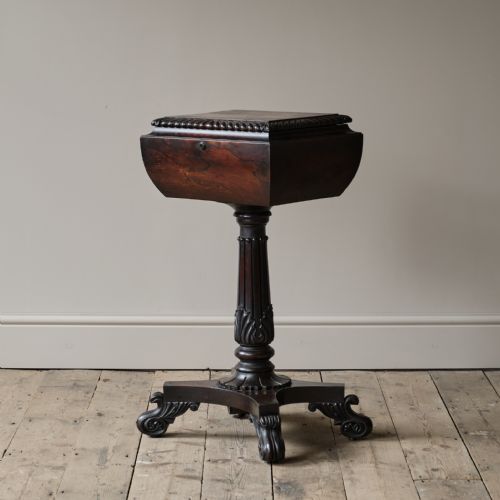
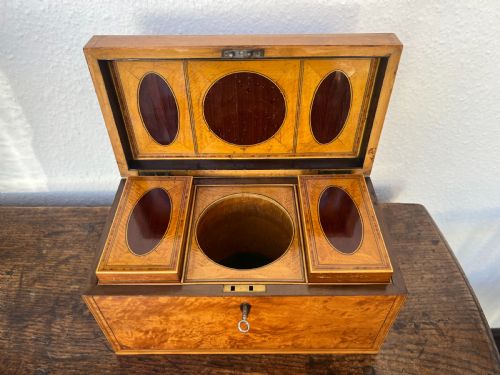
When buyers search for a wooden tea storage chest, they encounter a range of forms spanning the eighteenth and nineteenth centuries, including Georgian, Regency, and Victorian periods. These pieces functioned as secure containers for expensive imported leaves, often featuring internal compartments and fitted glass bowls for mixing.
Materials and construction
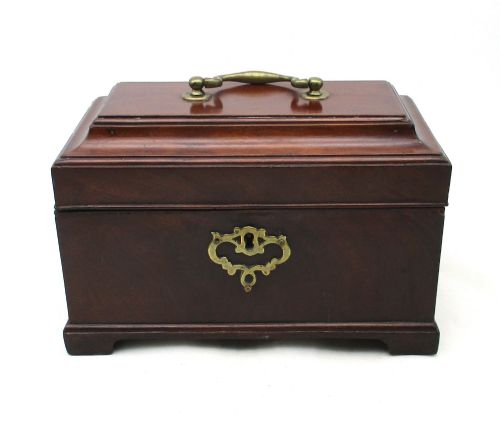
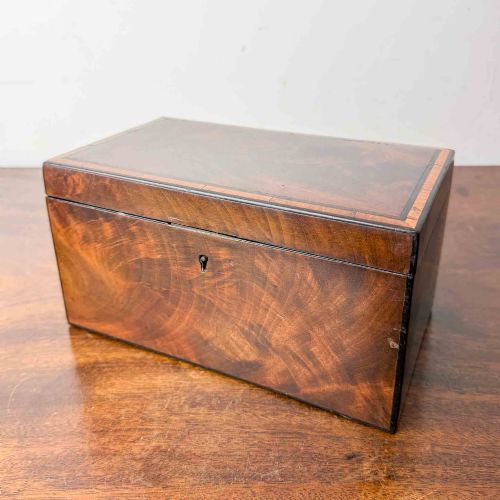
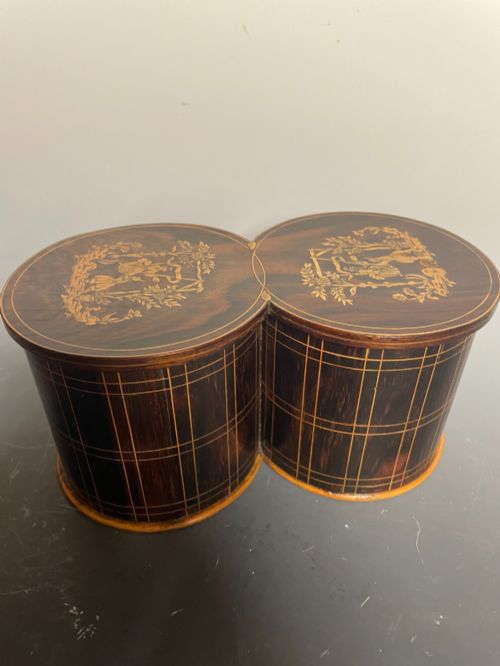
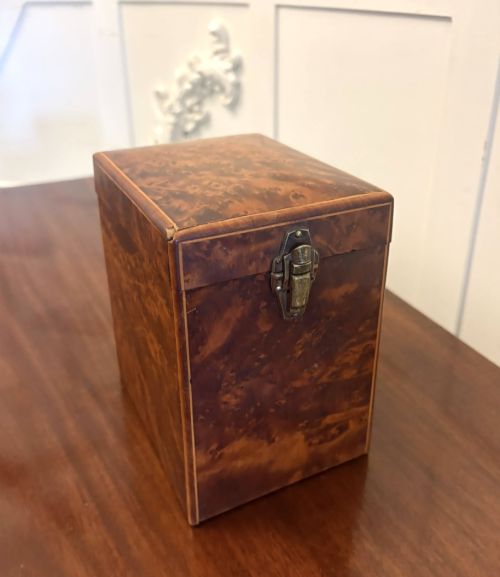
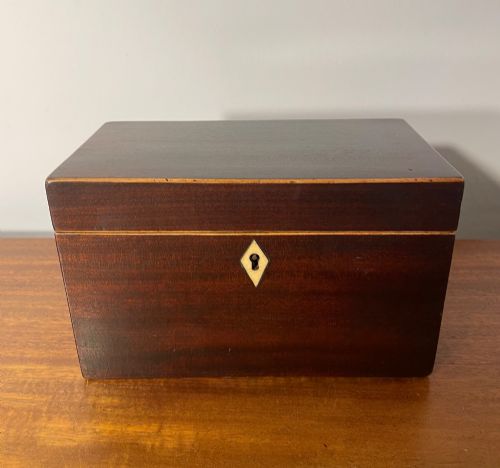
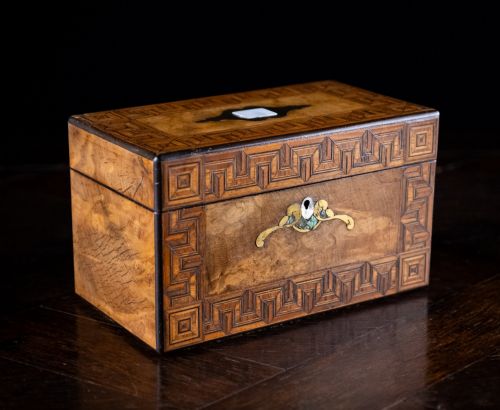
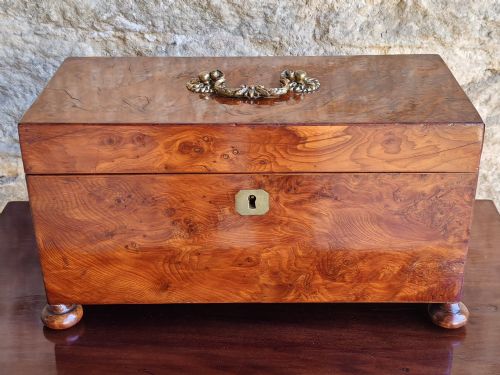
Cabinetmakers utilised dense hardwoods such as mahogany, walnut, and rosewood, frequently applying decorative veneers like flame mahogany, burr yew, and satinwood to external surfaces. Construction often incorporated meticulous parquetry and marquetry patterns to create striking geometric and floral motifs.
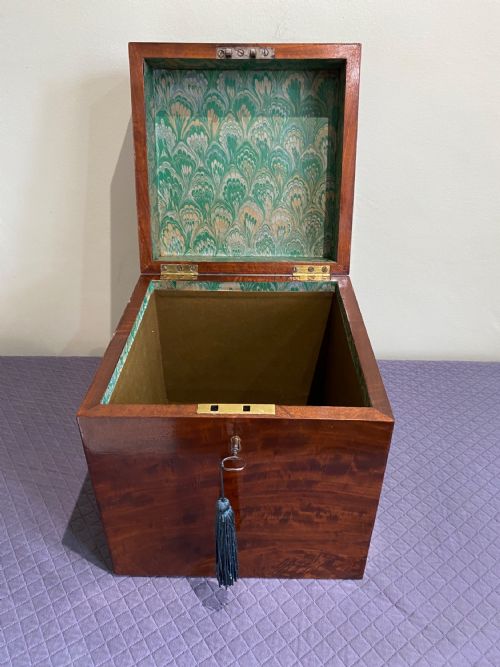
Details such as brass handles, bone escutcheons, mother-of-pearl inlay, and boxwood stringing enhance the primary wooden structures. Many examples include internal compartments lined with secondary woods and operational locks with original keys.
Listings feature woods including mahogany, rosewood, satinwood, walnut, yew, and boxwood, spanning the Georgian, Regency, and Victorian periods.
Assessment of quality
The standard of a piece depends on the choice of timber figure, such as highly grained burr walnut or flame mahogany, paired with precise execution of inlay like Tunbridge Ware or contrasting stringing. Superior examples maintain intact internal fittings, including original mixing bowls, lids, and functioning locks.
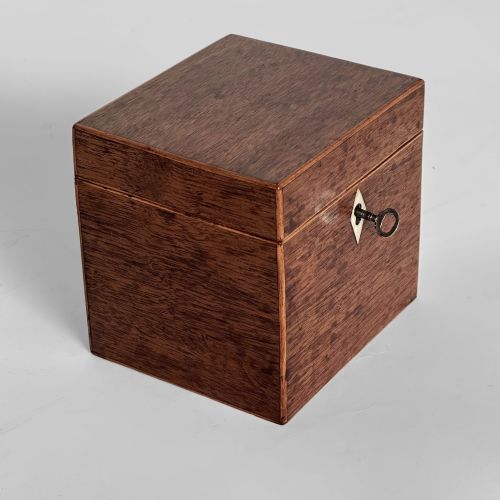
Proportion and architectural form also dictate distinction, where sarcophagus shapes or cube designs exhibit balanced proportions and harmonious secondary wood selections rather than plain construction.
Tahan of Paris
The Wooden Tea Storage Chest Glossary
- Teapoy
- A pedestal table or large box designed for storing tea, often standing on a central pillar or four legs. These larger pieces frequently incorporate internal canisters.
- Sarcophagus
- A box form with a domed or peaked lid tapering downward, popular during the Regency period for tea storage. This architectural shape resembles classical stone tombs.
- Stringing
- A narrow inlaid line of contrasting wood used to outline panels or edges on cabinet furniture. It highlights the geometric precision of the piece.
- Escutcheon
- A protective plate surrounding a keyhole, frequently fashioned from brass, bone, or mother-of-pearl. It prevents the surrounding wood from wearing around the lock.
- Parquetry
- Geometric mosaic woodwork arranged in patterns such as cubes or triangles across the surface of a box. This technique showcases the varied natural tones of different timbers.
Wooden Tea Storage Chest: Frequently Asked Questions
How were tea caddies used historically?
Households used these chests to store black and green teas safely, often keeping the container locked to protect the valuable contents from servants or guests. The host would mix the leaves using an internal glass bowl.
Many examples feature separate internal compartments with fitted lids to keep different tea varieties apart.
How do I identify a Georgian tea caddy?
Georgian pieces typically display straight lines, oval formats, or simpler rectangular shapes utilising solid mahogany, satinwood, or decorative veneers. They often feature subtle stringing and brass lifting handles.
Later Regency variants introduced bolder sarcophagus shapes, heavy paw feet, and elaborate rosewood or burr yew veneers.
What are internal mixing bowls for?
The glass bowls found inside many period caddies allowed the host to blend different tea leaves before serving. They also served as a rinsing vessel or a container for sugar.
Finding a caddy with its original glass bowl intact is a notable advantage for collectors.
Can I use an antique tea chest today?
These chests work well for storing dry goods, jewellery, or small keepsakes while adding period character to a room. Modern users often place them on sideboards or desks as decorative storage.
Care should be taken to protect antique wood surfaces from moisture and direct sunlight.