



Wooden Tapestry Screen
These wooden tapestry screen pieces combine timber frames with textile panels, offering warmth and historical charm to any interior space.
Wooden Tapestry Screen
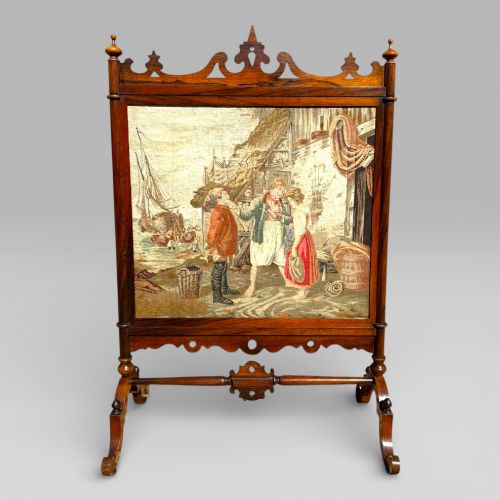
When you search for wooden tapestry screen examples, you encounter furnishings designed primarily as functional fire screens or room dividers. The selections on this page span several eras, including the Georgian, Regency, and Victorian periods, alongside later Victorian expressions.
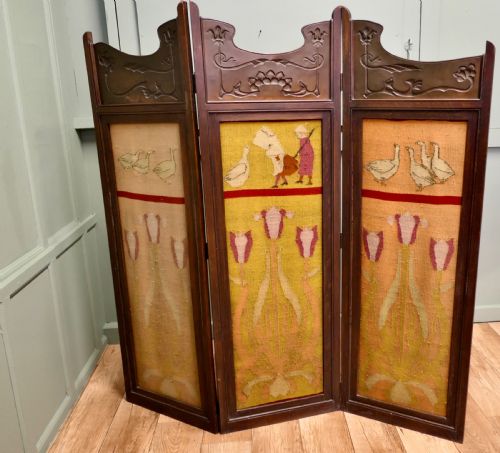
Most entries function as fire screens or fireplace accessories, while others serve as folding screens or room dividers. Materials range from mahogany, walnut, oak, satinwood, and rosewood paired with wool, linen, needlepoint, and tapestry panels.
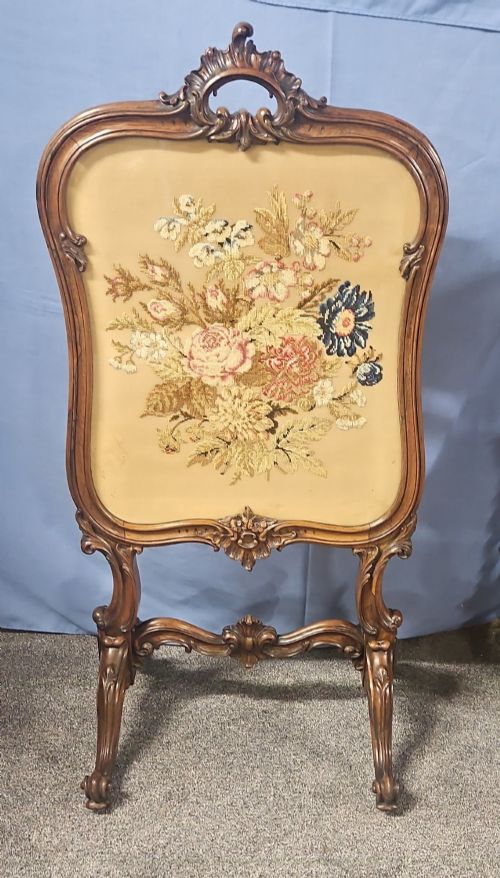
Forms vary from standard standing frames to metamorphic designs that double as occasional tables, as well as multi-fold room dividers. Stylistic influences incorporate Art Nouveau, Victorian Rococo Revival, Edwardian, Anglo-Indian, and Black Forest motifs.
How they were made
Frames are constructed from hardwoods such as walnut, mahogany, oak, rosewood, and satinwood, often featuring carved ornamentation or turned supports. Some examples incorporate brass fittings or glass components.
The textile panels utilise wool, linen, and silk threads worked into needlepoint, embroidery, needlework samplers, or hand-woven tapestry pictures. These textiles are mounted securely within the wooden framework to display pictorial or geometric scenes.
Wooden Tapestry Screen Retail Price Guide 2026
Typical asking prices for wooden tapestry screen among the pieces listed under this phrase on Sellingantiques today, from the lower quarter to the upper quarter. They describe what is for sale here now, not the wider market.
Some Victorian frames double as miniature tables, proving that 19th-century makers loved furniture that could multitask before it was trendy.
What varies in quality
Quality reveals itself in the crispness of the timber carving and the complexity of the wood selection, such as figured walnut or rosewood. Heavier, more substantial frames indicate superior cabinetmaking compared to lighter, plain structures.
The execution of the textile panel dictates the grade of the piece, with finely worked needlepoint and detailed hand-woven tapestry standing apart from simpler woolwork. The integration between the textile insert and the wooden rebated frame shows the level of care taken during assembly.
The Wooden Tapestry Screen Glossary
- Needlepoint
- A form of canvas work embroidery stitched with yarn, frequently seen in the textile panels of these screens. It provides a durable and decorative surface.
- Pole screen
- A type of fire screen featuring a vertical shaft where an adjustable screen panel slides up and down. This allows the user to block radiant heat from the fireplace at various heights.
- Needlework sampler
- A piece of embroidery produced to demonstrate skill in various stitches, occasionally repurposed into a fire screen panel. These often display alphabets, numbers, or pictorial motifs.
- Baronial
- A stylistic descriptor applied to heavy, carved wooden furniture with medieval or Renaissance revival characteristics. It implies a robust aesthetic suitable for grand interiors.
- Black Forest
- A style of wood carving originating from the mountainous region of Central Europe, characterised by realistic animal and foliage motifs. Pieces in this style display deep, naturalistic relief work.
Wooden Tapestry Screen: Frequently Asked Questions
What is a wooden tapestry screen used for?
These furnishings were originally placed in front of fireplaces to shield occupants from the intense radiant heat of open fires when unlit. Over time, many function purely as decorative room dividers or ornamental focal points in a sitting room.
Today, they suit placement against blank walls, in hallways, or as subtle partitions within larger open-plan living areas. Their textile panels introduce texture and historical narrative to modern interiors.
How do I date a wooden tapestry screen?
Dating relies upon identifying the timber species, construction methods, and stylistic cues present in the frame and textile. Georgian and Regency examples tend to show restrained classical lines, whereas Victorian pieces often feature heavier carving or revival ornamentation.
Needlework techniques and wool colours also offer clues to the period of manufacture. Comparing the joinery of the frame with established furniture eras helps narrow down the decade of production.
Are these screens stable on modern floors?
Most standing fire screens and folding panels possess wide feet or multiple hinged sections designed to support their weight securely. Heavier hardwood frames remain balanced during normal domestic use.
Multi-fold room dividers require proper angling of the panels to stand unsupported. Placing them on even flooring ensures steady placement without rocking.
How should I clean the textile panel?
Gentle surface cleaning with a soft brush or low-suction vacuum attachment helps remove accumulated dust from the wool and needlepoint. Avoid harsh liquid cleaners or rubbing the threads, which can cause abrasion.
Protecting the textile from direct sunlight prevents the natural dyed wools from fading over time. Professional textile conservators should handle any deep cleaning or structural repairs.