

Wooden Stick Rack
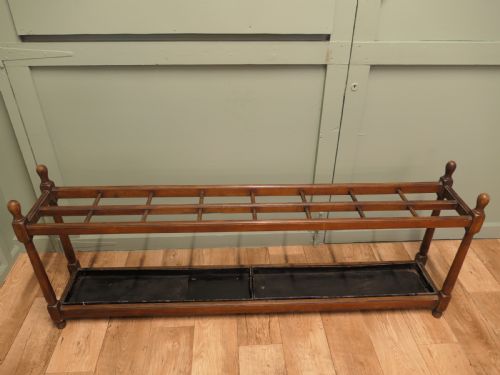
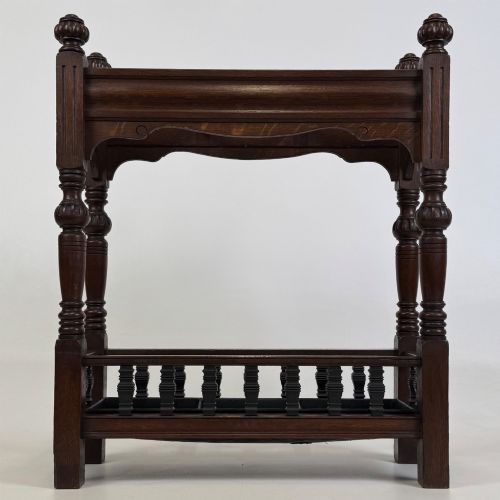
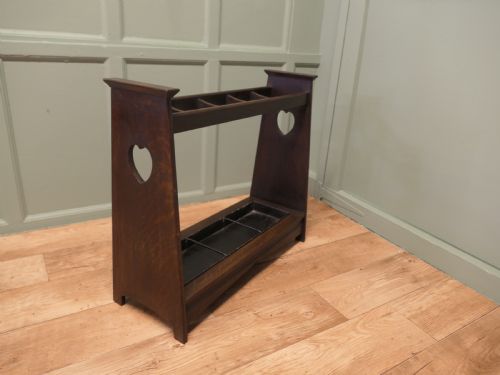
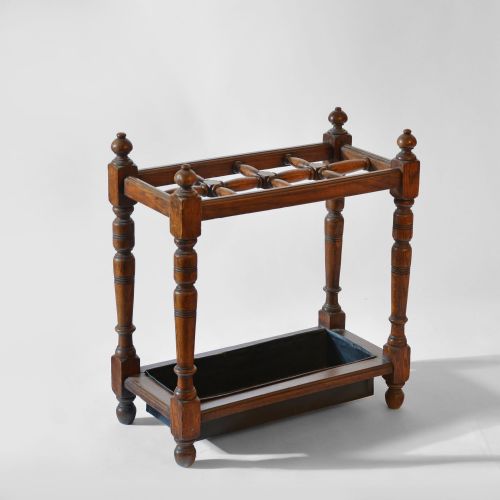
These wooden stick rack designs organise hallway clutter with timber frames and metal drip trays.
Wooden Stick Rack
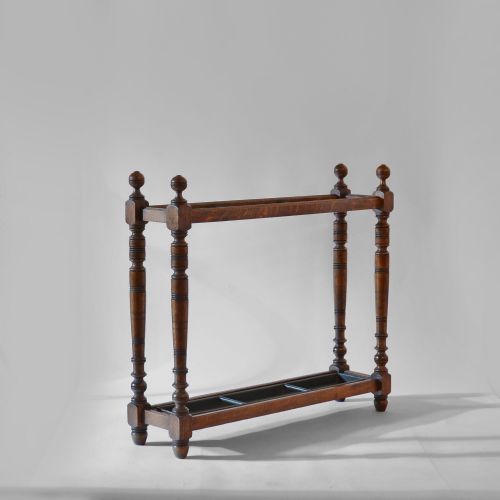
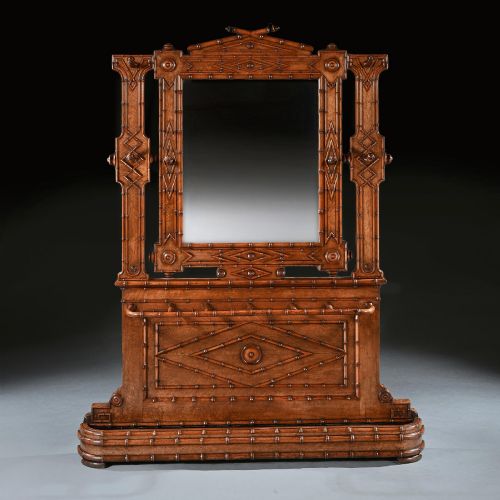
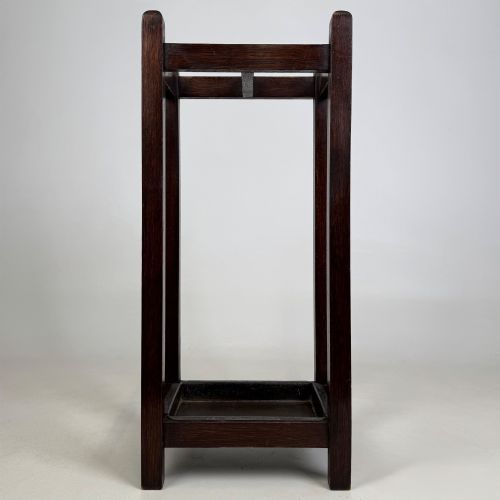
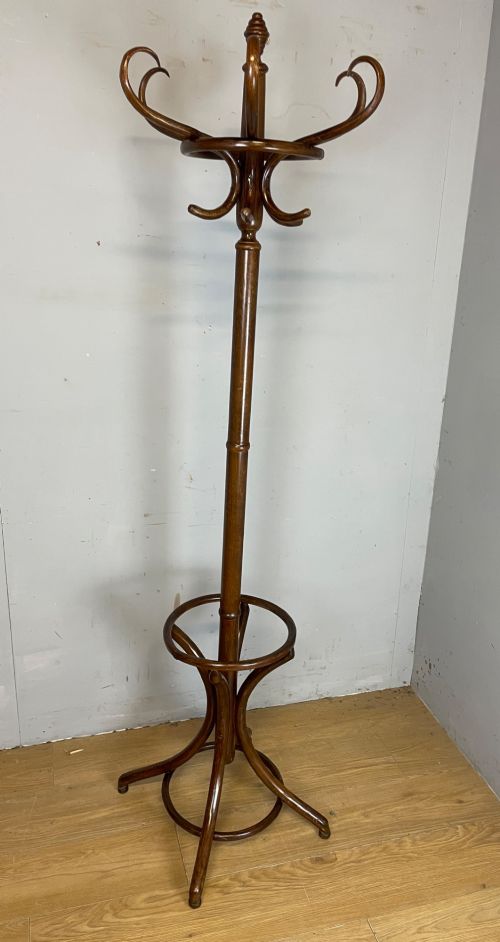
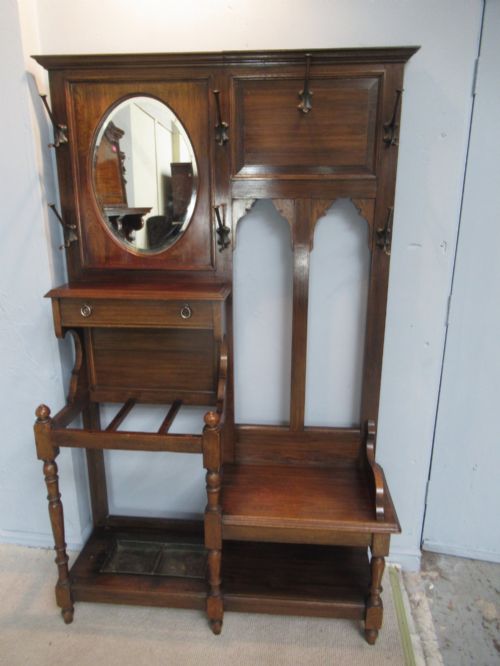
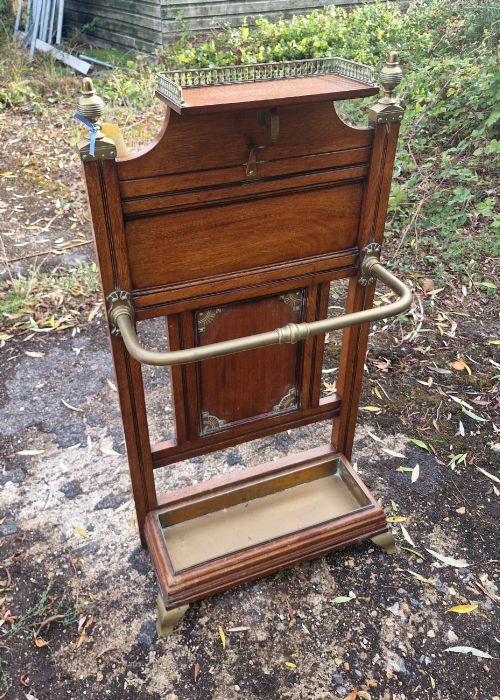
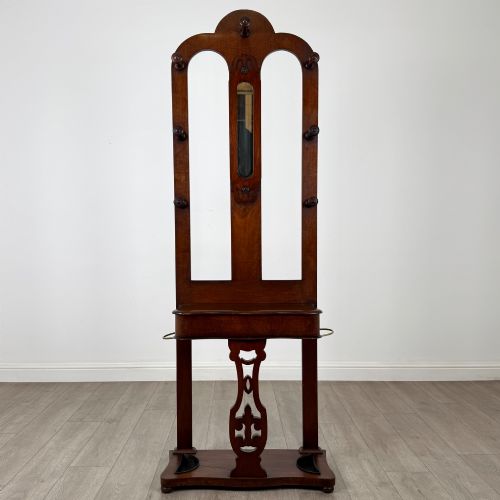
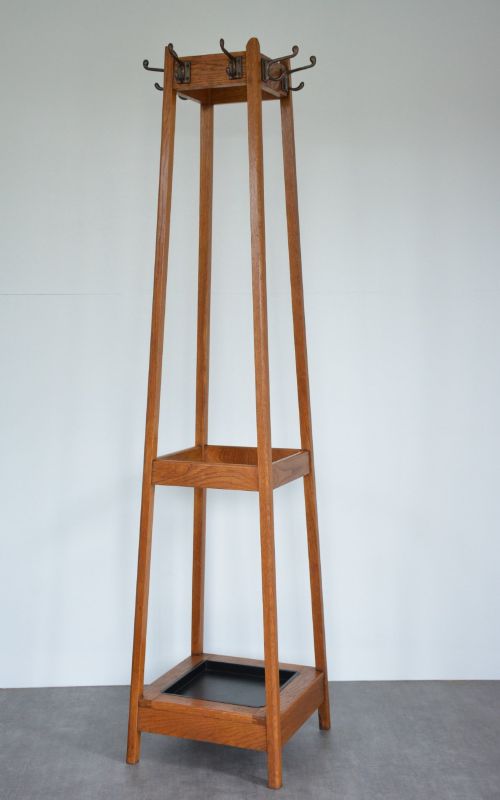
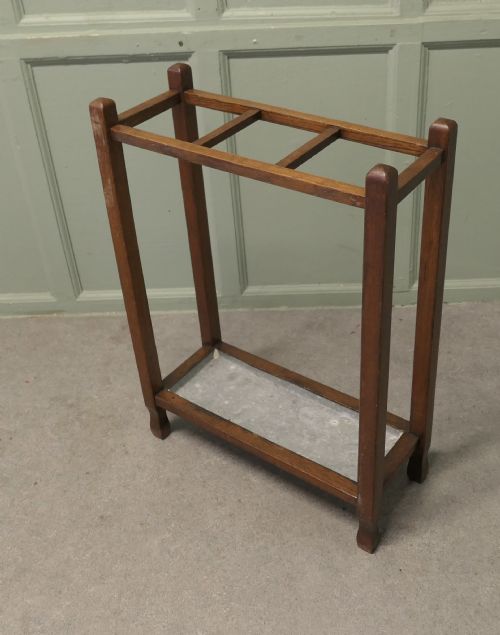
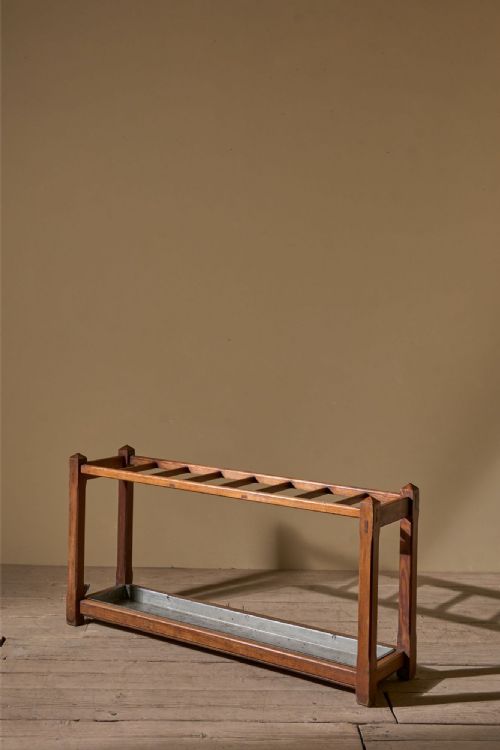
A wooden stick rack brings order to hallways by holding walking sticks, umbrellas and whips within sturdy timber frames. The pieces seen here span the nineteenth and twentieth centuries, taking the form of dedicated umbrella stands, corner stands, and combined hall stands with hat and coat hooks.
Victorian and Edwardian examples dominate the selection, often rendered in solid oak, mahogany, or pitch pine. Makers from the Arts and Crafts and Aesthetic movements applied simpler geometric lines or Japonisme influences, while Black Forest carvers produced figurative bear designs.
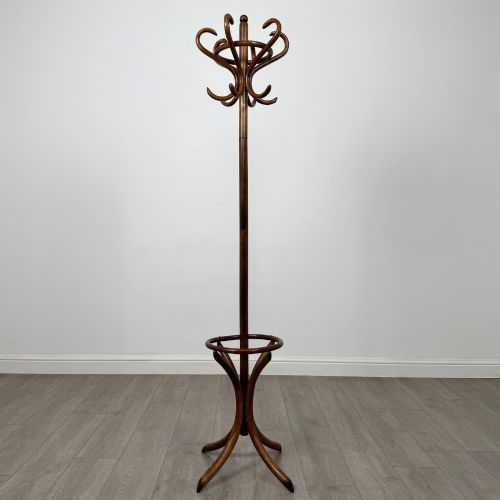
Country house models offer heavier proportions, whilst bentwood versions utilise steam-bent beech for lighter curved profiles. Buyers frequently encounter integrated metal drip trays and zinc liners designed to catch rainwater from wet umbrellas.
Construction and materials
Carpenters constructed these racks primarily using native and imported hardwoods like oak, mahogany, walnut, and pitch pine. Joints were typically dowelled or mortised to withstand the daily weight and moisture of walking sticks and umbrellas.
Metal components played a structural and protective role, incorporating brass rails, cast iron dividers, and removable zinc or metal drip trays at the base. Bentwood variants relied on moisture and heat to bend beech into flowing, continuous loops.
Carved decorative details appear on Black Forest and Gothic Revival pieces, utilising hand-chiselled ornamentation on solid timber surfaces. Faux bamboo elements also feature on specific aesthetic period frames, imitating natural cane through turned maple.
Design styles span Victorian, Edwardian, Arts and Crafts, Aesthetic Movement, and Gothic Revival forms.
Judging quality and craftsmanship
Quality rests on the selection of timber and the integrity of the joinery rather than surface polish alone. Dense golden oak and figured mahogany exhibit superior cabinet-making compared to plain utility pine.
The survival of original metal drip trays and zinc liners distinguishes well-preserved examples from those missing vital components. Integrated hat hooks, cast brass fittings, and hand-carved elements elevate certain pieces above standard production models.
Thonet·Heals of London·Liberty Design
The Wooden Stick Rack Glossary
- Bentwood
- Furniture formed by steaming wood until pliable and bending it into curved shapes. This technique creates lightweight frames for umbrella and coat stands.
- Drip tray
- A removable metal or zinc pan placed at the base of a stand. It protects wooden floors from water running off wet umbrellas.
- Hall stand
- A multi-functional piece combining a stick rack with coat hooks, a mirror, and glove boxes. They anchor the entrance spaces of period homes.
- Japonisme
- A style influenced by Japanese art and design. It appears on late nineteenth-century maple and bamboo hall stands.
- Pitch pine
- A resinous North American pine used for durable country house furniture. It shows prominent grain patterns.
Wooden Stick Rack: Frequently Asked Questions
What is a wooden stick rack?
A wooden stick rack is a piece of hallway furniture designed to store walking sticks, umbrellas, and whips upright. These stands combine timber frames with internal dividers and base trays.
They serve as both practical storage and decorative hallway furniture. Period examples often integrate coat hooks and mirrors.
How do I care for wooden stick racks?
Protect the timber by ensuring wet umbrellas dry before storage or by emptying the metal drip tray regularly. Regular waxing maintains the finish of oak and mahogany surfaces.
Keep wooden stands away from direct heat sources to prevent the timber from splitting. Check metal liners periodically for moisture accumulation.
How do I date a stick rack?
Dating relies on stylistic clues, construction methods, and timber choices typical of specific periods. Victorian pieces often feature heavier carved ornamentation, whilst Edwardian and Arts and Crafts examples favour simpler linear designs.
Bentwood and industrial versions point towards the early twentieth century. Maker marks or stamps can provide more precise origin dates.
Where were these stands used?
These racks stood in the entrance halls and boot rooms of period houses. They provided guests and residents a convenient place to leave wet coats and walking accessories.
Larger hall stands welcomed visitors at the front door of country residences. Smaller corner racks fitted into narrow hallway spaces.