






Entry Hall Stick Rack
An entry hall stick rack manages hats, coats, and walking gear with architectural presence, turning a busy threshold into a composed welcome.
Entry Hall Stick Rack
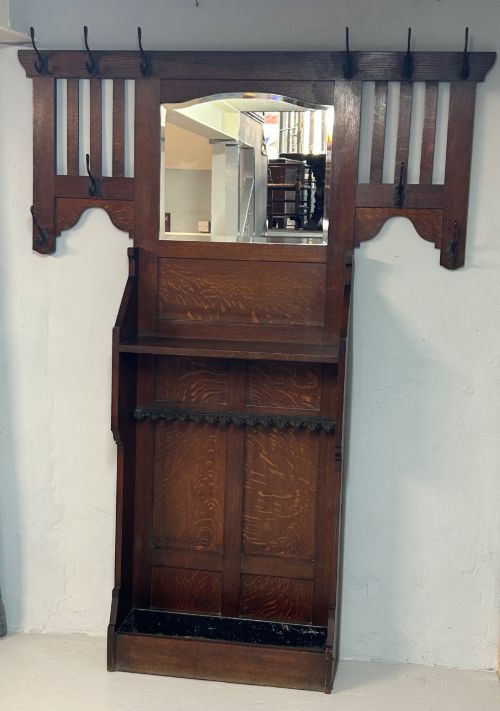
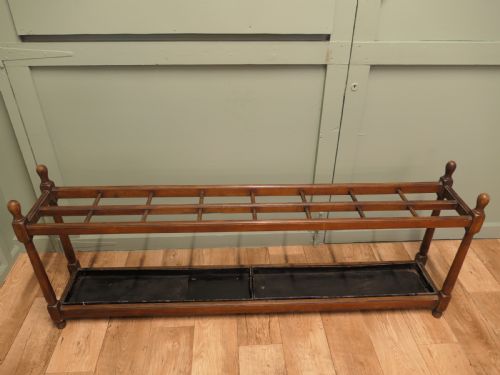
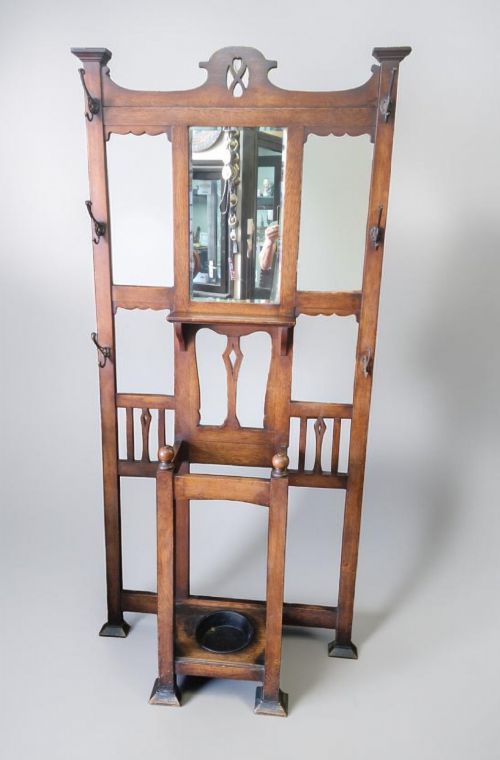
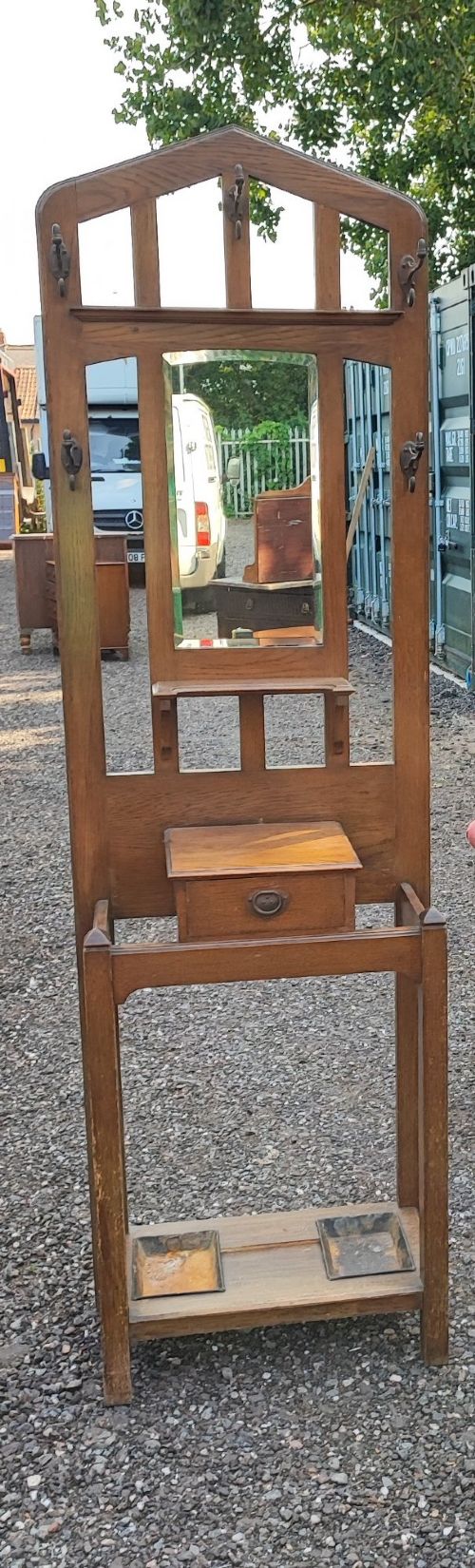
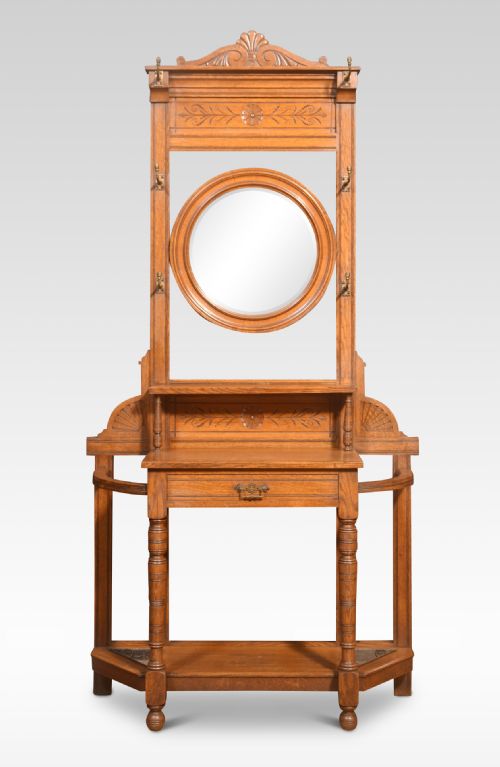
An entry hall stick rack organises outerwear and walking accessories near the door, drawing on forms recorded from the nineteenth century through the Art Deco era. You will most frequently encounter sturdy oak examples alongside cast iron and mahogany pieces designed for period hallways.
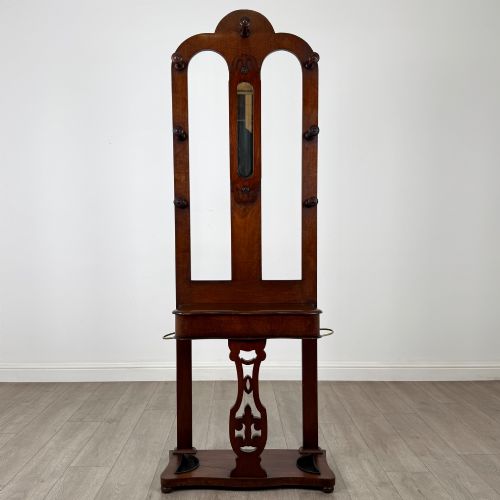
The selection ranges from narrow umbrella stands to substantial hall stands equipped with mirrors, coat hooks, and drip trays. Pieces span Victorian, Edwardian, and Arts and Crafts aesthetics, reflecting both country house practicality and urban utility.
Materials and construction
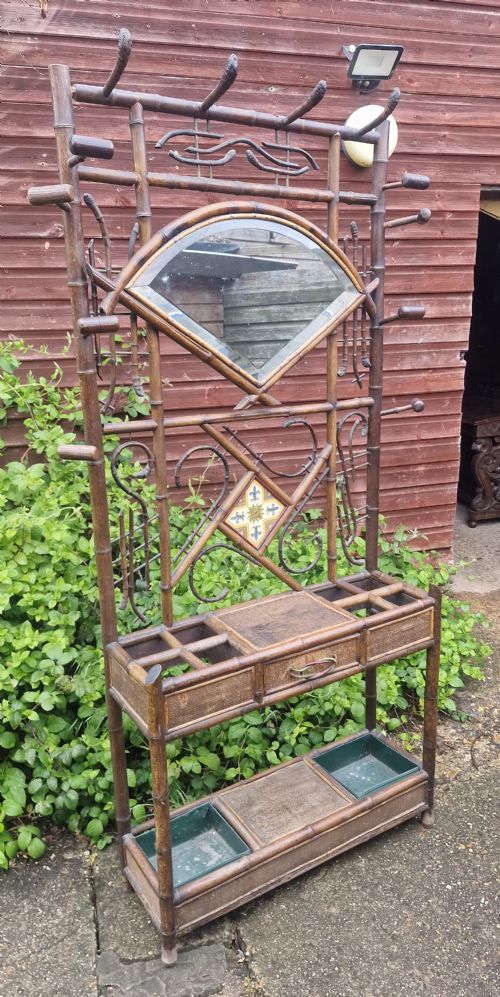
Cabinetmakers utilised solid oak and mahogany for carved framework, often incorporating figured panels, turned spindles, and inlaid details. Bamboo and wicker appear in lighter interpretations, particularly within the Aesthetic and Chinoiserie traditions.
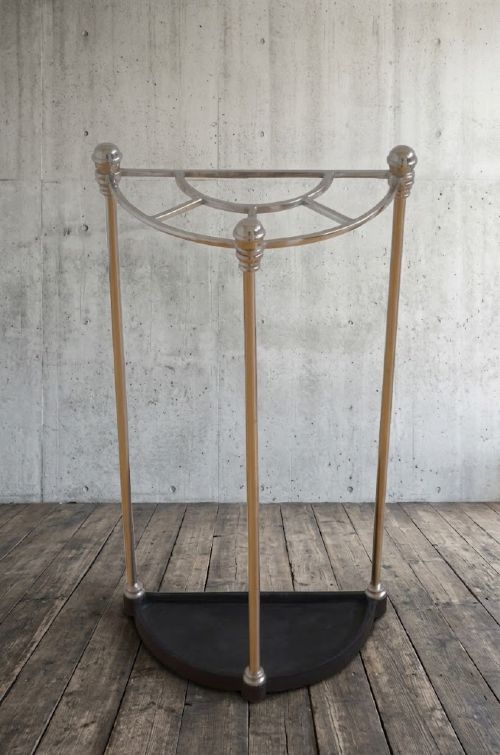
Foundries supplied heavy cast iron and nickel-plated metal frames for standalone umbrella and stick stands, providing the necessary ballast and moisture resistance. Integrated brass rails and zinc or ceramic drip trays were fitted to protect floorboards from wet weather.
Entry Hall Stick Rack Retail Price Guide 2026
Typical asking prices for entry hall stick rack among the pieces listed under this phrase on Sellingantiques today, from the lower quarter to the upper quarter. They describe what is for sale here now, not the wider market.
Greenman carvings stare out from the coat hooks, keeping a watchful wooden eye on muddy boots.
Judging quality and character
Superior execution shows in the crispness of carved motifs, such as Greenman masks or foliage, and the integration of bevelled mirror glass within secure wooden frames. The choice of timber grain and the joinery of structural corners distinguish ambitious commissions from utilitarian workshop output.
Hardware integrity separates better examples, visible in heavy brass coat hooks, original drip pans, and robust metal divisions that withstand daily domestic use without loosening.
Coalbrookdale
The Entry Hall Stick Rack Glossary
- Hall stand
- A multi-functional hallway furnishing combining coat hooks, a mirror, glove boxes, and an umbrella stand. These large pieces anchor an entrance hall.
- Demi-lune
- A half-moon shape used for wall-abutting umbrella stands and tables. This profile saves floor space in narrow corridors.
- Drip tray
- A removable metal or ceramic tray placed at the base of a stick stand to catch rainwater. It protects the surrounding timber floor.
- Greenman
- A sculptural architectural motif depicting a face carved from or entwined with leaves and vines. It appears frequently in Victorian Gothic Revival woodwork.
- Chinoiserie
- European decorative style employing imitation Chinese motifs and bamboo construction. It gained popularity during the late nineteenth century.
Entry Hall Stick Rack: Frequently Asked Questions
How do I place a hall stand?
Position your entry hall stick rack against a solid wall near the primary entrance, ensuring sufficient clearance for coats and umbrella handles.
Allow enough floor space around the base so doors can open fully without striking the frame or protruding umbrella tips.
Can these hold wet umbrellas?
Most traditional stands feature metal or ceramic drip trays designed precisely to catch moisture from wet walking gear.
Empty and dry these trays periodically to prevent standing water from damaging surrounding timber bases or floor surfaces.
How do I date a piece?
Examine the timber species, fastening methods, and decorative vocabulary such as Gothic carving or Art Deco nickel plating.
Victorian and Edwardian examples often feature stamped brass hardware and hand-cut screws that distinguish them from later reproductions.
Are bamboo stands sturdy?
Late nineteenth-century bamboo and rattan pieces utilise pinned joinery and lacquer finishes that provide surprising structural resilience.
Keep them away from direct heat sources and excessive dampness to maintain the tension of the natural binding.