

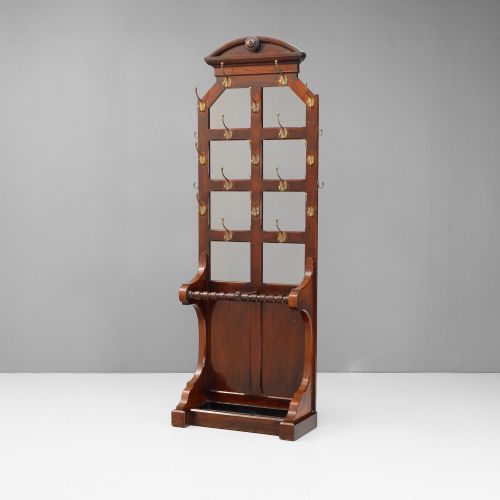


Wooden Entryway Coat Stand
A wooden entryway coat stand welcomes the visitor with practical service, bringing period character and organised storage to the hall.
Wooden Entryway Coat Stand
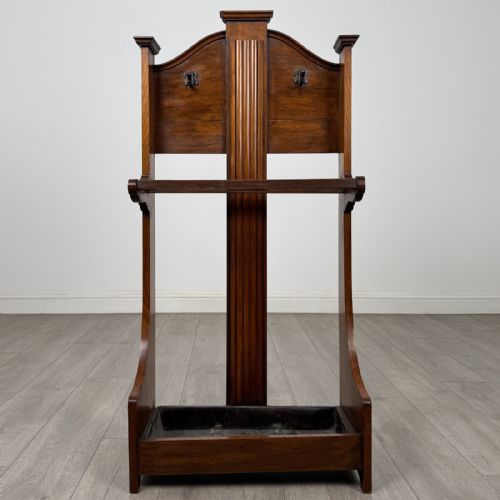
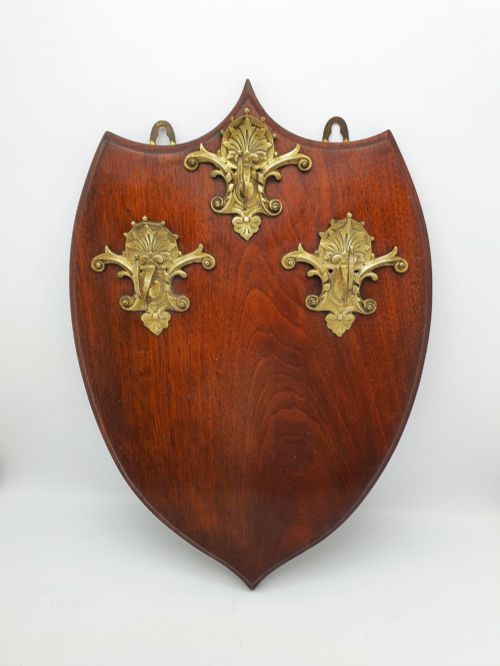
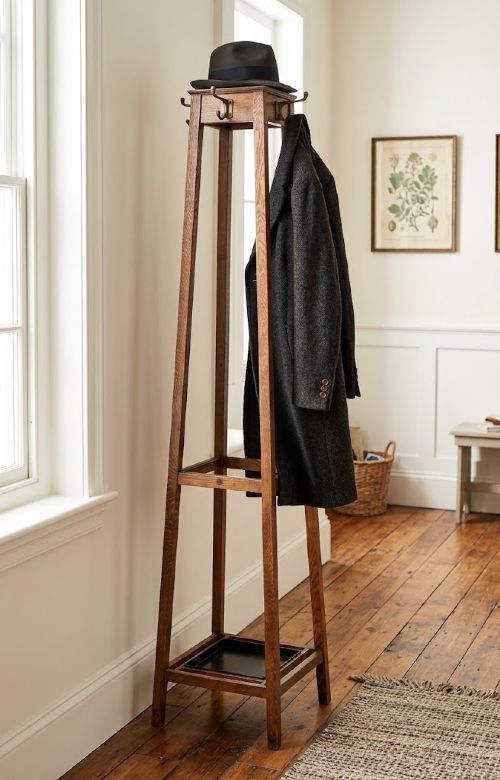
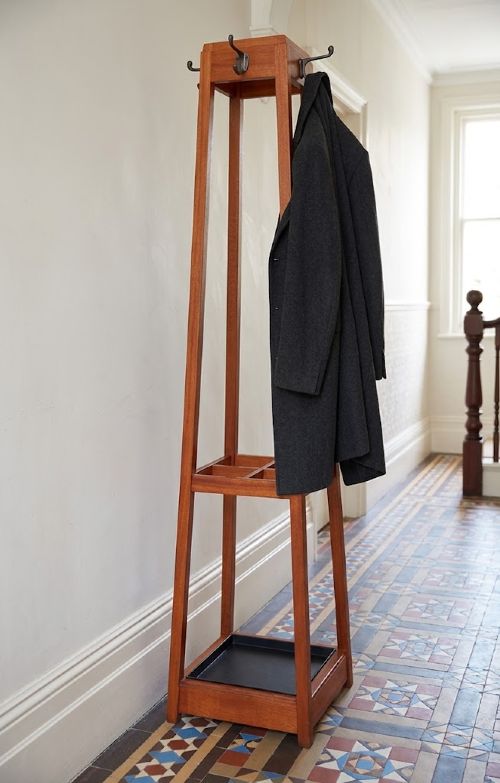
A wooden entryway coat stand combines practical storage for garments with the structured presence of period hall furniture. These pieces serve as the primary reception point in domestic interiors, designed to hold hats, coats, and walking accessories near the front door. Buyers searching for a wooden entryway coat stand encounter robust freestanding forms alongside wall-mounted variations.
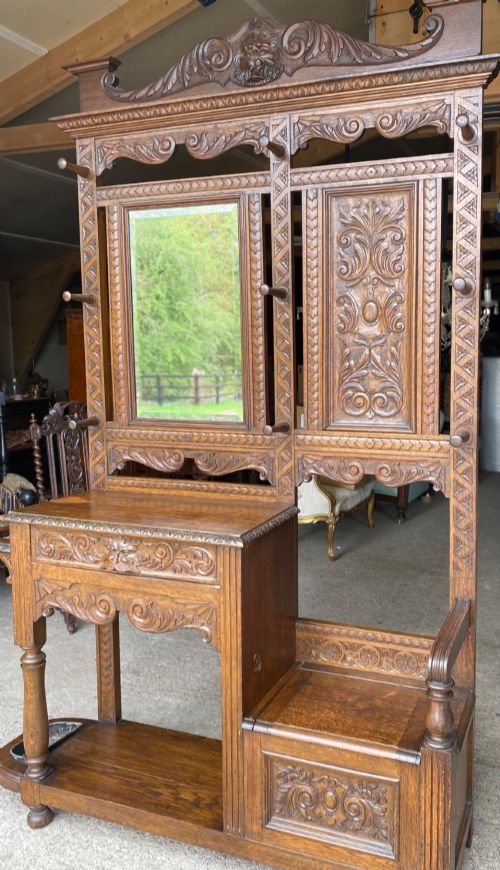
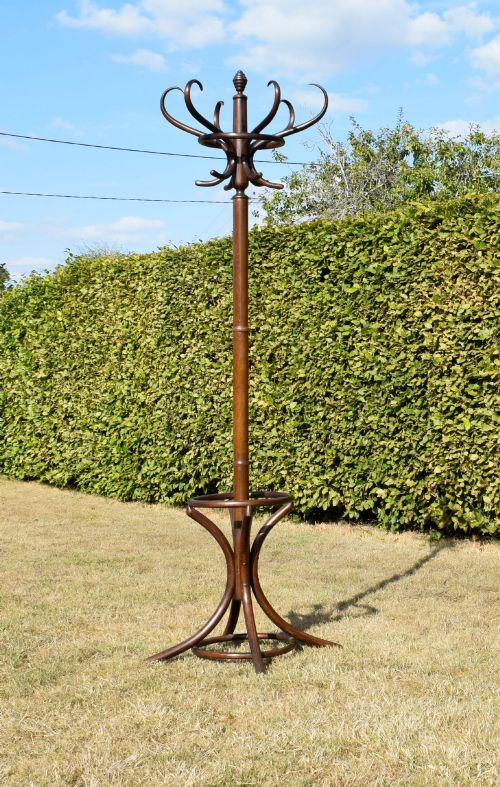
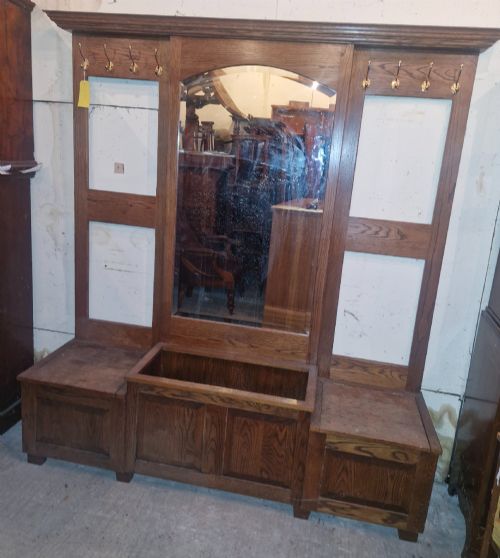
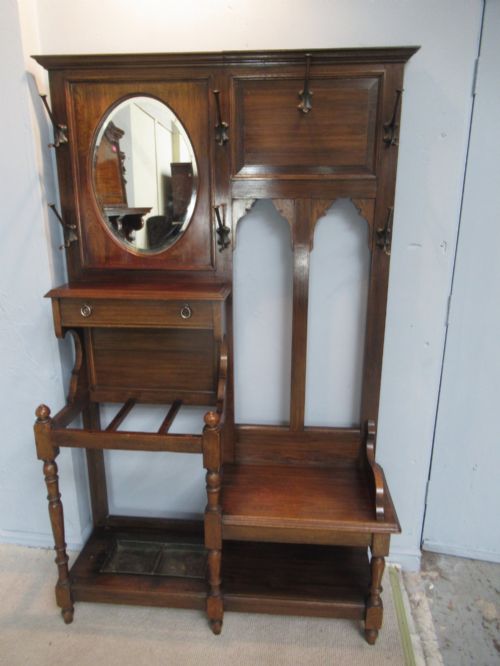
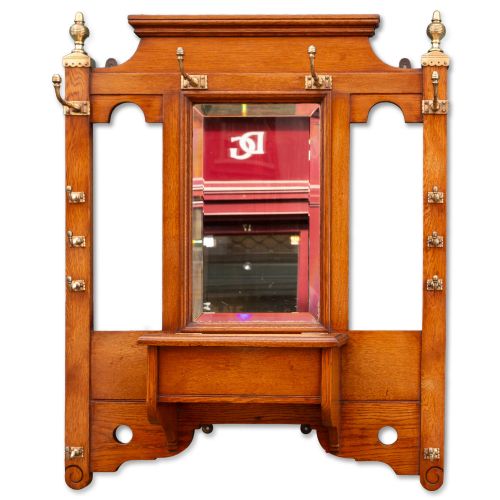
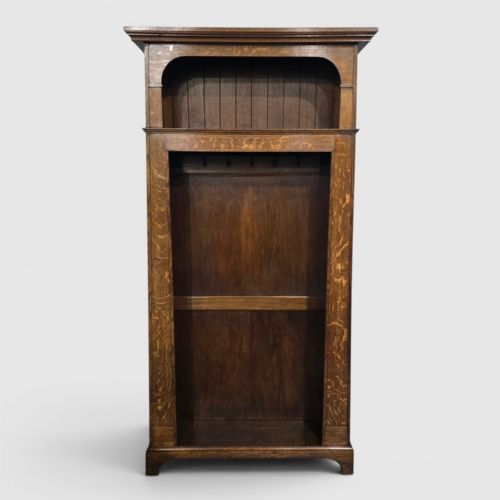
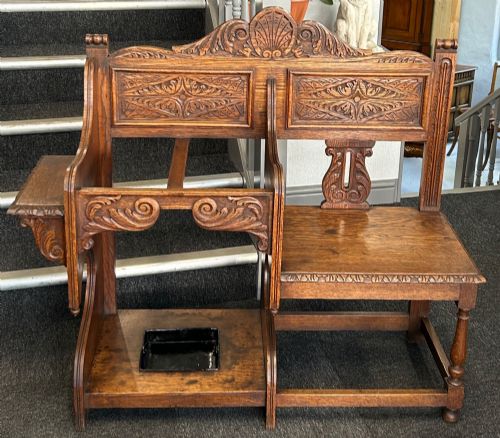
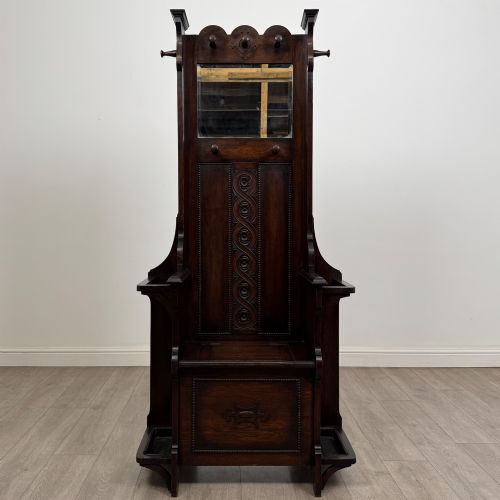
The selection ranges from simple bentwood designs to substantial Victorian and Edwardian examples featuring integrated mirrors and umbrella compartments. Oak and mahogany dominate the available forms, often incorporating brass hooks and marble inserts for durability. Pieces span from the late nineteenth century into the 1930s, offering a mix of utilitarian hat racks and multi-functional hall seats.
Materials and construction methods
Cabinet makers utilised solid hardwoods such as oak, walnut, and mahogany, selecting timber for strength and decorative grain pattern. Joinery methods relied on traditional mortise and tenon joints to withstand the heavy daily load of winter garments. Bentwood techniques emerged for lighter, curved frames formed under steam pressure.
Metal components added functional utility to the wooden structures. Brass and iron hooks were screwed securely to backboards, while cast metal trays collected water from wet umbrellas. Bevelled glass mirrors were integrated into larger hall stands, held in place by wooden moulding.
Listings feature oak, walnut, and mahogany across Victorian, Edwardian, and Arts and Crafts periods.
Distinctions in quality
Quality rests upon the selection of timber and the ambition of the carved or turned decoration. Superior examples display dense, figured oak or rich mahogany with well-proportioned architectural cornices and fielded panels. Simpler utility pieces rely on plain surfaces and basic bracket assembly without secondary embellishment.
The complexity of the form dictates the standard of manufacture. Multi-functional pieces combining seats, cupboards, and umbrella racks require sophisticated carpentry to remain rigid over time. Original hardware, intact mirror plates, and matched drip pans separate standard production items from exceptional workshop commissions.
The Wooden Entryway Coat Stand Glossary
- Hallstand
- A large piece of hall furniture combining coat hooks, a mirror, and umbrella storage. Many include a central drawer or a hinged seat for footwear.
- Bentwood
- Wood softened by steam and bent into curved structural forms. This technique created light, resilient coat stands popular around the turn of the twentieth century.
- Faux bamboo
- Wood carved or turned to imitate natural bamboo stalks. This decorative finish appeared on lighterhall stands during the late Victorian period.
Wooden Entryway Coat Stand: Frequently Asked Questions
How do I choose the right size?
Measure the available wall space and floor clearance in your hallway before selecting a piece. Freestanding variations require sufficient depth to accommodate hanging coats without blocking doorways.
Wall-mounted racks offer a space-saving alternative for narrower corridors while still providing robust hanging capacity for daily garments.
How were these stands used historically?
These pieces functioned as the domestic reception furniture for Victorian and Edwardian households. Visitors placed hats and coats on the hooks while umbrellas rested in the lower metal or ceramic wells.
Mirrors allowed occupants a final check of their attire before stepping out, and integrated seats provided a convenient surface for putting on boots.
Are these pieces suitable for modern hallways?
Their enduring utility makes them well-suited for contemporary homes needing organised coat storage. The robust wooden construction handles daily family use while adding historical character to modern entrances.
Compact wall racks suit small apartments, whereas large mirrored hall stands anchor spacious period hallways effectively.
How do I identify the period?
Examine the timber, decorative motifs, and hardware to determine the era of manufacture. Victorian pieces often display heavy carved mahogany or oak with elaborate mouldings, while Edwardian examples tend to be lighter in golden oak.
Arts and Crafts pieces show plain geometric lines, and bentwood items rely on smooth curved frames from the early twentieth century.