

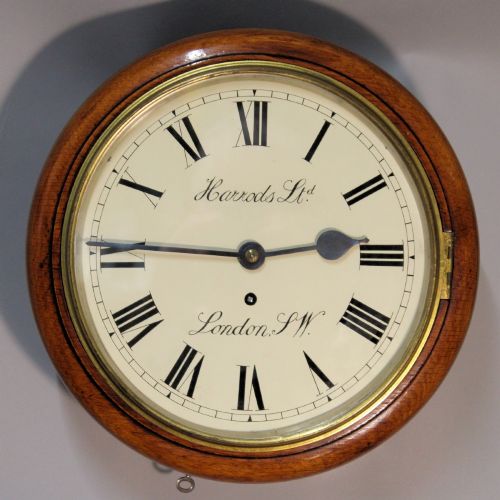
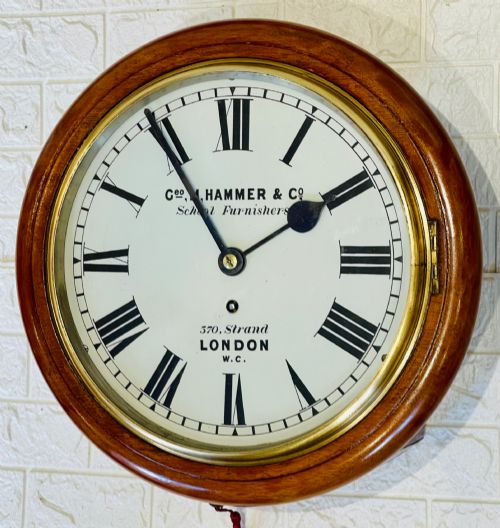
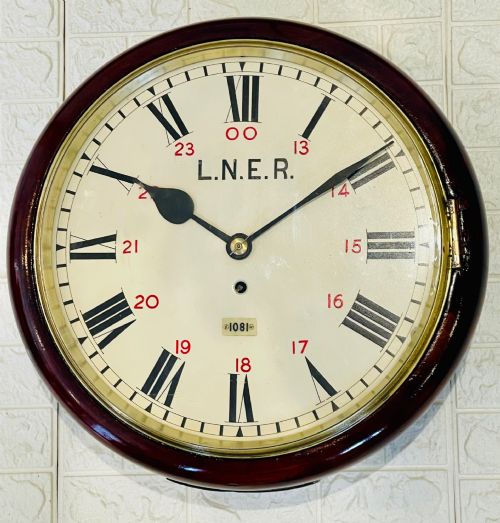

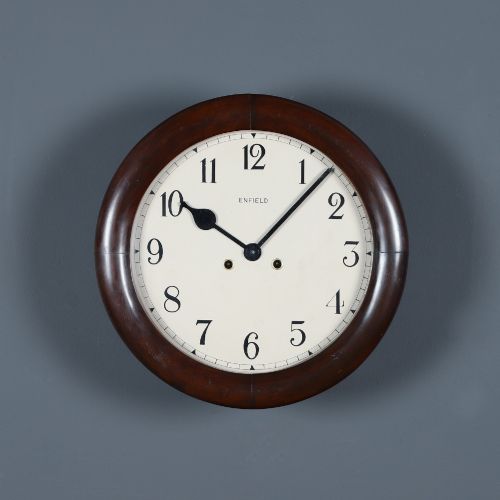
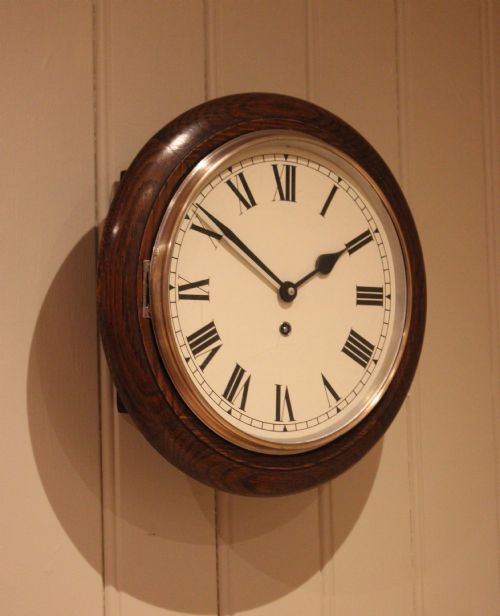
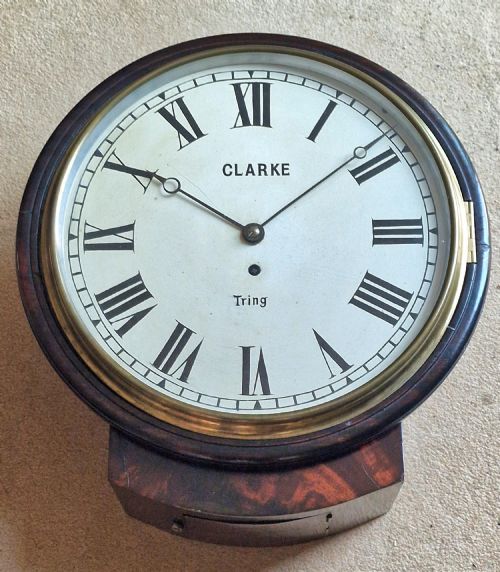
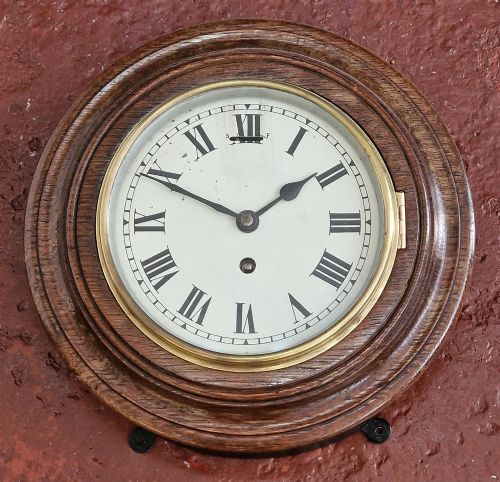
Wooden Station Clock
A wooden station clock brings the steady rhythm of the nineteenth and twentieth-century railway network directly onto a domestic wall.
Wooden Station Clock
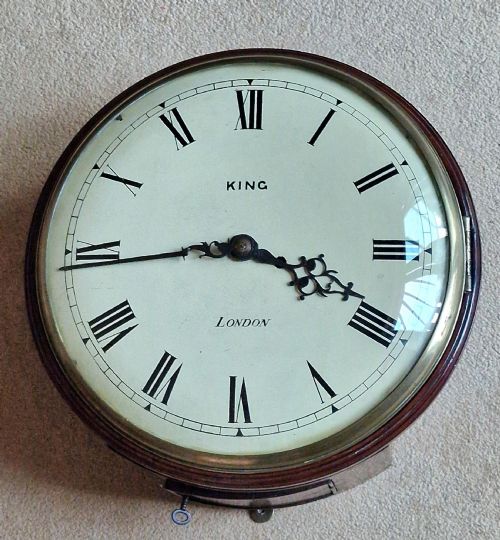
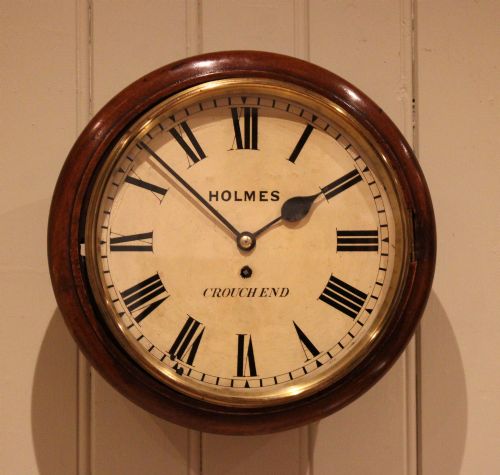
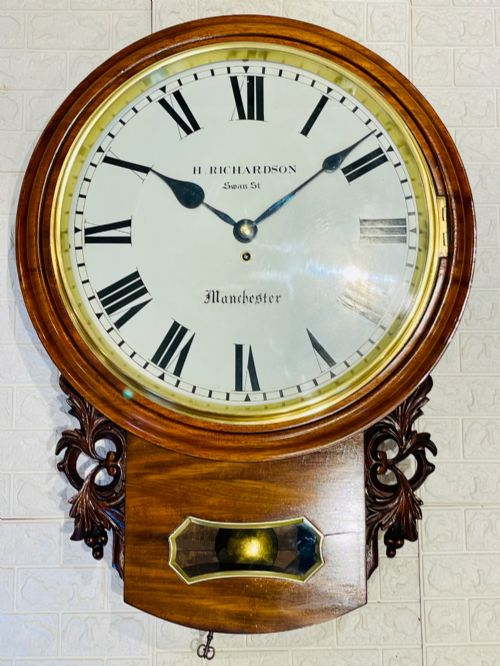
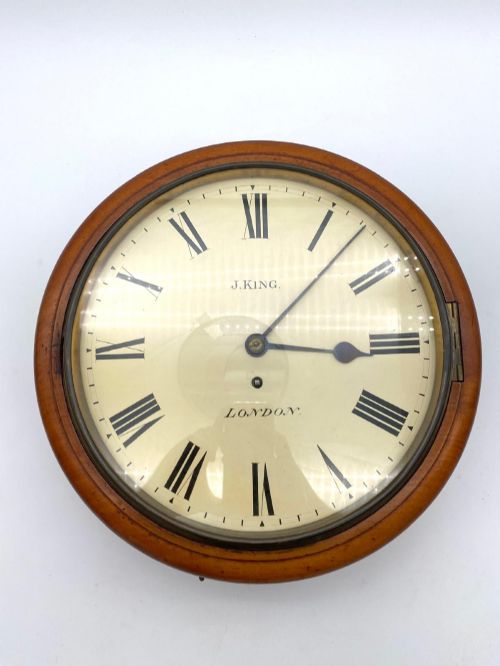
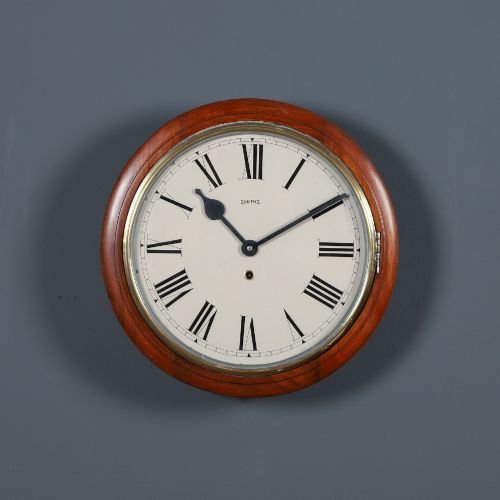
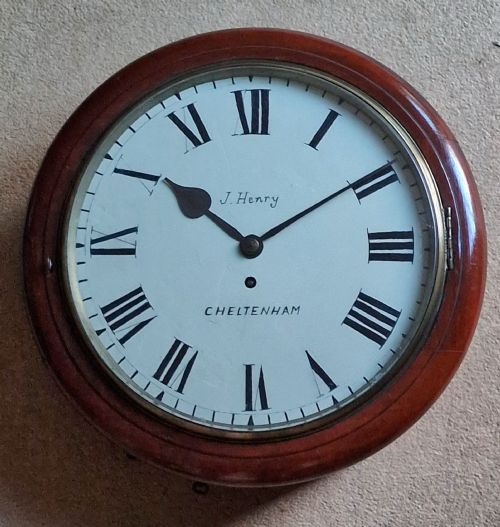
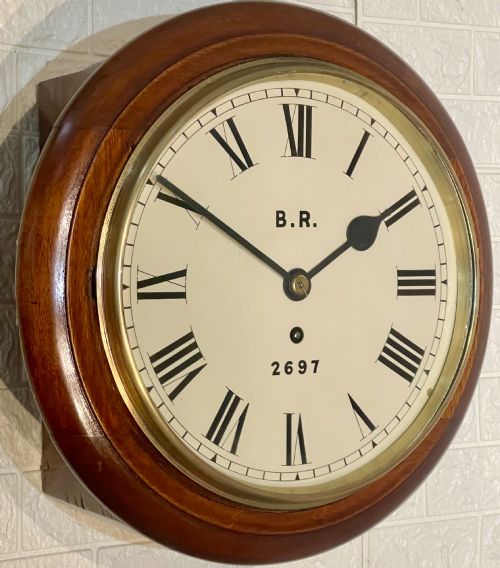
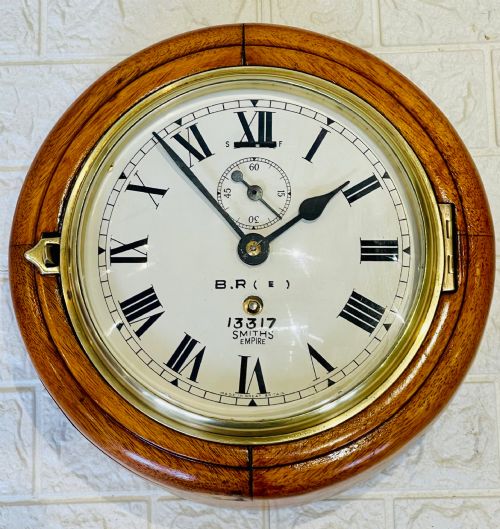
A wooden station clock is a round-dial timepiece designed for clear legibility in public transport hubs, municipal offices, and operational platforms. When searching for a wooden station clock, buyers encounter circular timber cases housing bold numeric faces behind protective glass, often associated with major railway companies or government departments.
The pieces appearing on this page span the Victorian era, the Edwardian period, and the mid-twentieth century, including wartime issues for the RAF and the Post Office. The most frequently met examples feature fusee movements housed in timber surrounds of mahogany or oak, bearing the markings of lines such as the GWR, LNER, and British Railways.
Materials and construction
Makers utilised dense timbers like mahogany, walnut, and oak to construct the heavy circular cases required to protect delicate interior mechanisms from damp station environments. Beech and iron also appear in regional workshops and utilitarian wartime pieces, providing structural rigidity.
Mechanical reliability depended on fusee movements, which use a conical pulley to equalise the pull of the mainspring as it winds down, ensuring consistent timekeeping. Brass components interact with iron and wood within these assemblies, covered by hinged brass bezels holding thick glass.
Wooden Station Clock Retail Price Guide 2026
Typical asking prices for wooden station clock among the pieces listed under this phrase on Sellingantiques today, from the lower quarter to the upper quarter. They describe what is for sale here now, not the wider market.
Listings feature oak, mahogany, walnut, and beech cases housing fusee movements from the Victorian era to the mid-twentieth century.
Judging the standard of execution
Superior quality in these timepieces rests upon the precision of the fusee movement and the integrity of the timber framing. Maker signatures inscribed on the dial or movement plates elevate a piece above unmarked municipal examples.
The treatment of the timber case and the preservation of original dial paint dictate desirability. Untouched mahogany frames with clean grain patterns sit at the upper end of the scale, alongside pieces retaining authentic railway company lettering.
John Walker·Enfield·Smiths·George Clarke·J Henry·Rudge
The Wooden Station Clock Glossary
- Fusee
- A conical pulley connected to the mainspring by a chain or cord that maintains even tension as the power unwinds. This mechanism is central to the accuracy of nineteenth-century English dial clocks.
- Dial clock
- A round-faced timepiece designed for wall mounting in public spaces or offices. These items typically feature a hinged wooden bezel or a cast brass ring holding the glass.
- Bezel
- The ring of brass or wood that holds the glass face in front of the dial. It usually swings open on a hinge to allow hand-setting and winding.
- Drop dial
- A clock case featuring an extended lower portion, sometimes with a curved base or trunk, which accommodated the descending weight or pendulum swing.
- Chain-driven
- A mechanism utilising a metal chain rather than a gut line to connect the fusee cone to the barrel. This method was widely adopted for heavy-duty railway timepieces.
Wooden Station Clock: Frequently Asked Questions
How do I wind a fusee wall clock?
Most fusee wall clocks require a specialised winding key inserted through a small hole directly into the dial face. Turning the key engages the chain-driven mechanism to tension the mainspring.
Care must be taken not to overwind the movement, stopping as soon as resistance is felt. Regular winding at the same time each week helps maintain consistent timekeeping.
Where were these clocks originally mounted?
These clocks hung in high-traffic public areas such as ticket offices, station platforms, signal boxes, and administrative headquarters. They needed to be easily read from a distance by both passengers and staff.
Municipal buildings like post offices and schools also utilised identical round-dial formats for precise time synchronisation.
How do I read railway company lettering on dials?
Railway company lettering usually appears as painted initials or full titles on the dial face, such as GWR, LNER, or LMS. These abbreviations denote the specific pre-nationalisation network that operated the clock.
Genuine pieces often carry corresponding property numbers or station names painted beneath the hands or stamped onto the wooden case interior.
What is the difference between a timepiece and a chiming clock?
A timepiece is a clock designed solely to indicate the hours and minutes without any striking or chiming mechanism. This simpler movement was favoured in railway stations where acoustic noise made bells unnecessary.
Chiming versions incorporate additional gear trains and hammers striking gongs, requiring more internal space within the wooden case.