


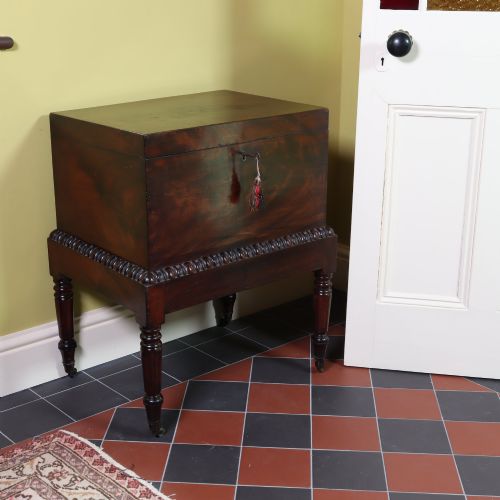

Wooden Sarcophagus Chest
These wooden sarcophagus chest designs combine grand architectural proportion with intimate domestic utility across Georgian and Regency periods.
Wooden Sarcophagus Chest
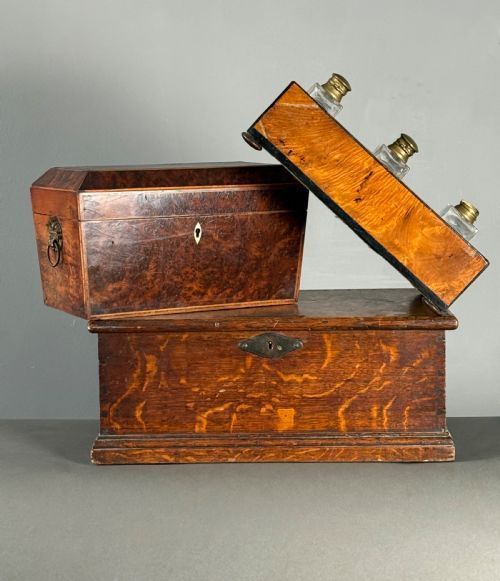
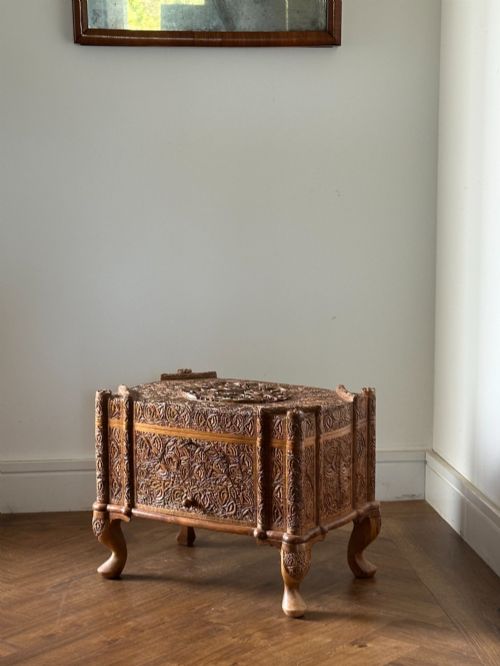
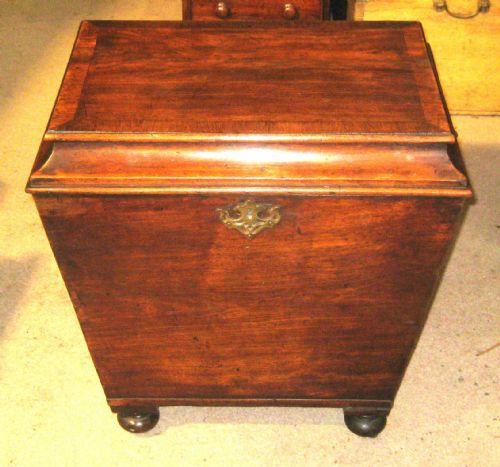
A wooden sarcophagus chest takes the classical, tapered vault form of ancient monumental tombs and scales it down for interior domestic use. When you search for a wooden sarcophagus chest, you encounter storage vessels intended for valuable commodities like leaf tea, fine wine, spirits, and jewellery.
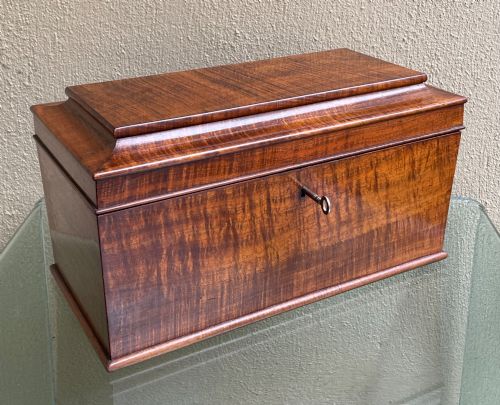
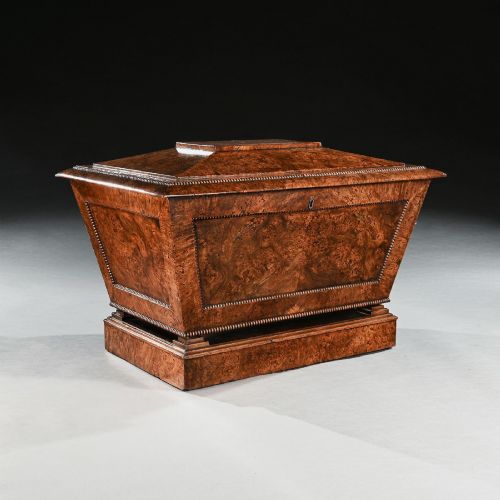
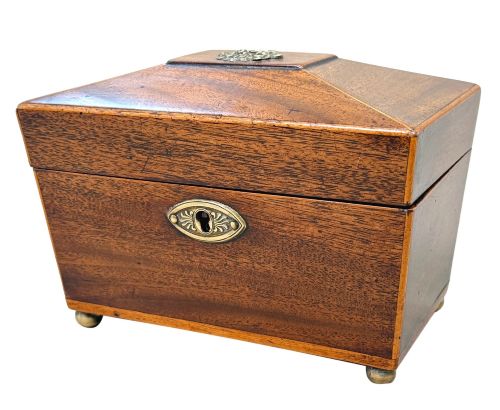
The versions most frequently met on this page span the Georgian, Regency, and Victorian periods, manifesting primarily as tea caddies, cellarettes, wine coolers, and jewellery boxes. These pieces borrow the distinctive stepped lid and flared body of monumental stone tombs to ornament the formal dining room, drawing room, or parlour.
Origins stretch from English workshops to Anglo-Indian studios and French-influenced ateliers, producing containers that served both practical preservation duties and decorative display functions. Builders shaped these lidded coffers to safeguard perishable luxury goods from light, air, and unauthorised hands within wealthy households.
How They Were Made
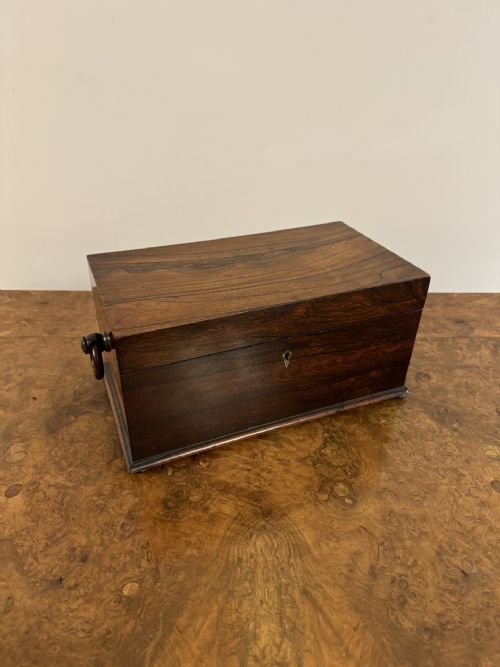
Cabinet makers constructed the foundational carcase from dense, stable timbers like mahogany, rosewood, and walnut, often applying decorative veneers of flame mahogany, pollard oak, or satinwood to the exterior surfaces. These primary woods provided structural integrity while allowing artisans to showcase dramatic grain patterns.
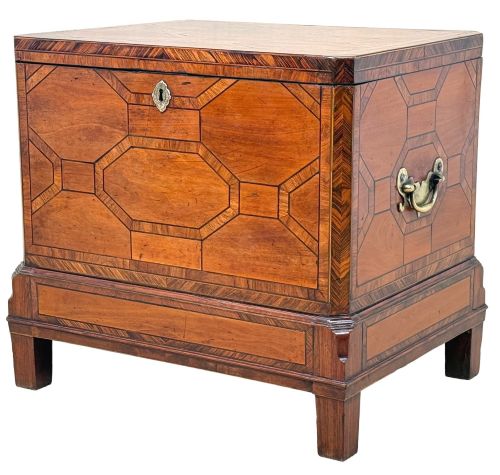
Gilding, ormolu mounts, brass stringing, and inlaid boxwood or ebony details accent the architectural lines of the sarcophagus profile. Interior compartments frequently incorporate lead linings for wine storage, velvet or silk linings for jewellery, and fitted wooden canisters with internal lids for tea preservation.
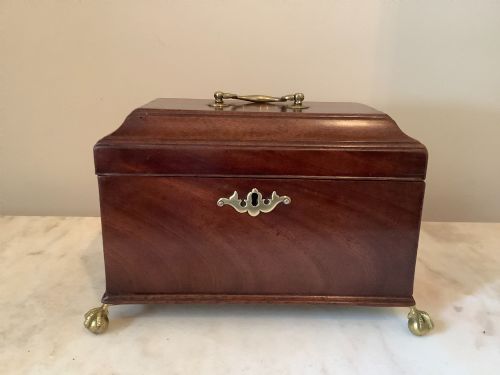
Object forms span tea caddies, cellarettes, wine coolers, teapoys, jewellery boxes, and collectors cabinets.
What Varies in Quality
The distinction between ordinary and exceptional examples rests upon the selection and matching of timber veneers, where continuous grain patterns flow seamlessly across the lid and sides. Superior pieces display meticulous hand-cut joinery, crisp brass inlay, and retained original internal fittings such as lead liners, glass mixing bowls, or velvet trays.
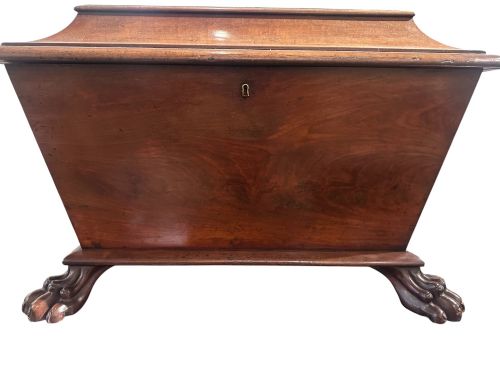
Proportion and execution of the carved details dictate the visual weight of the piece, with finer items showing precise execution of lion mask handles, paw feet, or delicate moulding. The integration of original working locks, secret drawers, and substantial hinges separates high workshop output from mass production.
Henry Hollamby
The Wooden Sarcophagus Chest Glossary
- Cellarette
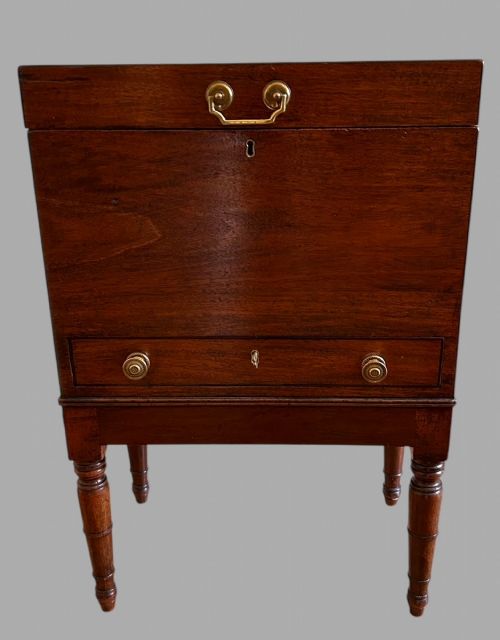
- A freestanding or floor-standing chest designed to hold bottles of wine or spirits near the dining table. They frequently feature lead linings to hold melting ice and drainage plugs.
- Teapoy
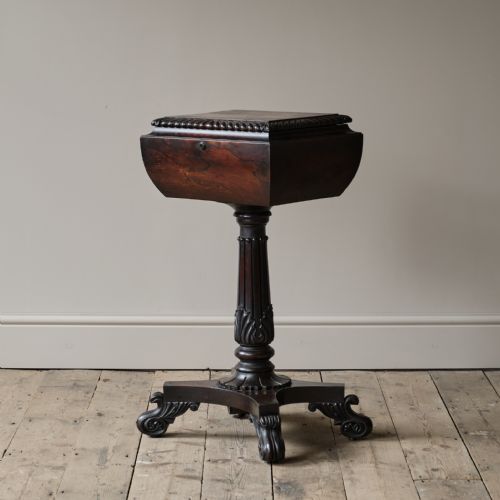
- A small table or large caddy designed to hold tea canisters, often supported on a central pillar with tripod legs. The top lifts to reveal compartments for black and green teas.
- Sarcophagus
- An architectural form featuring a steep, stepped, or domed lid above a tapered rectangular body. It derives its name from ancient stone burial vaults.
- Stringing
- A narrow strip of contrasting wood or brass inlaid into the surface of a box to create decorative borders. This technique highlights the geometric edges of the lid and base.
- Flame mahogany
- A veneer cut from the fork of the mahogany tree where the branch joins the trunk. It creates a distinctive, flickering flame-like pattern across the wood.
Wooden Sarcophagus Chest: Frequently Asked Questions
What were wooden sarcophagus chests used for?
These chests served primarily to store and protect valuable household commodities like imported tea leaves, bottled wine, spirits, and delicate jewellery. The heavy wooden construction helped shield perishable items from light, moisture, and theft in the formal rooms of large houses.
Tea caddies often included internal lidded compartments to keep different tea varieties separate, while wine cellarettes utilised lead linings to hold ice and keep bottles cool during long dining events.
How do I tell a Regency chest from a Georgian one?
Georgian examples, dating through the eighteenth century, tend to rely on solid mahogany or understated flame veneers with restrained classical mouldings and bracket feet. They emphasise architectural sobriety and balanced, clean proportions.
Regency pieces embrace bolder classical revival motifs, incorporating heavy brass lion mask handles, paw feet, intricate brass inlay, and exotic veneers like rosewood or pollard oak. They reflect a more theatrical, archaeological influence inspired by ancient Roman and Greek designs.
Where should I place a sarcophagus chest in my home?
Smaller tea caddies and jewellery boxes sit comfortably on sideboards, console tables, or desks where their detailed veneers and inlay can be closely appreciated. Larger wine cellarettes and floor-standing pieces work well as standalone accent items in a dining room or study.
Keep these wooden pieces away from direct sunlight and strong heat sources to prevent the delicate mahogany or rosewood veneers from drying out and splitting over time.
Did these chests always have locks and keys?
Tea and sugar represented expensive luxury items in the eighteenth and nineteenth centuries, making secure storage essential for households. Most original boxes included functional brass locks to prevent servants or guests from accessing the contents.
Many surviving pieces retain their working locks, and some feature hidden secret drawers operated by internal release mechanisms to store particularly valuable trinkets.