




Wooden Pricket Candlestick
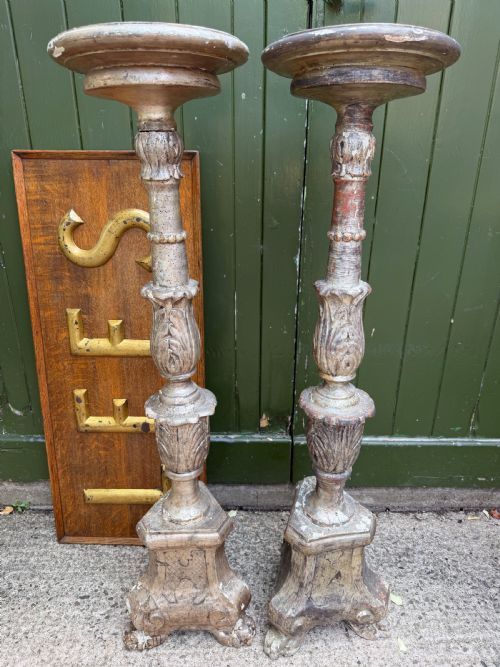
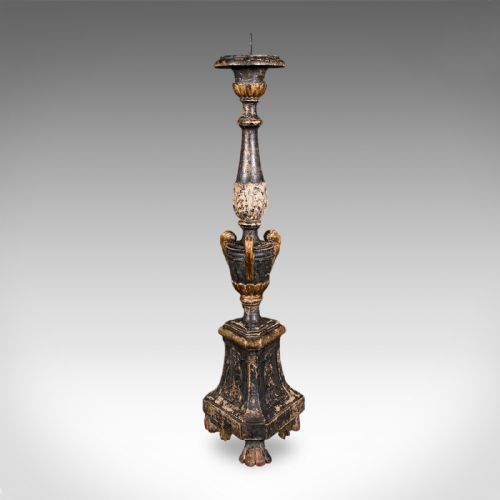
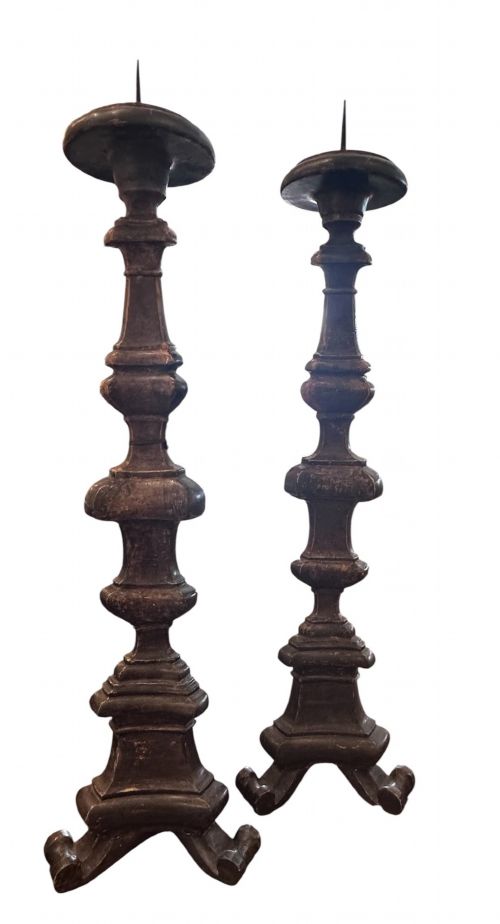
These wooden pricket candlesticks are carved altar lights and tall torcheres, offering rich historical presence and warm illumination to any interior.
Wooden Pricket Candlestick
A wooden pricket candlestick is an altar-style lighting piece or torchere designed with a central metal spike to secure a candle, appearing frequently in Italian and French styles from the eighteenth and nineteenth centuries. These items trace their origins to ecclesiastical and domestic settings where tall standards and smaller table models provided functional light and decorative gravitas.
Buyers browsing this selection encounter pieces ranging from monumental carved figures and altar candle-holders to converted standard lamps and smaller treen table pieces. The majority of these objects originate from Continental workshops, displaying baroque and neoclassical influences through carved timber forms.
The inventory includes pairs and single items spanning the eighteenth century through to the early twentieth century, capturing both restrained English treen and opulent Continental giltwood. Each piece bears the marks of hand carving, structural adaptations for modern wiring, and the natural patina of age.
How they were made
Craftsmen shaped these candlesticks from native and imported timbers, utilising hand carving to build up deeply sculptural acanthus leaves, fluted columns, and figurative elements. Dense woods like pinewood provided a stable base for detailed chisel work and subsequent decorative treatments.
Surfaces were frequently finished with gesso applied over the carved wood before receiving layers of gold leaf, silver leaf, or polychrome paint. This traditional preparation created a reflective ground that caught the flicker of candlelight, while ebonised or plain polished finishes highlighted the natural grain of the timber.
The selection includes pieces spanning the eighteenth century to the mid-twentieth century, featuring materials such as gesso, giltwood, and brass.
What varies in quality
Quality rests in the crispness and depth of the hand carving, where deeply undercut foliage and well-defined figurative details separate master workshops from routine production. The proportion and balance of the turned shafts dictate the overall visual harmony of the piece.
The integrity of the original giltwood, gesso, or silver leaf surface determines the aesthetic value, with undisturbed historical patination holding greater visual weight than later overpainting. Surviving original pricket spikes and matching pairs enhance the desirability of these lighting pieces.
The Wooden Pricket Candlestick Glossary
- Pricket
- A metal spike set into the top of a candlestick to hold a candle in place. This design is traditional for large altar sticks and heavy ceremonial candles.
- Torchere
- A tall, freestanding wooden stand or candlestick used to support a light source. These often feature elaborate carved decoration and substantial proportions.
- Giltwood
- Timber that has been coated with a thin layer of gold leaf over a prepared gesso ground. This technique gives the appearance of solid gold while utilising lighter wood.
- Treen
- Small handmade wooden domestic objects and utensils. In the context of candlesticks, it refers to items valued for their simple turned wood construction and tactile grain.
- Gesso
- A plaster-like mixture applied to wood as a smooth base for gilding or painting. It allows intricate relief work to be carved and finished before leaf is laid.
Wooden Pricket Candlestick: Frequently Asked Questions
What is a pricket candlestick?
A pricket candlestick uses an upright metal spike instead of a socket to secure the candle. This style derives from ecclesiastical lighting traditions found on church altars.
Over time, these pieces moved into domestic interiors as decorative accessories and statement floor or table lamps.
How do I style a tall torchere?
Tall wooden torcheres work well placed in empty corners, framing doorways, or flanking large pieces of furniture. Their height draws the eye upward and adds architectural weight to a room.
Many examples are wired as standard lamps, allowing them to provide soft ambient lighting while retaining their historical silhouette.
How do I care for giltwood?
Giltwood surfaces require gentle dusting with a soft, dry brush to protect the delicate gold leaf and underlying gesso. Avoid moisture, cleaning sprays, and direct sunlight, which can cause the finish to flake or fade.
Treating the wood with care preserves the historic patina and prevents damage to the carved details.
How can I tell the period?
Dating relies on observing the carving style, such as heavy baroque curves versus restrained neoclassical lines, alongside the condition of the gesso and timber. Tool marks and construction methods visible underneath offer further clues to the workshop era.
Comparing the turned profiles and decorative motifs helps distinguish eighteenth-century ecclesiastical pieces from later nineteenth-century revival items.