




Wooden Peat Bucket
A wooden peat bucket is a hearthside vessel designed to hold fuel or warm tea, combining robust coopered construction with fine cabinet timbers.
Wooden Peat Bucket
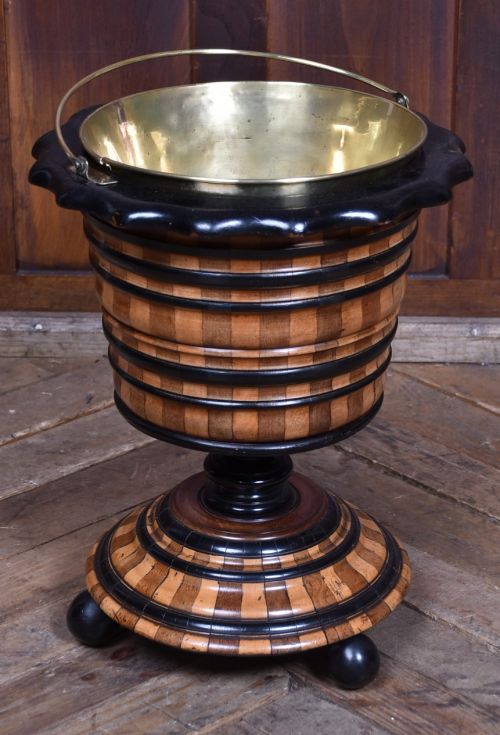
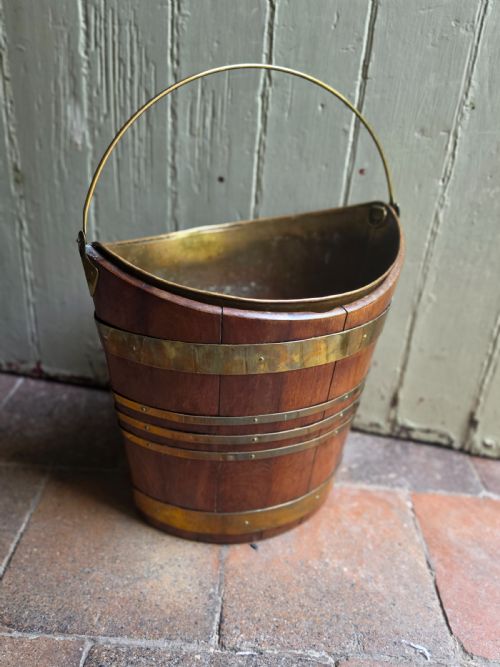
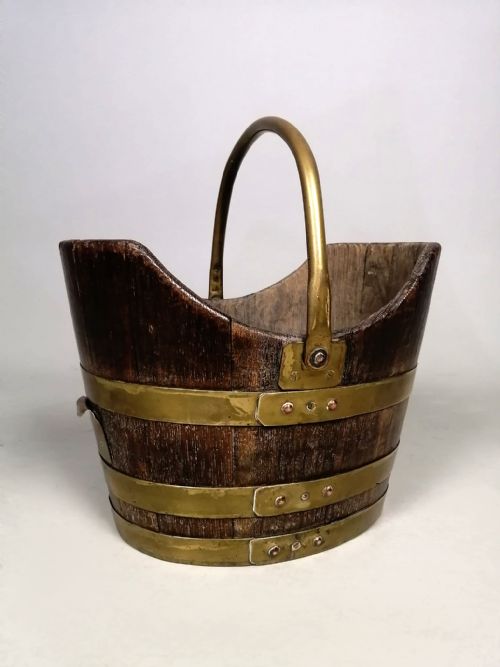
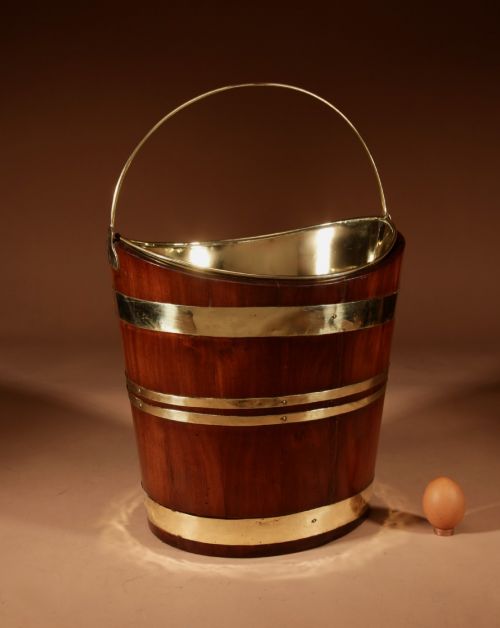
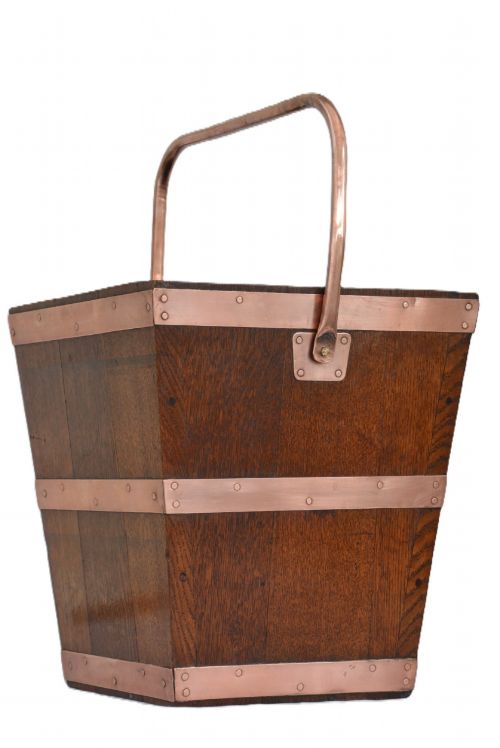
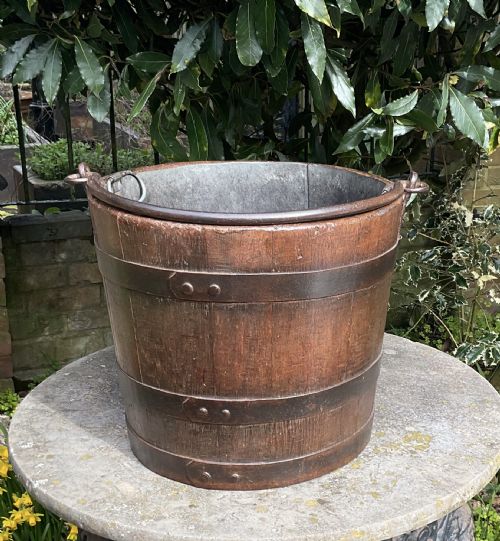
A wooden peat bucket is a traditional fireside container that originated to serve domestic heating needs in British and continental European homes. When searching for a wooden peat bucket, buyers encounter various vessel forms including boat-shaped schuitjes, cylindrical barrels, and occasional triangular bins, alongside related items like plate buckets and planters.
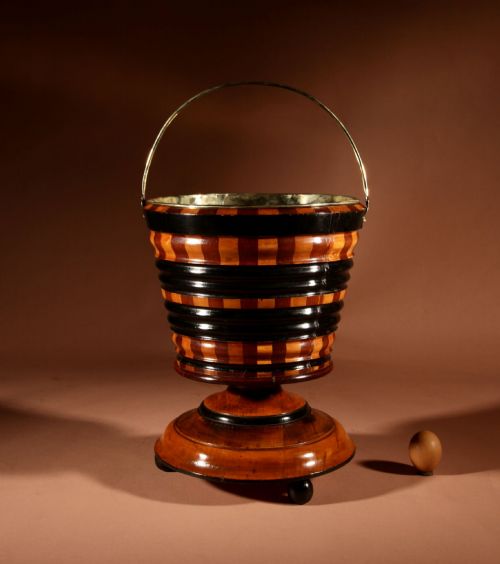
The pieces on this page span the Georgian, Victorian, and Edwardian eras, with many examples originating from Dutch workshops as well as English and Scottish makers. These vessels frequently double in description as tea stoves or jardinières due to their versatile shapes, metal liners, and ornamental capacities by the hearth.
Materials and Construction
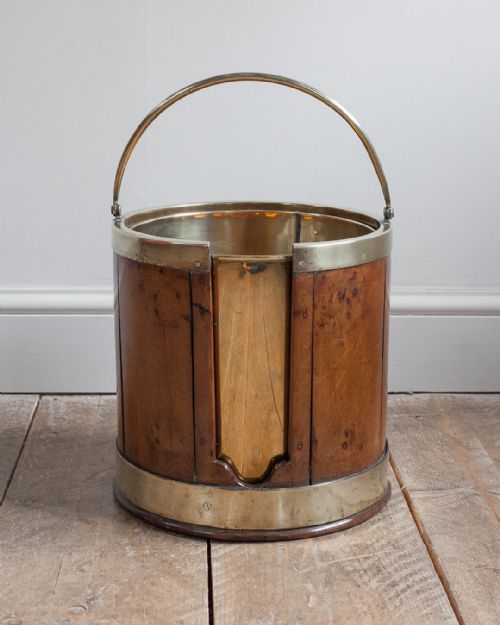
Makers utilised dense timbers such as mahogany, oak, walnut, and mixed hardwoods, frequently shaping the staves through traditional coopered techniques to form sturdy barrels and tapered bodies. These wooden staves are held tightly together by structural and decorative brass bands, hoops, or swing handles.
Many examples feature internal brass liners designed to protect the timber from moisture and ash when holding peat, coal, or plants. The exterior surfaces display the natural grain of ebonised wood, teak, or polished mahogany, sometimes enhanced by turned spindles or ribbed profiling.
Listings feature items spanning the 18th century through the Edwardian period, constructed in mahogany, oak, walnut, and mixed hardwoods.
Judging Quality
Quality rests in the crispness of the cooperage, the weight and gauge of the brass banding, and the preservation of the original timber surface rather than applied finish. Superior pieces exhibit tight, seamless stave joints and proportioned brass fittings that complement the natural figure of the mahogany or walnut.
The presence of original fitted metal liners and authentic swing handles elevates an example, as does structural integrity in the base and staves. Subtle details like turned spindle work, ribbed body forms, or well-executed Dutch styling distinguish finer domestic accessories from standard utility vessels.
The Wooden Peat Bucket Glossary
- Coopered wood
- Timber assembled from curved staves locked together by metal or wooden bands to form a hollow vessel. This method provides the structural strength needed for holding heavy loads of peat or coal.
- Teestoof
- A Dutch warming vessel or foot stove often associated with peat storage by the hearth. These pieces frequently feature brass liners and distinctive boat or bucket profiles.
- Schuitje
- A boat-shaped vessel form commonly seen in Dutch peat buckets and jardinières. The curved silhouette provides a decorative alternative to standard cylindrical barrels.
- Jardinière
- An ornamental pot or container designed to hold plants or flowers. Many antique peat buckets and tea stoves were later adapted for this domestic purpose.
- Plate bucket
- A vertical cylindrical vessel with a cut-down side used originally for carrying dining plates. They share identical coopered mahogany and brass-banded construction with peat buckets.
Wooden Peat Bucket: Frequently Asked Questions
What is a wooden peat bucket?
A wooden peat bucket is a coopered vessel originally built to hold peat or coal for domestic fireside heating. They utilise sturdy stave construction bound with brass.
Over time, many of these vessels survived by being repurposed as plant holders, wine coolers, or decorative hearthside storage bins.
How were peat buckets used?
They sat beside the fireplace to keep dry peat turf or coal close at hand for tending the hearth. The internal brass liners protected the wooden staves from damp fuel and ash.
Some Dutch variants functioned simultaneously as tea stoves, warming water or keeping pots hot near the family seating area.
Are these buckets waterproof?
Many examples retain their original fitted brass liners, which help contain moisture when the vessels hold damp materials. However, timber staves can shrink or expand with household humidity.
Buyers intending to use them as planters should check the condition of the metal insert to protect the surrounding antique wood.
How do I date an old bucket?
Dating relies on timber choice, construction marks, and stylistic indicators such as brass band thickness and foot forms. Georgian pieces often show rich mahogany figures and simpler joinery.
Victorian and later Edwardian examples frequently introduce walnut, oak, or more elaborate turned spindle details alongside Dutch influences.