




Antique Coopered Bucket
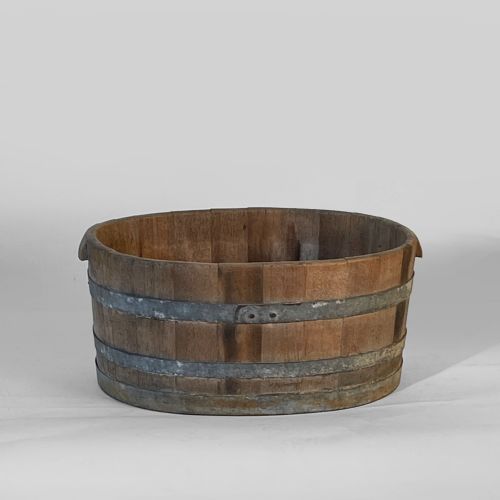
An antique coopered bucket brings traditional stave construction and warm timber into a room, serving practical domestic uses from holding logs to chilling wine.
Antique Coopered Bucket
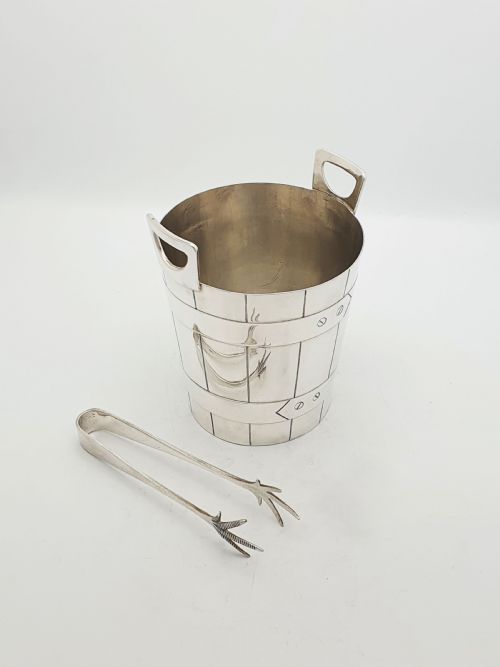
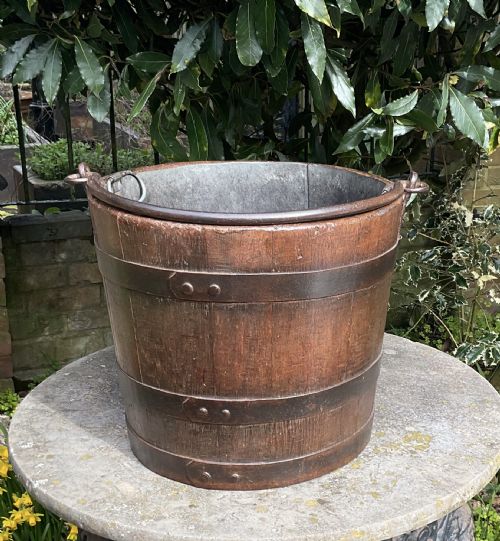
When you search for an antique coopered bucket, you encounter vessel forms made from vertical wooden staves held together by tensioned metal bands. These pieces span periods from the Georgian era through the Edwardian years and into the twentieth century, reflecting centuries of skilled woodworking.
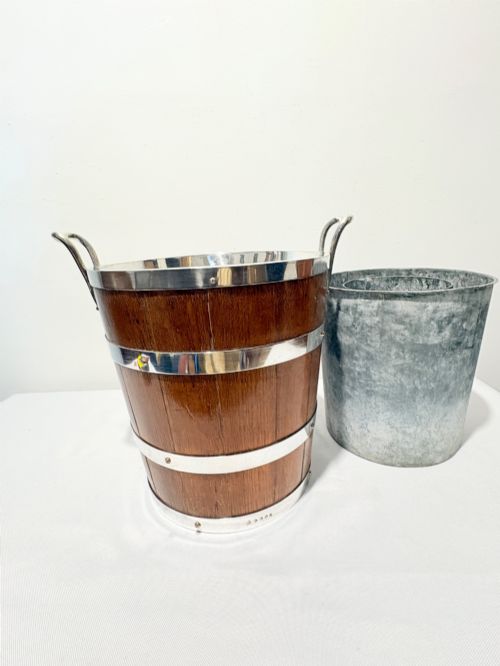
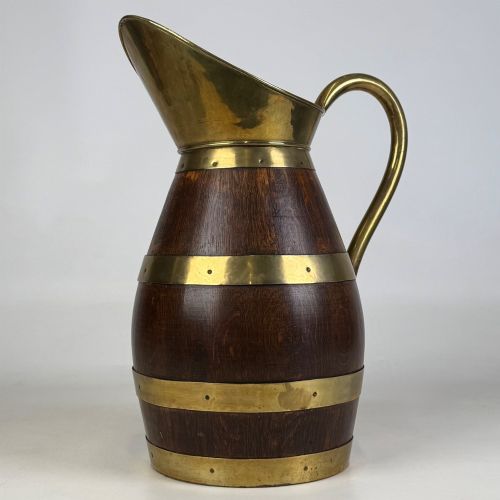
The selections on this page appear in various domestic forms, including wine coolers, umbrella and stick stands, peat buckets, butter tubs, and fireside coal bins. Oak and mahogany predominate, often complemented by brass handles, hoops, or swing bails.
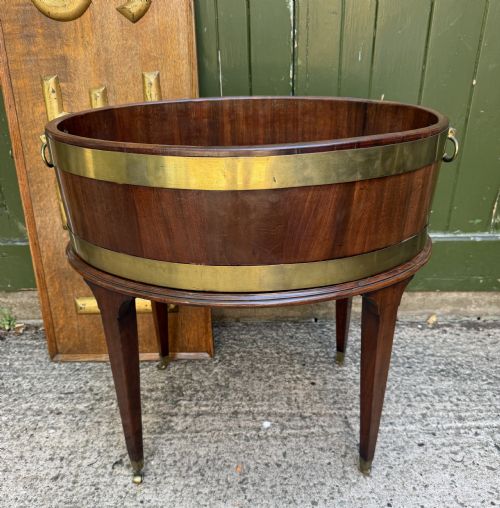
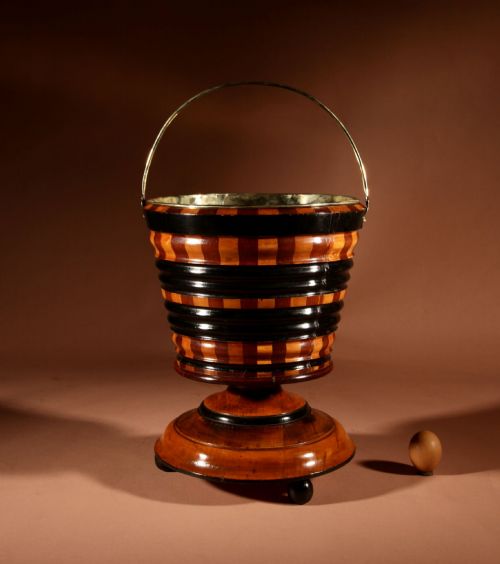
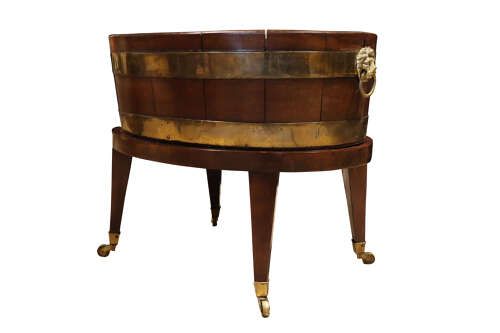
You meet both British country pieces in plain oak and formal George III mahogany wine coolers on stands, alongside continental Dutch examples. These vessels range from simple utilitarian washing tubs to decorative planters and jardinières.
What varies in quality
Quality rests in the precision of the stave joints and the proportion of the vessel, where the taper of the sides creates a balanced silhouette. Finer pieces employ figured mahogany or quarter-sawn oak with dovetailed or brass-pinned bases.
The execution of the metal mounts distinguishes utilitarian tubs from high-status objects, particularly where cast brass drop handles or paw feet are integrated into the design. Original liners and matching stands elevate certain examples above standard vessels.
Dutch traditional forms appear alongside English country pieces, encompassing peat buckets, butter tubs, and wine coolers.
Lister and Co·Samual Norman
The Antique Coopered Bucket Glossary
- Coopered
- Constructed from curved wooden staves joined vertically and bound with metal hoops. This technique traditionally produced barrels, tubs, and buckets.
- Stave
- A narrow strip of wood with bevelled edges that forms the sides of a coopered vessel. Multiple staves assemble to create the circular or oval body.
- Jardinière
- An ornamental pot or stand for holding plants and flowers. These vessels often utilise coopered wooden bodies with metal liners.
- Celleret
- A lockable container or cabinet for holding bottles of wine near the dining table. Many Georgian examples take a coopered bucket or barrel form.
- Teestoof
- A Dutch peat stove or warming bucket used domestically. These objects frequently feature brass handles and coopered hardwood construction.
Antique Coopered Bucket: Frequently Asked Questions
What were antique coopered buckets used for?
These vessels served diverse domestic functions, ranging from chilling wine at the dining table to storing peat for fires and holding walking sticks in hallways.
Many examples functioned as butter tubs, washing vessels, or decorative planters within period homes.
How do I care for an antique oak bucket?
Keep wooden coopered pieces away from direct heat sources and sudden temperature changes to prevent the timber from shrinking and loosening the metal bands.
Apply a traditional beeswax polish occasionally to nourish the wood and maintain a natural protective sheen.
Are these buckets completely watertight?
While originally constructed to hold liquids or ice, older vessels often dry out over time as the wooden staves shrink slightly.
Using a modern inner container or retaining the original ceramic or metal liner prevents potential leakage if used for plants or fresh water.
How can I tell a Georgian piece from a later one?
Georgian versions frequently utilise rich mahogany with fine brass banding and often stand on dedicated wooden frames or legs.
Later Victorian and Edwardian examples often feature heavy oak construction with prominent brass loop handles designed for umbrella storage.