


Antique Dutch Jardiniere
These antique dutch jardiniere vessels are heavy brass planters and coopered wood buckets built to hold indoor greenery or cool wine.
Antique Dutch Jardiniere
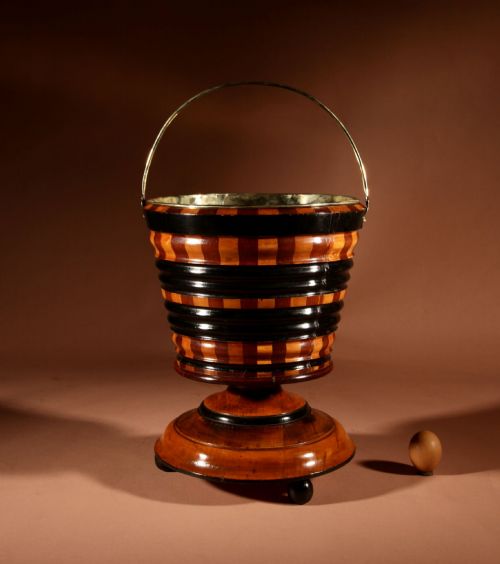
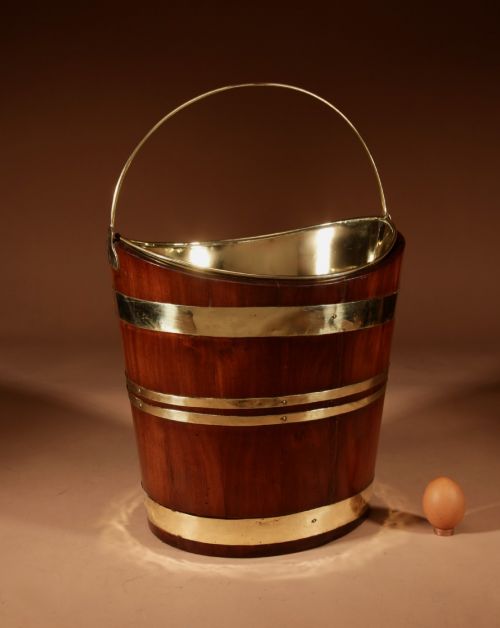
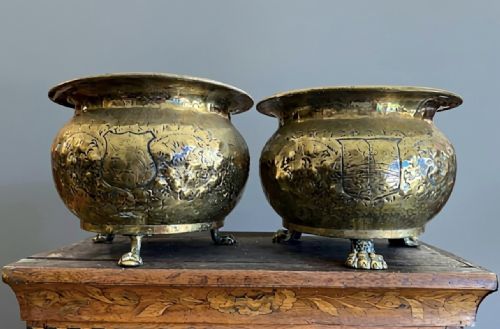
An antique dutch jardiniere is a decorative vessel designed primarily to house potted plants or cut flowers inside the home. Most examples appearing on this page take the form of heavy brass bowls or coopered wooden buckets fitted with metal liners.
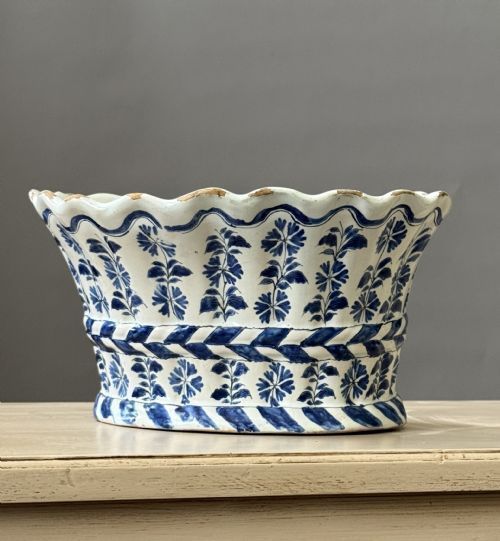
The materials and styles span from 18th Century Delftware and brass pieces to 19th Century mahogany, satinwood, and rosewood marquetry planters. Buyers frequently encounter boat-shaped schuitjes, cylindrical planters on stands, and traditional peat buckets adapted for ornamental use.
What varies in quality
Quality rests upon the crispness of the brass chasing, the integrity of the wooden cooperage, and the survival of original liners and stands. Heavy gauge metalwork and intact marquetry separate standard production vessels from finer workshop pieces.
Proportion and decorative detail dictate visual success, seen in the balance of boat-shaped bodies and the casting quality of handles and paw feet. Original stands and matching pairs command greater architectural presence in a room.
Many a stately palm tree spent its indoor winter resting inside a repurposed 19th Century peat bucket.
The Antique Dutch Jardiniere Glossary
- Coopered
- Constructed from wooden staves fitted together side by side and bound by metal hoops, much like a traditional barrel. This technique provided the sturdy water-resistant structure needed for wooden planters and peat buckets.
- Schuitje
- A boat-shaped vessel or container form originating in the Netherlands. In garden furniture and tableware, it describes planters and wine coolers featuring curved, pointed ends.
- Delftware
- Tin-glazed earthenware produced in the Netherlands, typically featuring blue and white painted decoration. Early pieces from the 18th century served as bough pots or bulb holders.
- Marquetry
- The art of applying decorative pieces of veneered wood to a structure to form intricate patterns and pictures. Makers utilised contrasting timbers such as satinwood and rosewood.
- Bough Pot
- A ceramic or wooden container designed to hold leafy tree branches and flower boughs for interior decoration. They frequently date from the 18th century.
Antique Dutch Jardiniere: Frequently Asked Questions
How do I clean a brass jardiniere?
Wash the surface gently with warm soapy water and a soft cloth to remove dust and dirt. Avoid harsh chemical polishes that strip away the aged patination collected over centuries.
Dry the metal thoroughly after washing to prevent spotting. Leave the interior lining protected if it shows original solder or oxidation.
What is the difference between a jardiniere and a wine cooler?
Jardinieres and wine coolers share remarkably similar coopered wooden or brass bucket forms. Makers often adapted the exact same vessel shape to hold potted palms or ice and wine bottles.
Water-tight metal liners allowed wooden staves to serve both functions interchangeably. Look at the interior wear and historical descriptions to determine primary use.
How do I date an antique brass jardiniere?
Examine the construction of the seams, handles, and feet to establish the period of manufacture. Hand-beaten brass bodies with cast brass attachments typically point towards 18th or 19th Century craftsmanship.
Simpler machine-rolled brass and heavier Victorian revival styling indicate late 19th Century production. Compare the patination and wear patterns against dated pieces in the archive.