
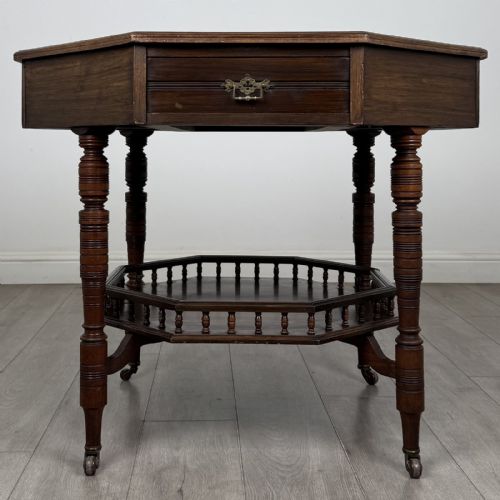
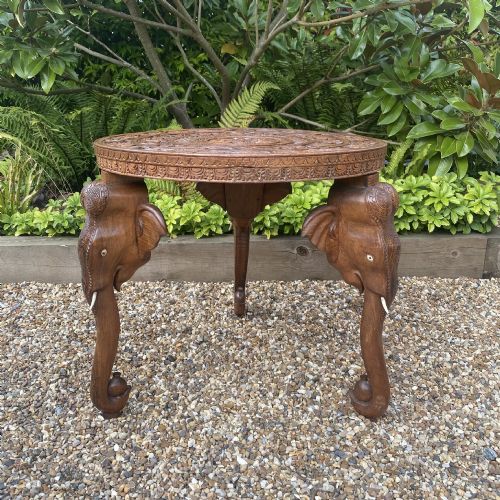
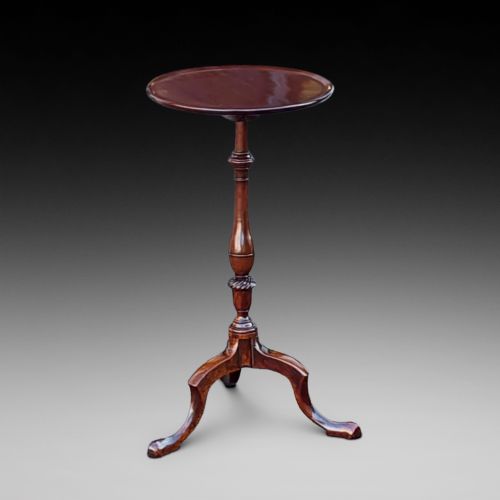
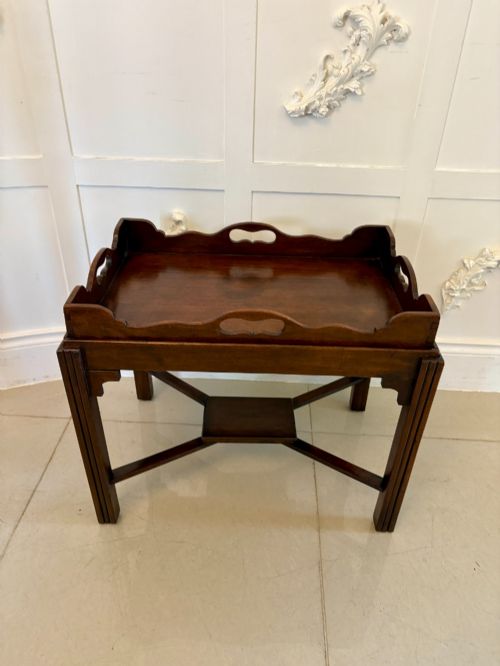
Wooden Occasional Side Table
A wooden occasional side table is a compact surface for lamps, books and drinks, offering flexible placement across period and revival interiors.
Wooden Occasional Side Table
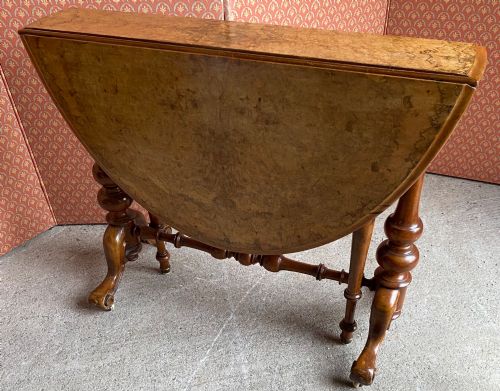
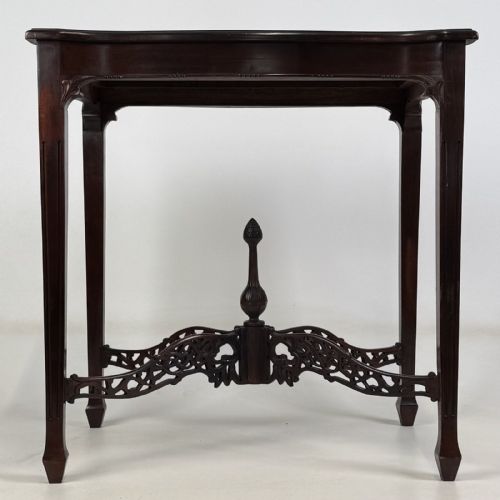
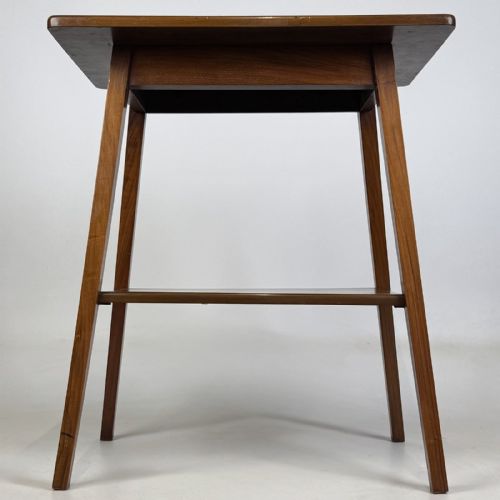
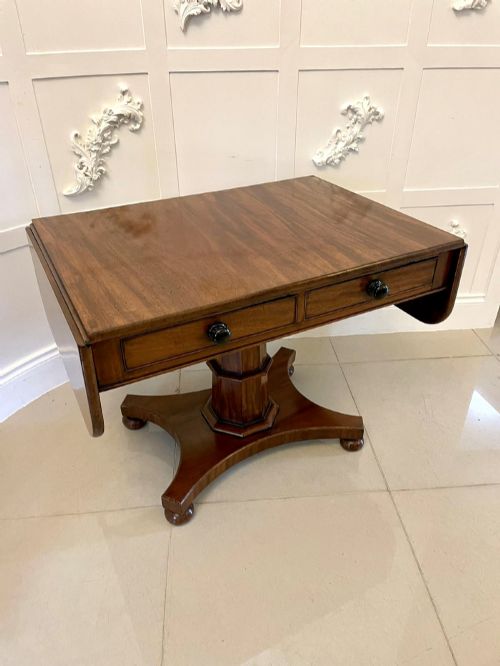
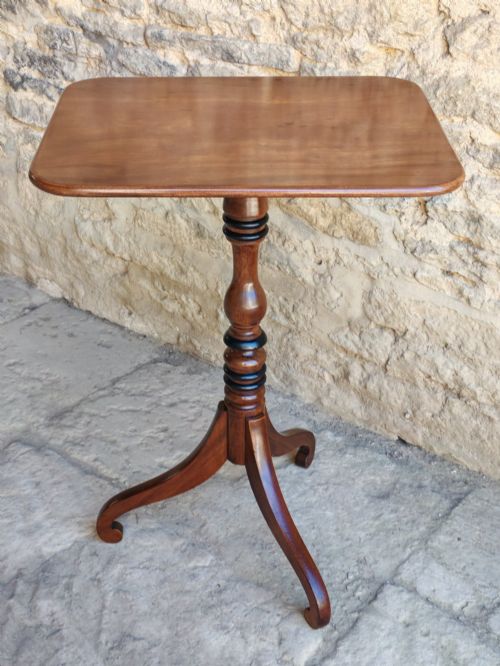
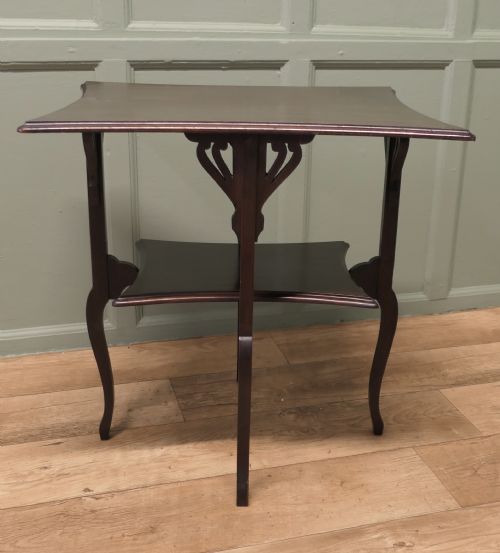
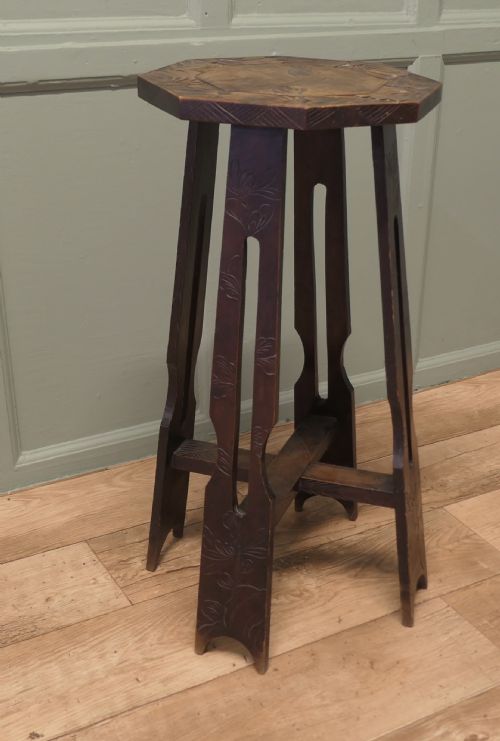
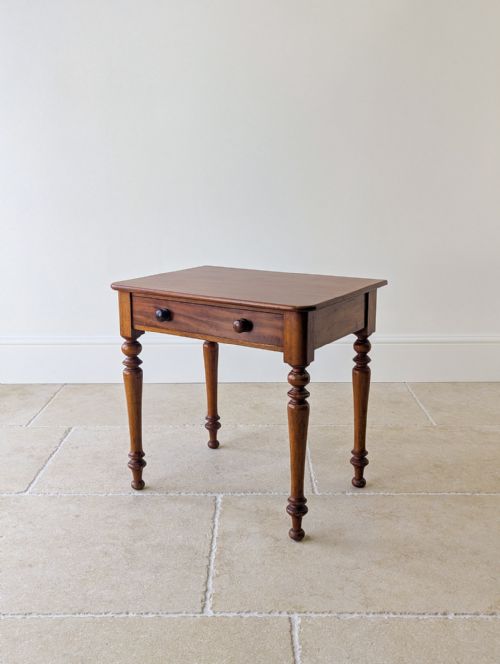
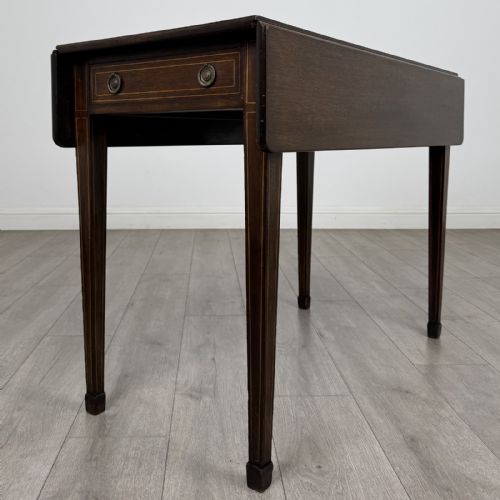
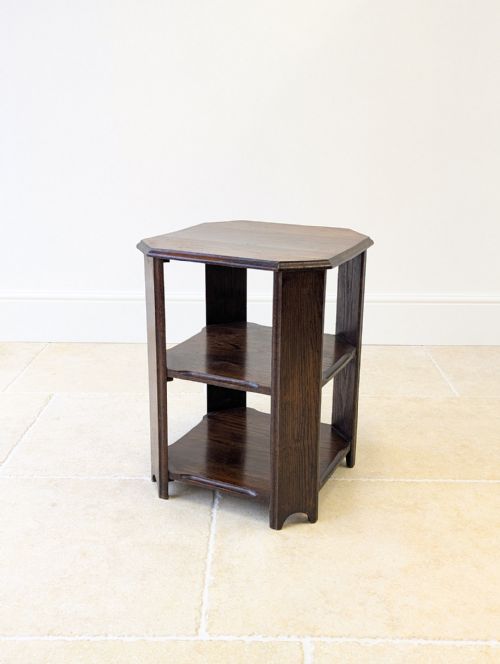
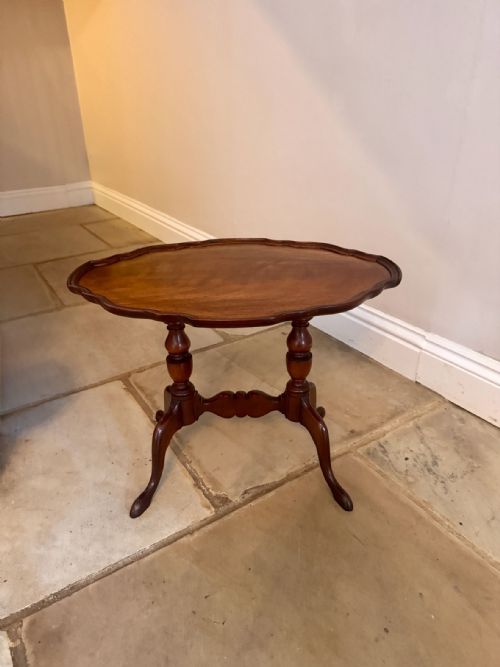
A wooden occasional side table spans centuries of domestic furniture, running from Georgian proportions through Victorian craftsmanship to Edwardian utility and 1930s modernism. Buyers exploring this selection encounter side tables, lamp tables, wine tables, nests of tables, pembroke tables, and drop leaf tables built for specific corners and sitting rooms.
The versions most commonly met on this page date from the Edwardian era and the nineteenth century, often fashioned in oak, mahogany, or walnut. These pieces range from simple folding campaign designs and plant stands to finely inlaid occasional pieces and tilt-top pedestal tables.
Makers and workshops adapted these forms to suit changing domestic habits, producing small bedside cupboards, nightstands, sofa tables, and multi-tiered tables that served multiple functions within the home.
Materials and construction
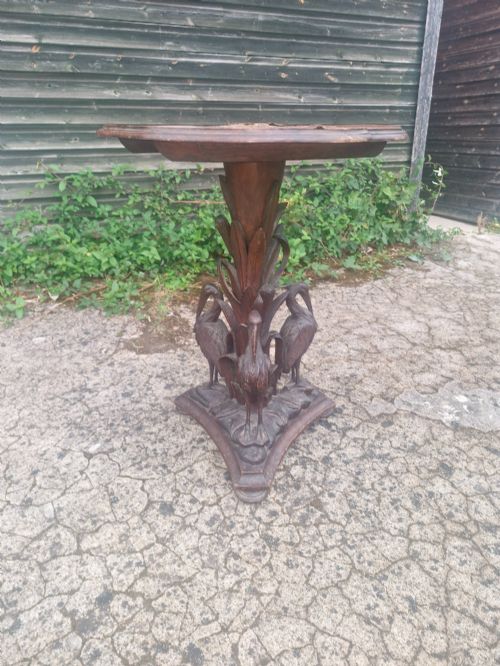
Cabinet makers utilised a variety of native and imported timbers, selecting mahogany, oak, walnut, satinwood, and yew wood for their grain and durability. Wood inlay, brass fittings, and carved detailing appear frequently across the pieces, enhancing plain surfaces with geometric or floral patterns.
Construction methods varied from solid timber framing and turned pedestal columns to drop leaves, folding mechanisms, and tilt-top ratchets. Joinery relied on traditional techniques such as dovetailing for drawers and mortise and tenon joints for structural stability.
The listings here span eight distinct periods, from 18th century Georgian designs to 1930s walnut pieces.
Judging the work
Quality rests in the selection of timber figures, such as burr walnut or figured mahogany, and the crispness of hand carving. Superior examples display precise wood inlay, well-matched veneers, and sturdy structural joints that withstand regular daily use.
Maker attribution and originality of hardware, turning, and drop-leaf mechanisms elevate a piece above standard domestic output. The integration of secondary woods and the balance of pedestal tripod bases further distinguish finer workshop production.
Trevor Page & Co
The Wooden Occasional Side Table Glossary
- Tilt-top table
- A small table featuring a hinged mechanism that allows the wooden top to pivot vertically when not in use, saving floor space in smaller chambers.
- Pembroke table
- A drop leaf table characterised by two folding flaps on opposite sides, supported by hinged brackets or rule joints.
- Nest of tables
- A set of graduated small tables designed to slide neatly beneath one another, popular in Edwardian and later interiors for entertaining.
- Spider leg table
- A slender, delicate occasional table supported by multiple thin turned legs, often found in Georgian and revival forms.
- Sutherland table
- A narrow drop leaf table featuring exceptionally slender gatelegs that support the leaves when fully extended.
Wooden Occasional Side Table: Frequently Asked Questions
What is a wooden occasional side table?
A wooden occasional side table is a small, movable piece of furniture designed to hold items like lamps, books, or drinks beside seating.
These tables appear in numerous formats across this page, including wine tables, lamp tables, and nests of tables.
How were pembroke tables used?
Pembroke tables served as versatile breakfast, writing, or side tables in historic homes.
Their drop leaves allowed owners to expand the surface area quickly when guests arrived or fold them down to save space against a wall.
How do I date an Edwardian side table?
Edwardian side tables typically date between 1901 and 1910, frequently constructed from mahogany or oak with subtle string inlay.
Clues to the period include lighter proportions, factory-milled components combined with hand finishing, and revived Georgian or Sheraton design motifs.
Where should I place a tilt-top table?
Tilt-top tables suit corners, hallways, or beside armchairs where a compact surface is occasionally required.
When tilted vertically, the decorated top acts as a display feature against a wall, a traditional method of saving floor space.