
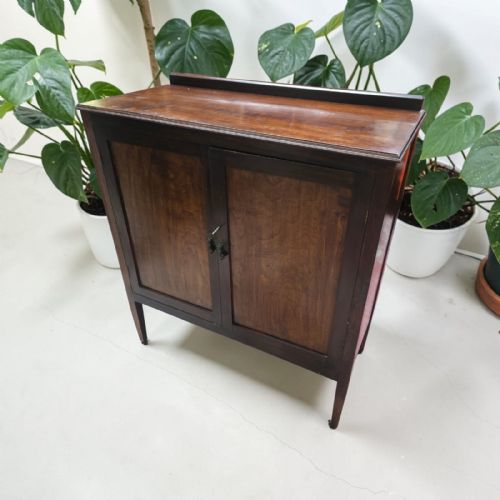
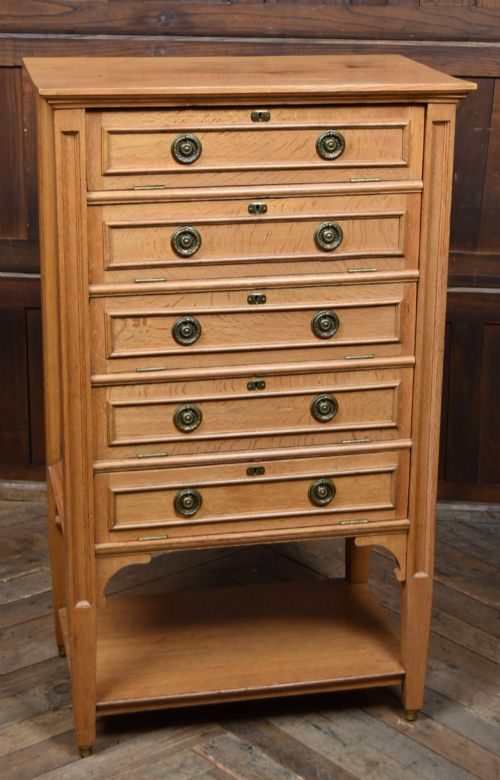
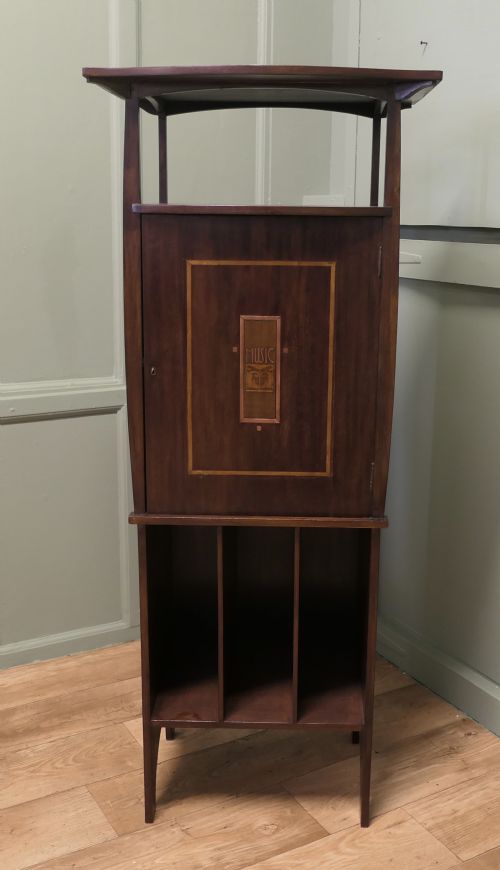

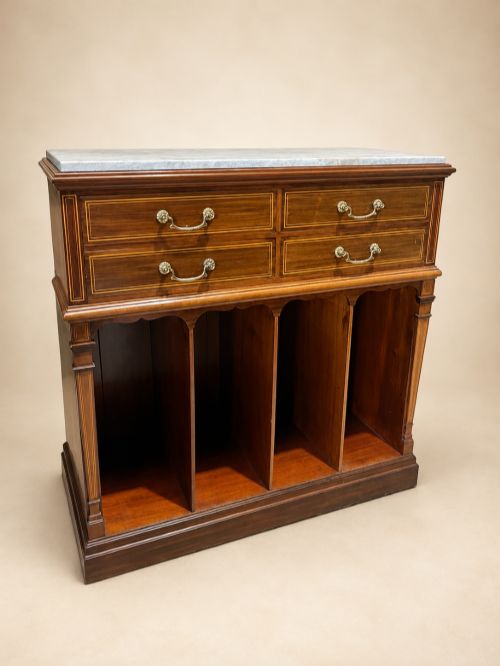


Wooden Music Storage Cabinet
A wooden music storage cabinet organises scores and sheets with period timber and tailored internal partitions.
Wooden Music Storage Cabinet
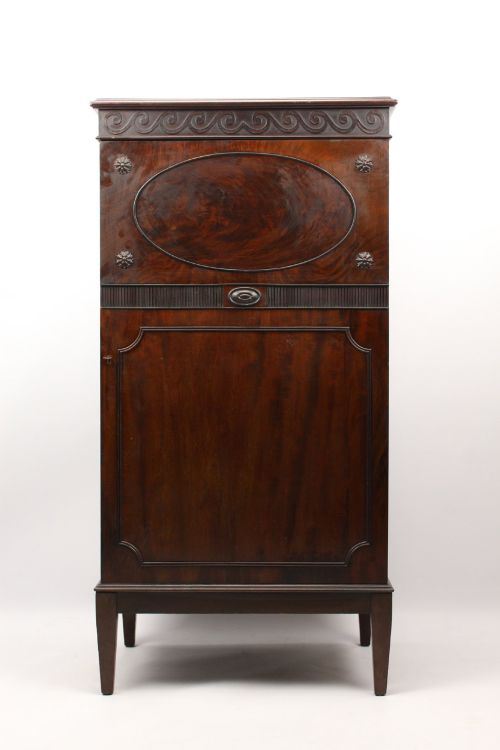
A wooden music storage cabinet serves to house sheet music, folios and scores within domestic rooms. The form responds to the parlour and drawing room traditions of the nineteenth and twentieth centuries, providing dedicated compartments for paper rather than general storage.
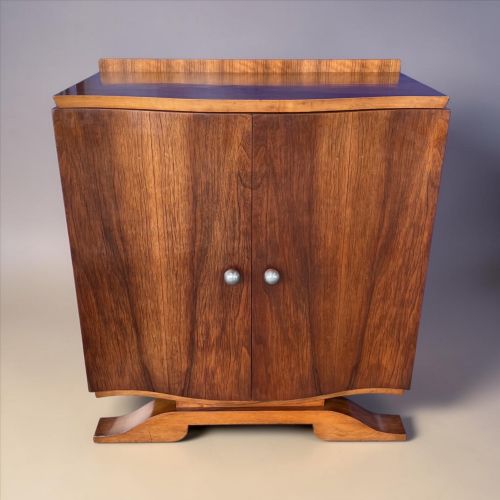
Edwardian mahogany examples appear most frequently alongside nineteenth century and 1930s variations. Pieces emerge in styles ranging from Arts and Crafts and Art Deco to Victorian and Edwardian iterations.
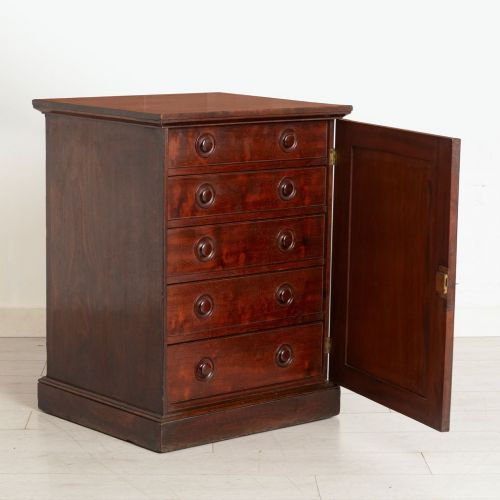
The objects manifest as tall narrow cupboards, music cabinets, and filing formats with drop fronts or internal tiers. Makers adapt pedestals and side cabinets specifically for domestic musicians.
How they were made
Cabinetmakers utilise hardwoods such as mahogany, walnut, oak and satinwood for the primary carcases, often incorporating boxwood and marquetry for surface decoration. Brass handles, hinges and gallery rails provide metal accents to the wooden structures.
Techniques combine traditional joinery with specialised internal partitioning designed to hold flat paper sheets securely. Glass panels appear in doors while carved details and inlaid stringing mark the decorative phases of manufacture.
Listings feature mahogany, walnut and oak across Edwardian, Victorian and 1930s periods.
What varies in quality
The distinction between tiers rests upon the selection of timber and the precision of internal arrangement. Highly figured mahogany or walnut veneers combined with intricate marquetry separate standard production from elevated workshop execution.
Design articulation defines the upper range through considered proportions, integrated brass hardware, and specialised maker attribution. Structural integrity in the internal shelf configuration governs the durability of the piece.
GM Elwood for JS Henry·Denby and Spinks·Henry Ogden and Son
The Wooden Music Storage Cabinet Glossary
- Marquetry
- Decorative veneer work forming pictures or patterns by assembling small pieces of different woods, metals or shells. This technique adorns the top surfaces and door panels of Edwardian music cabinets.
- Canterbury
- A low stand with vertical divisions used for holding loose music sheets, folios or books. This form relates closely to the music cabinet family.
- Pedestal cabinet
- A tall narrow piece of furniture designed to stand independently against a wall while occupying minimal floor space. Edwardian makers frequently utilised this proportion for sheet music storage.
- Satinwood
- A durable, lustrous hardwood with a yellowish sheen used for fine cabinetmaking and decorative stringing. It appears frequently in inlaid pieces from the Edwardian period.
Wooden Music Storage Cabinet: Frequently Asked Questions
What is a wooden music storage cabinet?
A wooden music storage cabinet is a specialised piece of furniture built to hold sheet music, scores and folios in domestic spaces. These pieces emerged to keep paper organised and protected in period parlours.
Most examples date from the Victorian and Edwardian eras, featuring tall narrow proportions designed to fit efficiently into reception rooms. Internal partitions separate the interior into shallow horizontal tiers or vertical compartments suited for unbound music.
How did people use them?
Musicians used these cabinets beside pianos or in music rooms to store working repertoires of sheet music and bound folios. Drop-front drawers and narrow shelves kept fragile paper flat and accessible during practice or performance.
The dedicated internal layout prevented sheets from curling or tearing, serving households where home piano playing formed a central part of daily evening entertainment.
How do I live with one today?
A wooden music storage cabinet functions effectively in modern rooms as an organiser for documents, stationery or art supplies alongside its original musical purpose. The slim profile allows the furniture to occupy compact spaces in studies or living areas.
Placing the cabinet away from direct heat sources and sunlight protects the polished timber and delicate veneer work from drying or fading over time.
How do I tell the periods apart?
Victorian models often feature heavier dark walnut or rosewood timbers with carved details and substantial proportions. Edwardian cabinets tend to utilise lighter mahogany or satinwood with refined inlaid stringing and marquetry.
Later pieces from the 1930s adopt Art Deco influences with cleaner geometric lines and simpler surfaces stripped of traditional period ornamentation.